

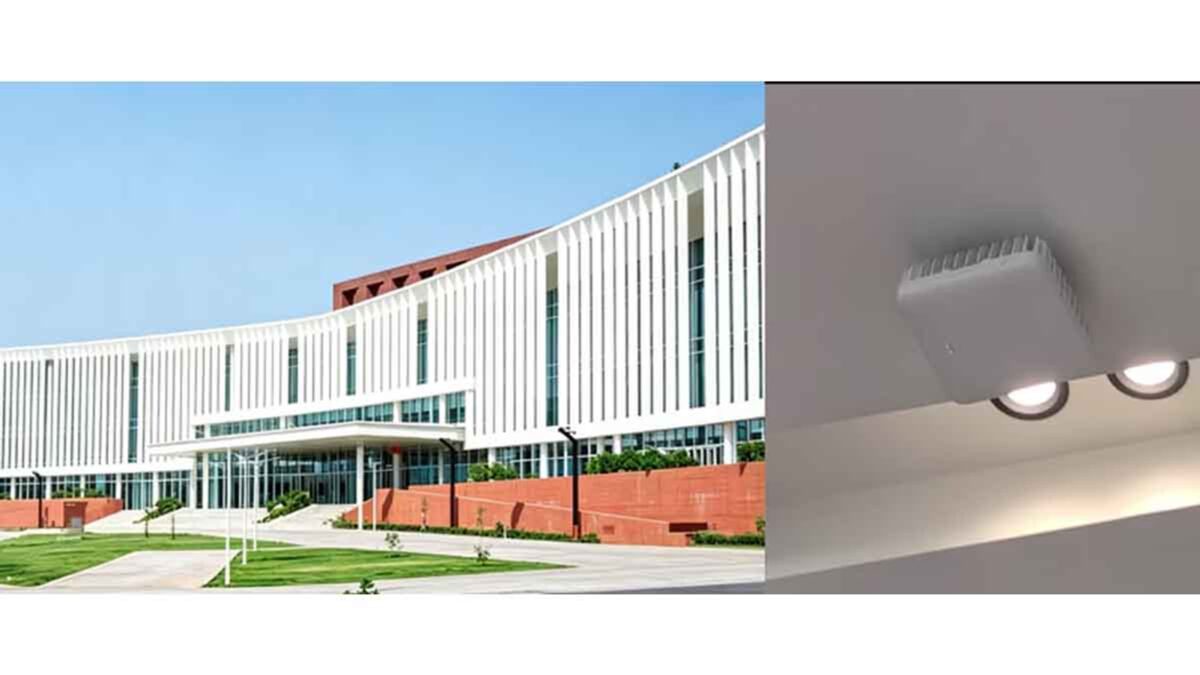
Huawei has finished installing its five-band LampSite indoor network at the Mulungushi International Conference Centre in Zambia, a venue that doubles as the country’s biggest stage for conferences and business exhibitions. The system brings 1 Gbit/s indoor coverage, with a path toward 5G-A without ripping everything out and starting again.
The system uses a five-band architecture with built-in TDD 2.6 GHz support, covering 1.8 GHz, 2.1 GHz, 2.3 GHz, TDD 2.6 GHz, and 3.5 GHz. Huawei says the setup can deliver a peak download speed of 1 Gbit/s, with each band able to allocate up to 1 Gbit/s to a single user. That is the kind of number venues like to print on slides because nobody enjoys buffering in front of a crowd.
What Huawei installed at Mulungushi
Each LampSite module supports 2G, 3G, 4G, and 5G, which matters in a large venue where not every device is brand new and not every visitor is carrying the same network profile. Huawei also says the fibre-based architecture reduces the number of modules by up to 50% versus conventional approaches, while keeping the same coverage and lowering construction costs.
That reduction is a quiet but useful part of the story. Indoor systems are often sold on raw speed, yet the real win for operators is usually simpler deployment and less hardware clutter, especially in venues that need dense coverage without turning ceilings into a small telecommunications museum.
5G-A upgrade path for large indoor venues
Huawei is also aiming this at the next step, not just the current one. The company says the solution can move smoothly to 5G-A across scenarios and support immersive services such as XR, augmented-reality navigation, and glasses-free 3D. Competitors in the enterprise indoor space are making similar bets, because the market is no longer about basic coverage alone; it is about whether a network can handle the showroom demo, the live event, and the future application all at once.
For Zambia’s largest conference centre, the upgrade is a practical signal as much as a technical one: the venue is being readied for heavier traffic and more demanding applications. The better question now is how quickly other large public venues follow suit, because once one flagship site gets gigabit indoor coverage, everybody else starts looking a bit dated.