

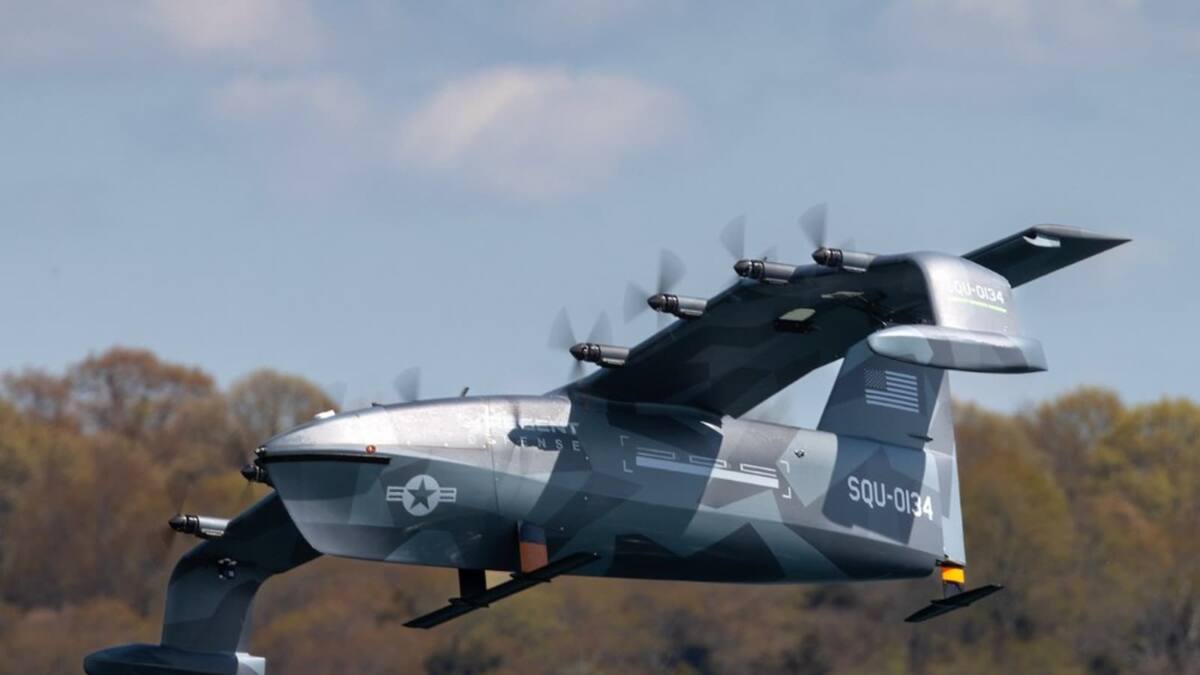
American company Regent says its Squire demonstrator has reached its projected top speed of 70 knots, or about 130 km/h, while testing a machine that is part boat, part hydrofoil, and part wing-in-ground-effect craft. The company now says the harder part is ahead: pushing range and endurance far enough to turn a flashy prototype into something operators might actually buy.
Squire is unusual even by the standards of marine aviation experiments. It starts on the water like a normal vessel, lifts onto hydrofoils, and then rises into low-altitude flight just above the surface, where an air cushion-like aerodynamic effect does the heavy lifting. That three-stage approach is a clever way to reduce drag, and it helps explain why developers keep circling back to this category even though the commercial history of ekranoplane-style vehicles has been messy at best.
How Regent’s Squire moves
According to Regent, the craft uses eight electric motors and has a wingspan of about 5.5 meters. The company says it can cover more than 185 km, which puts it in a narrow but interesting lane between high-speed ferry service and short-haul aviation. For coastal routes, that could be enough to matter; for anything else, the math gets ugly fast.
- Top speed: 70 knots, or about 130 km/h
- Propulsion: eight electric motors
- Wingspan: about 5.5 meters
- Range: more than 185 km
Military backing and the Viceroy plan
The project has support from the US Marine Corps, which has put about $15 million into development. That kind of backing does more than pay for test flights: it signals interest in a vehicle that could move people or cargo quickly along coastlines without needing a runway, a port overhaul, or the patience of a saint.
Regent is also pushing a civilian version called Viceroy, a 12-seat model with an advertised range of about 300 km. The company says its pre-orders for that craft already exceed $10 billion, a figure that suggests strong demand on paper even if the real challenge is proving the economics, certification path, and battery performance all line up in the real world.
Range and endurance are the real test
Speed is the easy headline. Range and endurance are the parts that decide whether Regent is building a useful transportation product or just a very expensive way to make waves in coastal demo runs. If the company can stretch Squire’s stamina without sacrificing the low-drag trick that makes it interesting, it may have something more persuasive than a novelty boat with ambitions.