

A floating power plant driven by fusion sounds like something drafted by science fiction and approved by a very optimistic engineer, but that is now the pitch behind Fusion Power Barge, or FusPoB. Announced at Posidonia 2026, the project aims to build the first commercial maritime platform powered by thermonuclear fusion, with a demonstrator targeted for 2032. Siemens Energy is part of the consortium backing the plan.
The consortium brings together ABS, nT-Tao, Siemens Energy, P&P Marine Consultants, and TEMISTh. The immediate job is less glamorous than the headline: a feasibility study, a set of technical requirements, and the awkward but necessary work of figuring out how to certify a reactor at sea before anyone tries to put one into service.
A 71-meter fusion power barge
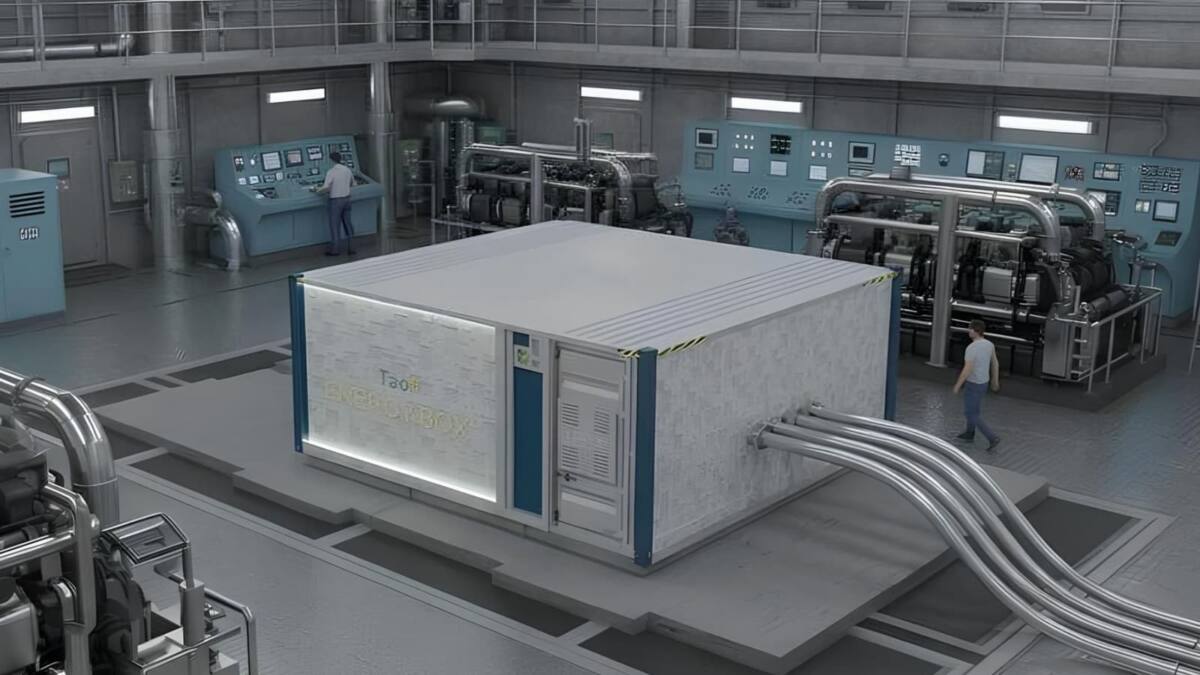
FusPoB is planned as a barge about 71 meters long, with a compact reactor from nT-Tao at its core. The developers say the system is intended to fit inside a standard container module and be integrated into the hull, which is exactly the kind of sentence that makes shipyards, regulators, and safety engineers reach for stronger coffee.
The power system is expected to generate up to 20 MW of electricity. A backup battery is also built into the concept, so the vessel could keep moving even if the reactor is temporarily offline, which is a sensible detail for a machine that will be asked to float, power itself, and persuade the public that ”fusion” and ”marine safety” belong in the same sentence.
Why shipping is looking at fusion
The shipping industry is under pressure to cut emissions fast. The International Maritime Organization estimates that maritime transport produces about 3% of global greenhouse gas emissions, and the sector is supposed to move close to carbon neutrality by mid-century. That is a brutal deadline for an industry that still leans heavily on conventional fuel.
Hydrogen and ammonia are the best-known alternatives, but both come with a catch: they need new infrastructure on a large scale and are still difficult to roll out widely. Fusion, if it can be made compact and reliable enough, offers a different route for ships and remote sites that need dense, flexible power without building an entire fuel supply chain first.
- Target: commercial demonstrator by 2032
- Vessel length: about 71 meters
- Power output: up to 20 MW
- Backup: battery system for temporary reactor downtime
The regulatory problem is the real test
The biggest obstacle may not be the reactor itself, but the rulebook around it. There are effectively no international standards today for commercial vessels carrying fusion reactors, so ABS is stepping into the role of standards builder as much as ship classification society. That is a familiar pattern in emerging energy tech: the hardware gets the publicity, while the paperwork decides whether anything ever leaves the dock.
The project also hints at a broader competition in maritime decarbonization. Big shipping players have spent the past few years testing batteries, alternative fuels, and hybrid systems, but none has yet produced a clean, universally practical answer for long-haul or off-grid use. If FusPoB gets even part of the way there, it could become a reference point for how far shipping is willing to go to escape fossil fuel dependence.
Ports, buoys and other use cases
The barge is not being framed as a one-trick experiment. The consortium says it could serve as a mobile power plant for ports, remote marine infrastructure, ocean-going towage, and desalination in places without access to centralized grids. That makes the concept more plausible than a pure showcase ship: if you can sell power and services as well as movement, the economics start looking less ceremonial.
The open question is whether a compact fusion system can reach the promised combination of safety, size, and commercial reliability on the timetable being suggested. If it can, the first beneficiary may not be the headline-grabbing barge itself, but the next generation of industrial and maritime systems built to borrow its technology.