

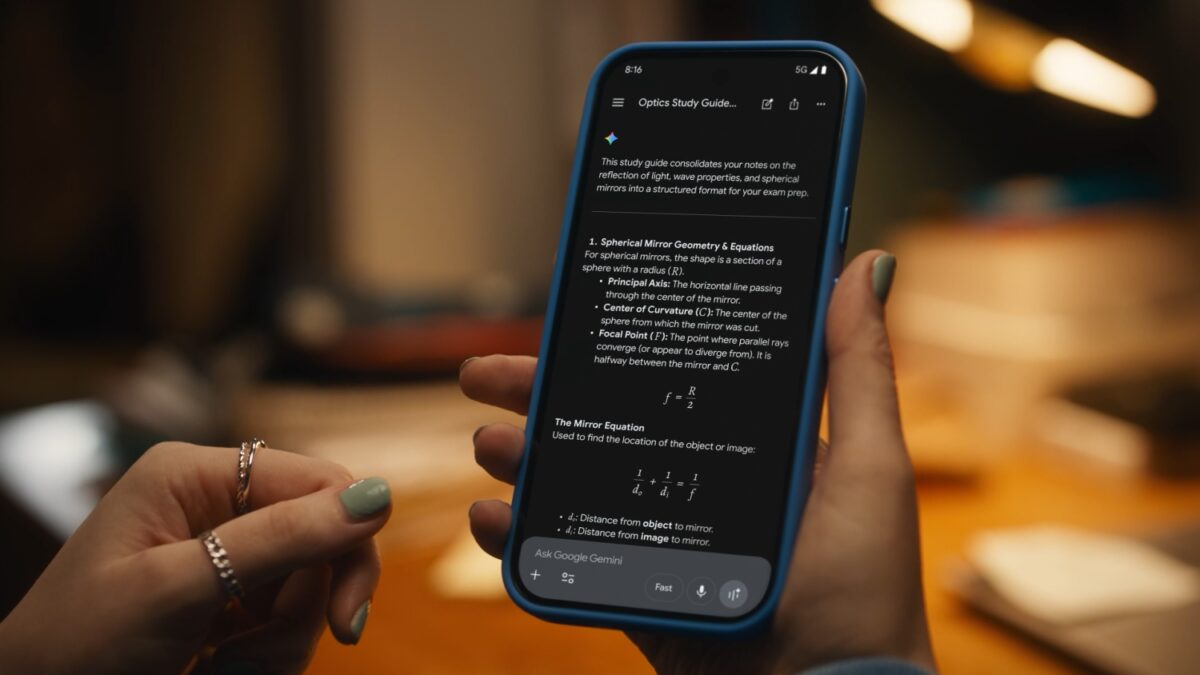
Google is pushing Gemini downmarket, and that is the surprising part. The company has started rolling out Gemini Go to Android Go phones with as little as 2GB of RAM, replacing Assistant Go and giving budget devices access to a more capable AI helper without asking users to install anything extra.
For millions of cheaper Android phones, that matters more than the usual AI marketing fluff. Android Go is Google’s stripped-back version of Android for entry-level hardware, so this is the first time a Gemini assistant has been tailored for devices that sit far below the flagship class where most AI features debut.
What Gemini Go can do
Gemini Go lives inside the Google app, so there is no separate download to hunt down. Users can launch it with a long press of the Home button or Power key, and Google says it can handle calls, texts, alarms, and calendar events, along with more conversational requests.
It also supports file and photo uploads and even mood-based music playback, which is a fancier trick than most low-end phones have ever been invited to try. The rollout is gradual, so the feature will not appear everywhere at once; updating the Google app in the Play Store is the quickest way to check.
Why Google is taking the lower road
Most of the AI industry has been racing in the opposite direction. Apple Intelligence needs 8GB of RAM, Samsung’s Galaxy AI begins with the S24 series, and Google’s own Gemini Nano tier now requires 12GB of RAM and a newer chipset. That leaves a lot of mainstream phones out in the cold, including the Pixel 9 and Galaxy S25.
Google’s move is smart partly because it is the only one playing both ends of the market. Android Go devices still make up a huge chunk of global phone shipments, especially in regions where budget hardware is the default rather than the downgrade. Put bluntly: if AI is going to matter outside the rich-phone bubble, it has to run on cheap phones too.
What happens after Assistant Go
This also fits Google’s recent habit of folding older assistant features into Gemini across more surfaces. The company already pushed Gemini into Android Auto and removed Assistant from Android Auto, so Gemini Go looks less like a side project and more like the next step in a wider transition.
The open question is how far Google is willing to stretch Gemini before the experience gets watered down. If it works well on 2GB phones, the company gets a tidy win in markets where Apple and Samsung are still talking mostly to premium buyers. If it feels sluggish or too limited, budget users will notice fast – and they are usually less forgiving than flagship shoppers with shiny new toys.