

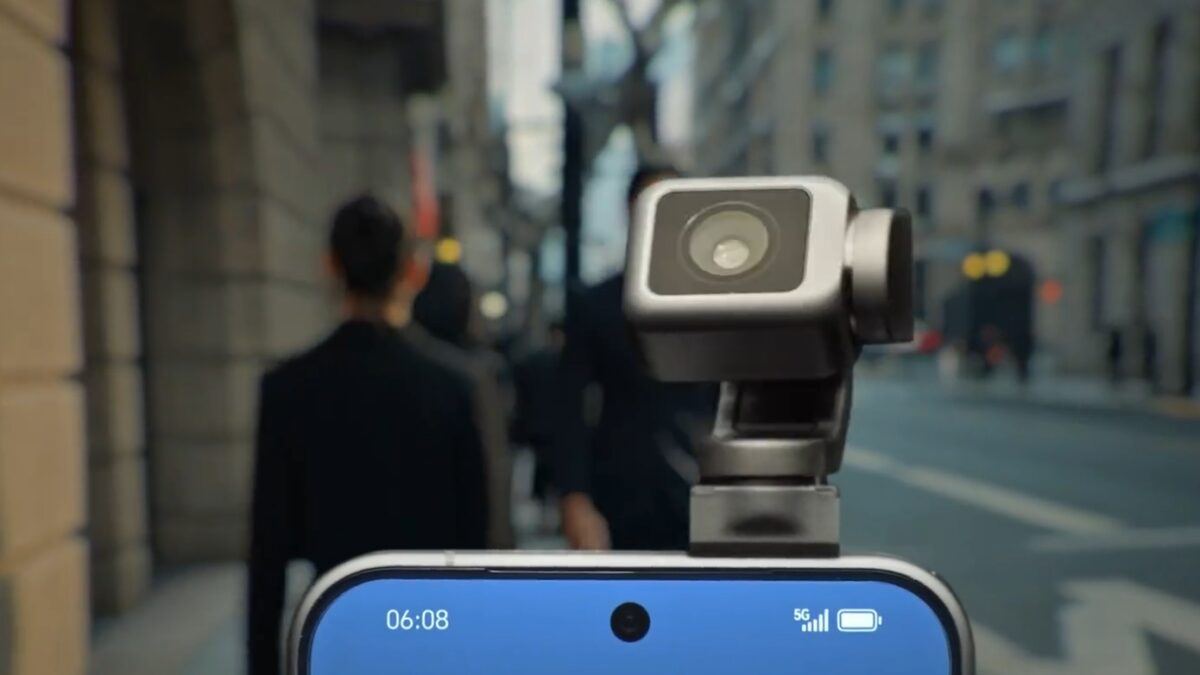
Honor is turning its Robot Phone into something closer to a pocket video rig than a normal smartphone, and that is the whole point. The company says the Honor Robot Phone, first shown at MWC 2026, is being built around mobile video creation rather than the usual camera bump race, with a motorized three-axis gimbal on top, a 200-megapixel sensor, and AI tools meant to help ordinary users shoot smoother footage without wrestling with pro-level controls.
That pitch makes sense. Smartphone cameras have been excellent for a while, but most of them still rely on software trickery to fake the stability and movement that a real camera system can deliver. Honor is trying to push past that ceiling with hardware first, then wrap convenience around it.
What Honor built into the Robot Phone
The headline feature is the rotating camera module, which can point forward or backward depending on what the user is filming. Honor says the design creates more space for future hardware upgrades and new shooting methods, and it has teamed up with ARRI, a name that should ring bells for anyone who follows professional filmmaking gear.
- Motorized three-axis gimbal camera system
- 200-megapixel sensor
- AI subject tracking and shooting assistance
- Automated camera movements
- AI-powered video editing tools
The practical angle is obvious: presets, tracking, and automated moves lower the barrier for users who do not know their way around framing, focus, or camera motion. That is also where Honor may have an edge over rivals that keep adding lenses but still expect people to do the hard work themselves.
Durability is the awkward question
A phone with moving parts invites one immediate objection: how long before it breaks? Honor says the first-generation Robot Phone already matches the drop resistance of its flagship phones, while water resistance still needs work. That is a fairly honest admission, and a welcome one, because pretending a mechanical camera pod is just as robust as a slab phone would be nonsense.
Company engineers reportedly spent around a year refining the concept, building a compact motor, balancing the gimbal, and solving stability and rotational-force problems. Several design revisions were needed before the current prototype took shape, which suggests this is less a gimmick than a stubborn engineering project that finally stopped misbehaving.
Honor’s Robot Phone launch window
Honor CEO James Li has already said the Robot Phone is scheduled to launch in the third quarter of 2026. That puts it in a fairly crowded stretch for premium phone launches, where it will need more than novelty to win attention. The company is betting that the blend of hardware motion, AI help, and pro-style imaging branding will do the job.
The bigger question is whether this stays a one-off experiment or becomes the start of a new camera-first category. Honor says durability improvements will continue across future generations, which hints that the company expects the idea to evolve rather than peak at the prototype stage. If it works, other brands will copy the concept fast; if it flops, it will join the long list of ambitious phone ideas that looked brilliant in a demo and awkward in a pocket.