

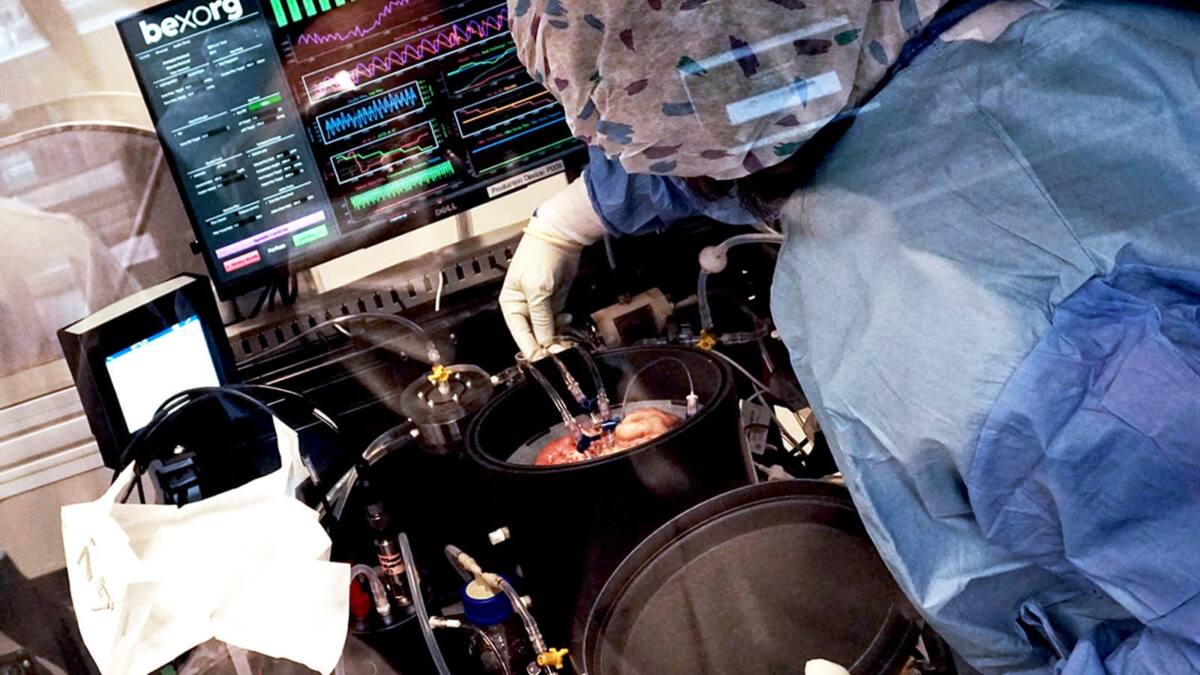
Bexorg is trying to fix one of drug development’s oldest headaches with something that sounds like science fiction: human brains recovered after death, plugged into a life-support system, and used to test experimental treatments for Alzheimer’s, Parkinson’s, and other brain diseases. The pitch is simple enough, even if the method is not – animal studies keep failing to predict what happens in people, so the company wants to work with actual human tissue instead.
The setup, called BrainEX, keeps donated brains supplied with oxygen, blood, and nutrients through artificial components that mimic parts of the body. According to Science, the tissue shows no signs of consciousness or organized electrical activity, and the company also uses propofol as a further safeguard. That matters because the ethical line here is not subtle; Bexorg is leaning hard on the claim that these brains are biologically active without being aware.
Why pharma is paying attention
This is the part that makes drug companies listen. Bexorg says the brains come from people who lived for decades, meaning the tissue has been shaped by real-world exposure, illness, and medication history – a much richer biological backdrop than a petri dish or a mouse. That may sound cold, but in drug development, better data often beats prettier assumptions.
The broader problem is familiar: compounds that look promising in animals often collapse in human trials. Human-based models have been the holy grail for years, from organoids to lab-grown tissues, but none has fully solved the translation gap. A platform built from intact human brains is a far more extreme answer than most researchers expected to see first.
What Bexorg does with the tissue
The company does not keep the brain intact for long. After 24 hours, it is cut into hundreds of fragments for analysis, and Bexorg says it eventually wants to automate that workflow with robotics and process up to 1,600 brains a year. That scale is the real business story here: the science is unusual, but the commercial ambition is what turns it from a one-off experiment into a platform.
- BrainEX keeps human brain tissue oxygenated and nourished after death.
- The tissue is later divided into hundreds of pieces for testing.
- Bexorg wants to automate the workflow and reach 1,600 samples a year.
Bexorg’s Parkinson’s and Alzheimer’s drug testing
Bexorg has already attracted industry interest. Science reports that Biohaven used about 130 brain samples provided by the startup to test drugs, including a potential treatment for Parkinson’s disease. The company is also planning clinical trials for one of its drugs, relying in part on data generated from these experiments.
That is the promise and the risk in one package. If BrainEX keeps proving useful, it could become a new filter before human trials begin, reducing some of the expensive guesswork that has slowed neuroscience drug development for decades. If it disappoints, it will join a long list of elegant lab ideas that looked more convincing than they performed.
Either way, the bigger shift is clear: biotech is moving beyond asking whether a drug works in animals and toward asking whether it works in human tissue that still behaves like tissue. For a field built on bad predictions, that is a very tempting place to start.