

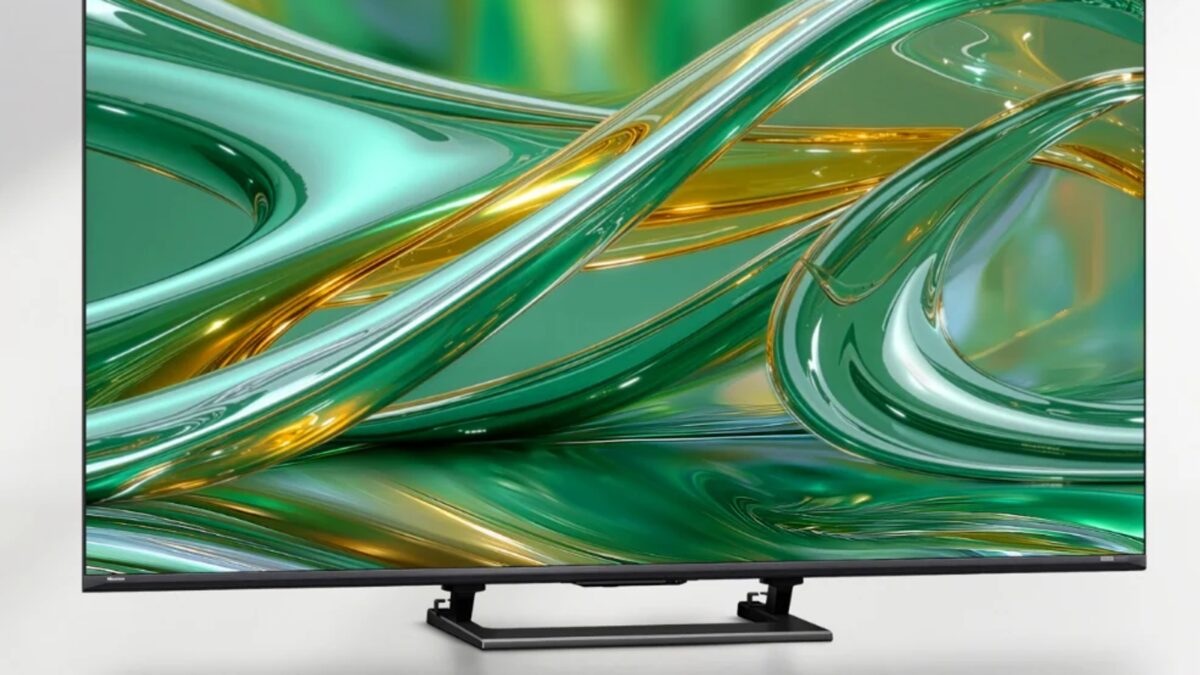
Hisense has launched the U7SE family of 4K Mini-LED TVs, and the pitch is simple: big screens, fast panels, and enough HDR acronyms to make a spec sheet blush. The range spans 55, 65, 75, 85, and 100 inches, with pricing starting at $670 for the Hisense U7SE series.
The lineup leans hard on Mini-LED backlighting with full-array local dimming, which should help it deliver higher contrast and fewer glowing halos around bright objects in dark scenes. That puts it squarely in the same fight as mid-range sets from Samsung, TCL, and LG, where brightness and gaming features are now doing most of the selling.
Mini-LED panel and Hi-QLED colour tuning
Hisense is also using its Hi-QLED quantum dot layer to push colour performance, while the Hi-View AI Engine handles upscaling, dynamic picture adjustments, and tone mapping in real time. On the 100-inch model, the company says a more powerful processor variant is fitted, which is exactly what a giant panel needs if it is going to stretch lower-resolution content without looking messy.
An AI RGB Light Sensor is included too, automatically adjusting the image to match the room lighting. Dolby Vision IQ, HDR10+ Adaptive, and Filmmaker Mode are all supported, so the TVs can switch between flashy mode-switching and a more faithful cinema presentation without much user babysitting.
Hisense U7SE gaming features reach 165 Hz on the 100-inch model
For gaming, the standard U7SE models offer 144 Hz panels with HDMI 2.1, VRR, and AMD FreeSync Premium. The 100-inch version goes further with a gaming mode rated up to 165 Hz, which is a very large amount of screen to throw fast-moving shooters at.
- Sizes: 55, 65, 75, 85, and 100 inches
- Starting price: $670
- Panel type: 4K Mini-LED with full-array local dimming
- Gaming support: 144 Hz, HDMI 2.1, VRR, AMD FreeSync Premium
- 100-inch model: up to 165 Hz
Devialet-tuned audio and the price war ahead
The audio side gets a built-in subwoofer, Dolby Atmos support, and tuning with Devialet, which is the sort of partnership TV makers reach for when they want the box to sound less like a box. The real test will be how aggressively Hisense prices these models beyond the starting $670 figure, because premium picture features have become table stakes while the fight has shifted to who can offer the biggest panel and the most gaming-friendly spec sheet for the least money.
The 100-inch model is the obvious headline grabber, but the more interesting move is that Hisense is pushing many of the same features down to far smaller sizes. That is how the company keeps pressure on rivals: make the expensive TV aspirational, then make the smaller one look like the sensible buy.