

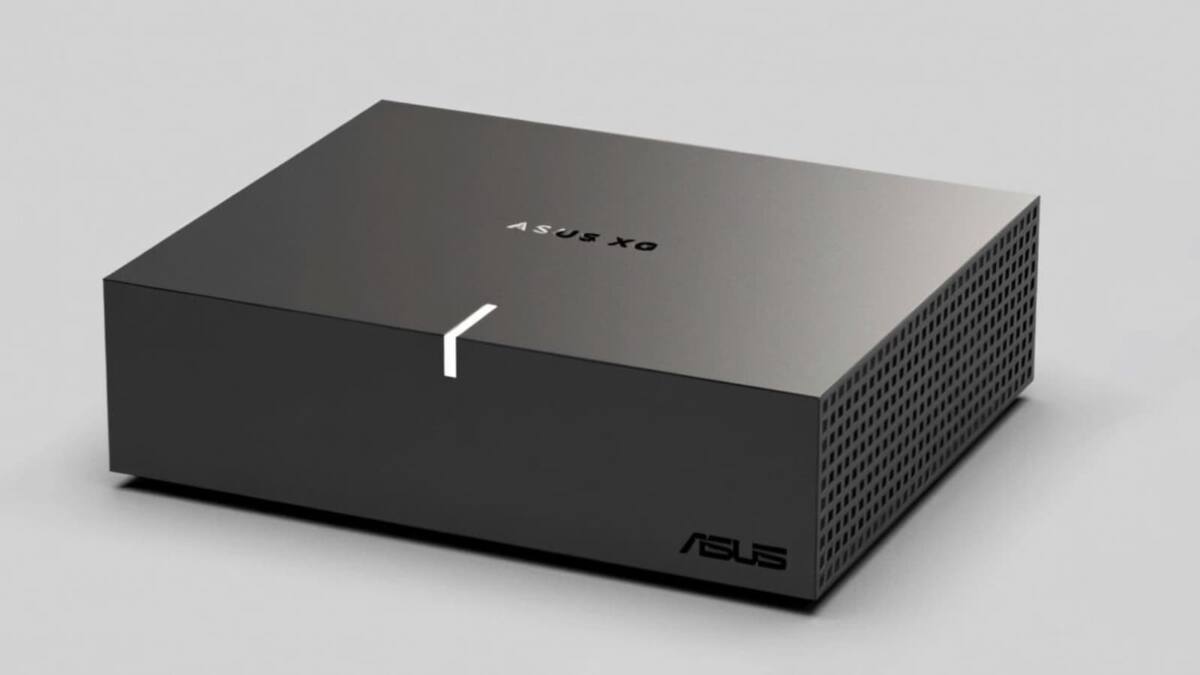
Asus has jumped out ahead of the pack with what it says is the first external graphics card built on AMD’s Radeon RX 9000 family. The new box, called XG Core, uses the Radeon RX 9600 XT LP and comes with 16 GB of memory, but Asus is still keeping the useful bits under wraps: there are no confirmed dimensions, no full spec sheet, and, most importantly, no price.
That leaves the usual launch-day mystery box problem. The hardware sounds promising on paper, especially because the LP variant is only a lower-power version of the RX 9600 XT rather than a different chip altogether, so performance should be decent even with the reduced power limit. But in the external GPU market, charm is cheap and pricing does the real talking.
What Asus has shown so far
The company has only revealed a compact enclosure with a minimalist look. Beyond the photo, there is little to measure and even less to benchmark, which is very much on-brand for surprise hardware reveals.
What is clear is that this is the first external graphics solution built around a GPU from the Radeon RX 9000 line. That gives Asus a neat bragging right, even if buyers will care far more about cooling, connectivity, and whether the enclosure avoids the usual eGPU tax on performance.
Radeon RX 9600 XT LP and 16 GB memory
RX 9600 XT LP is described as a technical twin of the RX 9600 XT, but with a lower power cap and, as a result, lower clock speeds. In normal form, the chip is associated with 140 W, though Asus may have chosen a different figure for its own implementation.
- GPU: Radeon RX 9600 XT LP
- Memory: 16 GB
- Form factor: external graphics box
- Known details: limited so far to the card itself
That 16 GB figure should help the card look more comfortable in demanding workloads than leaner configurations would, but the real test is whether Asus has priced XG Core like a premium accessory or an actually sensible upgrade. External GPUs already fight an uphill battle; if the price is wrong, the whole idea becomes a very expensive desk ornament.
The price will decide everything
For now, the launch is more about timing than certainty. Asus gets the first-mover headline, AMD gets a fresh RX 9000 showcase, and everyone else gets to wait for the spec sheet that should have arrived with the photo. The next obvious question is whether this is the start of a broader wave of RX 9000-based external cards, or just a one-off flex from a company that knew it could claim the spotlight first.