

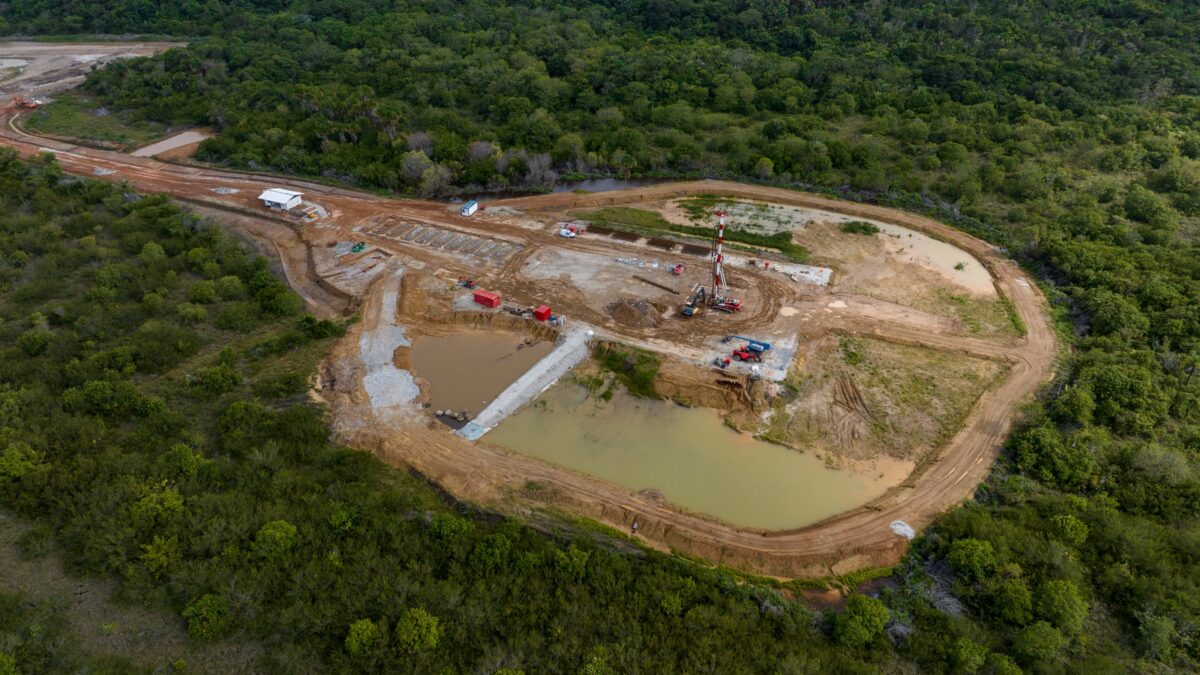
Spanish rocket maker PLD Space is betting bigger on Miura 5, raising its investment in a launch complex at the Kourou spaceport in French Guiana to €35 million. That makes it the first private operator to commit at that scale to the historic ELM-Diamant site, and it gives Europe’s first private launch site a clearer path from plans to hardware.
Construction is already well advanced. Civil works at the launch pad are in the final stretch and are due to finish this summer, while final assembly of the Miura 5 rocket is also moving ahead quickly. For Europe, that is the interesting part: not another promise of sovereign access to space, but an actual pad, an actual rocket, and a company willing to spend real money to make both happen.
Miura 5 launch site in French Guiana
Kourou has long been one of the continent’s most important launch hubs, but it has mostly been dominated by public programs and established players. A private Spanish operator putting fresh capital into its own infrastructure there is a meaningful shift, especially as Europe keeps searching for faster, cheaper ways to get small satellites into orbit without relying entirely on the biggest rockets in the fleet.
PLD Space’s plan fits that pressure nicely. Miura 5 is a two-stage, partially reusable light launcher designed to give Europe commercial and independent access to space for small satellites. The first stage is meant to return under parachutes into the ocean for recovery and reuse, which is the sort of cost-saving promise that has become table stakes in launch marketing-and one that is still hard to execute cleanly.
Miura 5 specs and reuse plan
- Two-stage light launcher
- Partially reusable first stage
- First stage recovery by parachute into the ocean
- Built for commercial access to space for small satellites
PLD Space is also hedging its bets geographically. The company previously said Miura 5 would also launch from Etlaq Spaceport in Oman in 2027, after an agreement signed on 20 February. That kind of dual-site strategy is sensible: if one range slips, another can pick up the slack, and small-launch companies rarely get the luxury of waiting for perfect conditions.
Europe’s small-launch race gets more crowded
The bigger picture is that Europe has been trying to catch up in small-satellite launch for years, while U.S. rivals and new Asian entrants have been moving fast. PLD Space is not solving that problem alone, but a privately funded pad in French Guiana, plus a second launch base in Oman, gives the company something many competitors still lack: options, momentum, and a clearer shot at turning launch plans into a schedule.
The open question is whether Miura 5 reaches orbit on the timeline PLD Space wants, and whether its reusable first stage performs well enough to justify the extra engineering. If it does, Europe may finally get a more flexible launch option for small satellites; if it doesn’t, the pad will still be there, waiting for the next ambitious rocket to prove the point.