

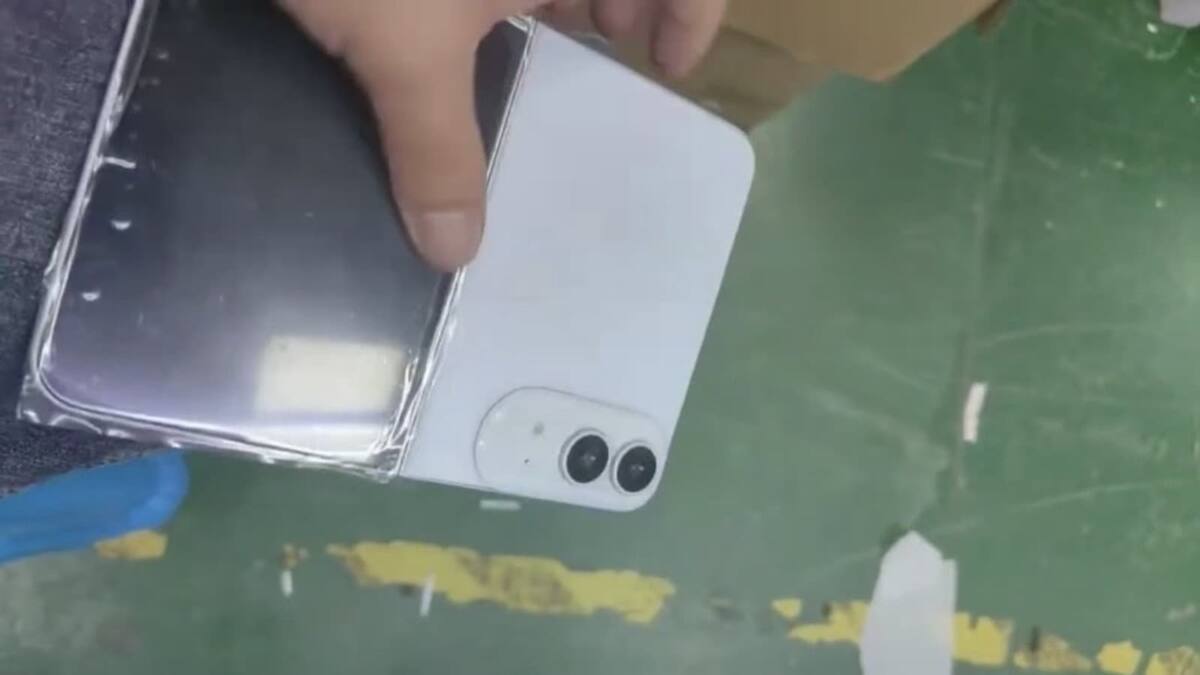
A new dummy model of Apple’s first foldable iPhone is doing the rounds online, and the reaction is exactly as polite as you would expect from the internet: not very. The white, book-style prototype suggests a large inner display, a smaller outer screen, a dual rear camera, and a format that lands somewhere between a phone and a mini tablet.
The rough consensus so far is that the design looks odd rather than futuristic. That is not necessarily fatal – early Apple hardware often looks a bit weird before it gets polished – but foldables have already taught buyers to be suspicious of first impressions. Samsung spent years smoothing out that category, while rivals have leaned on thinner bodies and cleaner hinges to win over skeptical shoppers.
What the foldable iPhone mockup shows
The leaked dummy follows a clamshell-style ”book” layout with an inner display of about 7.7 inches and an outer screen of about 5.3 inches. In the unfolded position, the device should feel closer to a compact tablet than a normal iPhone, which is probably the point: bigger canvas, smaller pocket compromise.
One detail stands out. The volume buttons are said to sit on the top edge of the body, which could make more sense on a wide device held open. The power button is expected to live on the right side and, if the rumors are right, will double as Touch ID, bringing fingerprint unlocking back after years of Face ID dominance.
The internet verdict is harsh
Viewers were quick to compare the prototype to old Microsoft hardware and to call it ugly outright. That kind of backlash is hardly unusual for foldables, though: these devices often look awkward until the first hands-on footage makes the hinge, thickness, and screen crease the real story instead of the silhouette.
- Inner display: about 7.7 inches
- Outer display: about 5.3 inches
- Rear cameras: dual-camera setup
- Authentication: Touch ID on the power button, by rumor
- Expected price: around $2000
Apple’s foldable iPhone could launch at around $2000
The larger issue is price. Around $2000 puts this squarely in ultra-premium territory, where Apple will have to convince buyers that a foldable iPhone is not just an expensive curiosity. The company usually waits out a category until the parts, hinges, and software are less embarrassing; if this device arrives in 2026 as rumored, it will be late by phone-world standards and right on schedule by Apple standards.
For now, the mockup is a reminder that foldables still have to sell the idea before they sell the hardware. If Apple gets the software polish right, the format could still land; if not, the joke will keep writing itself.