

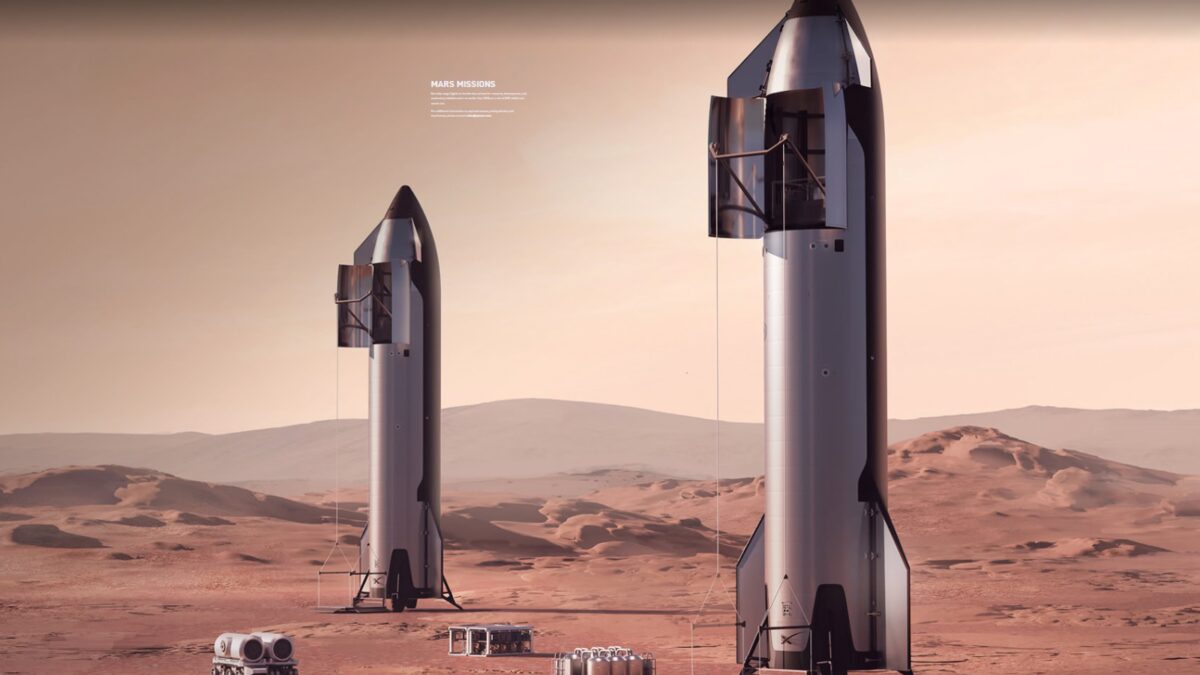
SpaceX has quietly pulled its Mars timetable forward again, updating its website to say Starship Mars cargo flights to the red planet could begin no earlier than 2028 instead of 2030. The company is also still quoting the same eye-catching freight price: about 100 million dollars per metric ton of payload. Ambitious? Absolutely. Guaranteed? Not even close.
The change is small on paper and big in practice. A two-year shift suggests SpaceX wants to signal momentum after a string of Starship test milestones, but it also underlines how much engineering still has to go right before a Mars mission can move from slideshow material to launch pad reality.
What SpaceX says about Starship Mars cargo flights
The updated description on SpaceX’s Mars page says the first Starship cargo missions would support research, development, and reconnaissance work. That is a classic SpaceX move: start with robots, data, and hardware hauling before talking about anything far more delicate, like people.
That pricing figure matters too. At around 100 million dollars per metric ton, Mars logistics would still be brutally expensive by Earth standards, but it is exactly the sort of number SpaceX likes to use to frame Starship as a system that could one day undercut today’s deep-space economics. The catch is that the price is theoretical until the vehicle can actually do the job repeatedly.
Why 2028 is still a very hard target
SpaceX still has some of the hardest parts of the plan in front of it, especially orbital refueling, ship reliability, and a long run of successful test flights. That is the same bottleneck that has slowed nearly every serious Mars architecture ever proposed, from government studies to private-sector concept art.
The company has a habit of moving faster on its own roadmap than most rivals can move at all, which is why this update matters even if it comes with giant asterisks. Boeing, NASA, and a host of smaller launch players are all chasing cheaper access to space, but no one else is trying to build a vehicle this large, reusable, and Mars-focused at the same time.
What comes after the date change
The real question is whether SpaceX can turn this from a website update into a flight cadence. If the company keeps clearing major Starship hurdles, 2028 could become the new anchor date for Mars cargo runs; if it hits another run of technical setbacks, the calendar will probably slide again, because space programs are allergic to optimistic timelines.