

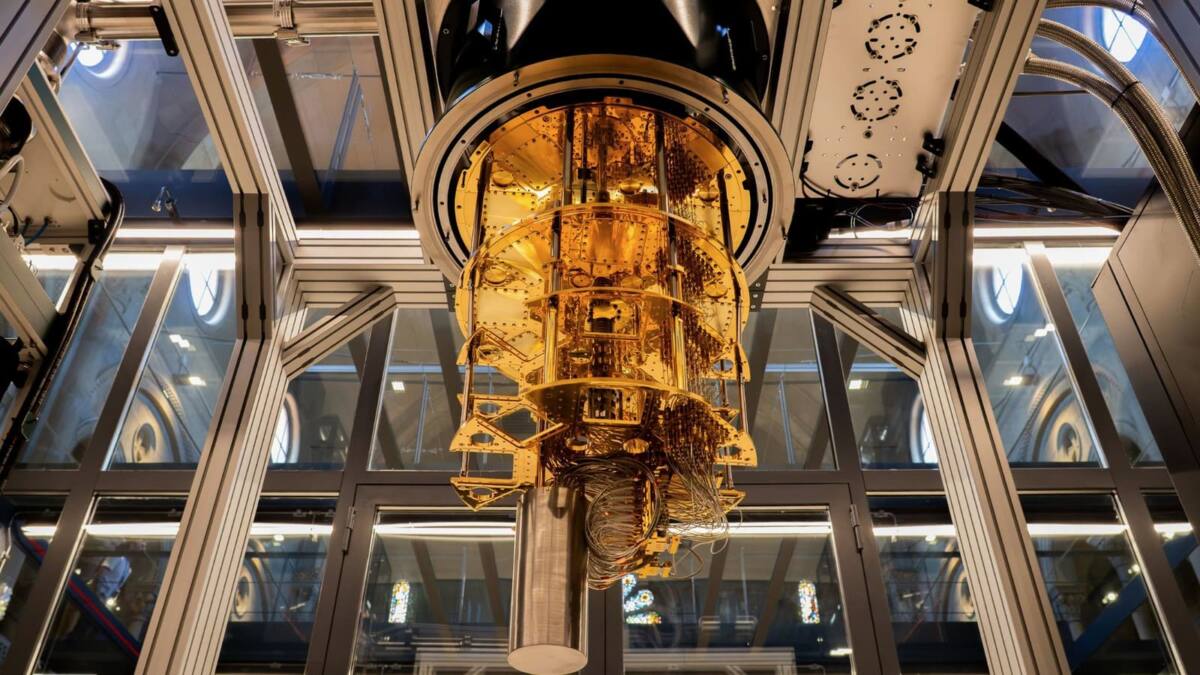
Barcelona’s supercomputing center has switched on Spain’s third quantum computer, and this one is different: it is analog, not digital. Installed inside MareNostrum 5 at the Barcelona Supercomputing Center, the new machine is meant to work alongside two existing digital quantum systems, giving Europe a more varied toolkit as it tries to build homegrown computing capacity instead of leaning on U.S. vendors.
The Barcelona analog quantum computer cost 9.8 million euros and was funded by the European Union and Spain’s State Secretariat for Digitalization and Artificial Intelligence. Local company Qilimanjaro Quantum Tech handled the design and assembly, which fits the broader European push to keep more of the stack in-house. In a field where the biggest commercial bets are still coming from private companies in the U.S., that is less a nice-to-have than a strategic hedge.
What makes this quantum computer different
The new system lives in Torre Girona, the chapel that has housed the previous four generations of MareNostrum machines. Its main distinction is architectural: the first two quantum computers in the center are digital, while this third unit is analog.
That split is not just branding theater. Digital quantum machines behave more like classical computers, which makes them flexible and broadly programmable, but also prone to noise and error-correction headaches. Analog systems take another route, mapping mathematical problems onto physical quantum states and letting them evolve over time, which makes them especially useful for physics and chemistry problems.
MareNostrum Ona has already logged 4,200 hours
The two digital units form MareNostrum Ona, the quantum arm of MareNostrum 5. Since its launch in February 2025, Ona has accumulated more than 4,200 computing hours, shared across 53 research projects selected by the Spanish Supercomputing Network.
That matters because quantum hardware is still scarce, expensive, and heavily oversubscribed. Europe’s answer has been to pool resources through initiatives such as EuroHPC, betting that shared infrastructure can close part of the gap with the U.S. while researchers and startups wait for the hardware to mature.
Europe’s bet on digital independence
Catalan research minister Nuria Montserrat framed the launch in explicitly political terms, calling it a step toward ”strategic autonomy” so the region does not depend on third countries. That language is familiar in Europe’s chips, cloud, and AI debates; quantum computing is simply the newest front.
The real test is whether these public investments translate into useful workloads, not just impressive ribbon-cuttings. If Barcelona can keep MareNostrum 5 running as a combined classical, AI and quantum platform, it may become a template for how Europe builds capability without waiting for Silicon Valley to hand it over.