

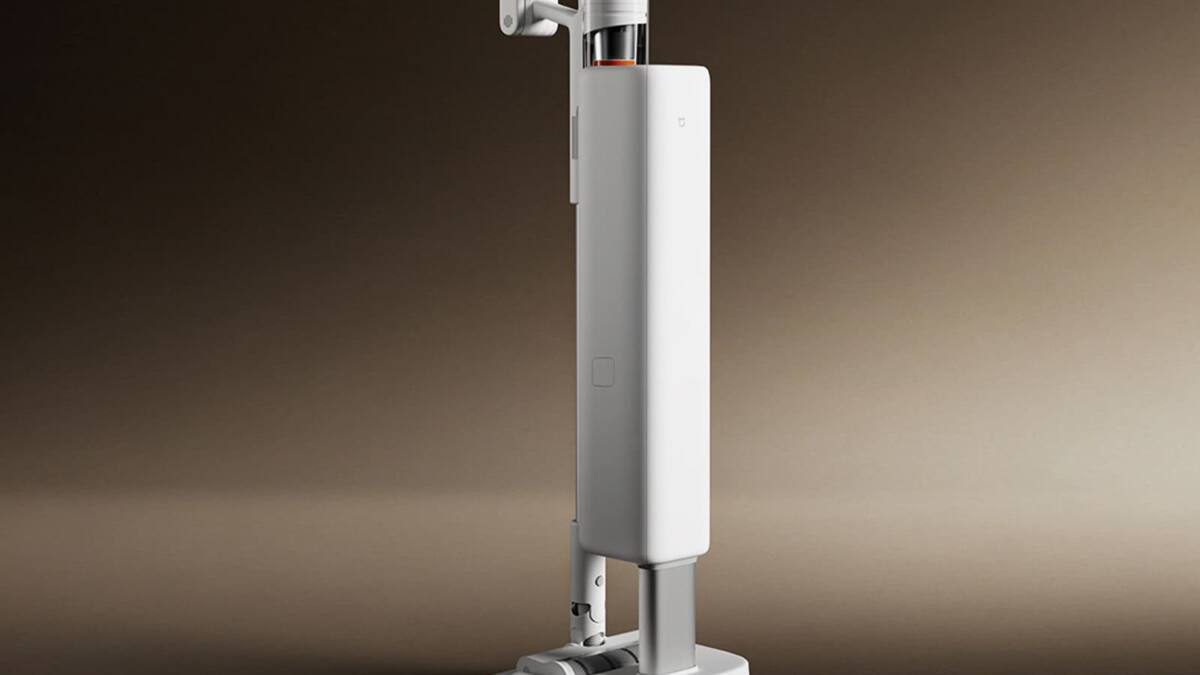
Xiaomi has put the Mijia Wireless Vacuum Cleaner 4 Pro on preorder in China, pitching it as a cordless cleaner that can go up to 100 days without you emptying dust by hand. The new model, listed as F202, costs 1,498.55 yuan, or about $220, with sales set to begin on 10 June. With state subsidy and trade-in offers on JD.com, the price drops to 1,219 yuan, roughly $180.
That price puts it in familiar territory for premium stick vacuums, but the feature list is doing the heavy lifting here. Xiaomi is clearly aiming at the same convenience-first crowd that buys Samsung, Dyson, and Dreame models with auto-empty bases and then hopes not to think about dust again for a while.
Xiaomi Mijia Wireless Vacuum Cleaner 4 Pro features
The vacuum uses a dual-channel self-cleaning system with a dust-collection base, a motor spinning at 120,000 rpm, and claimed suction of 230AW. Xiaomi also says the cleaner uses a wide-angle 180-degree blue light to expose dirt more clearly, which is a neat trick if you enjoy being emotionally judged by your floors.
The dust bag holds 3 liters and includes an antibacterial module with silver ions. Xiaomi says that setup is what lets the vacuum go without dust cleaning for up to 100 days. That kind of claim is becoming a standard badge of honor in the cordless category, because convenience sells better than raw suction numbers ever will.
Battery life and charging on the base
Power comes from a removable 2,600mAh battery, rated for up to 90 minutes of use. Once the vacuum is docked on its base, it starts charging automatically. The package also includes a 685W base with Xiaomi HyperOS Connect support, so the company is leaning hard into its wider smart-home ecosystem rather than treating this as a standalone appliance.
For buyers, the real question is whether the combination of auto-emptying, long runtime, and ecosystem features is enough to justify the premium over simpler cordless models. Xiaomi’s answer is obvious: remove as many chores as possible, then charge for the privilege. In a market where every brand promises less maintenance, that is usually the message that wins.