

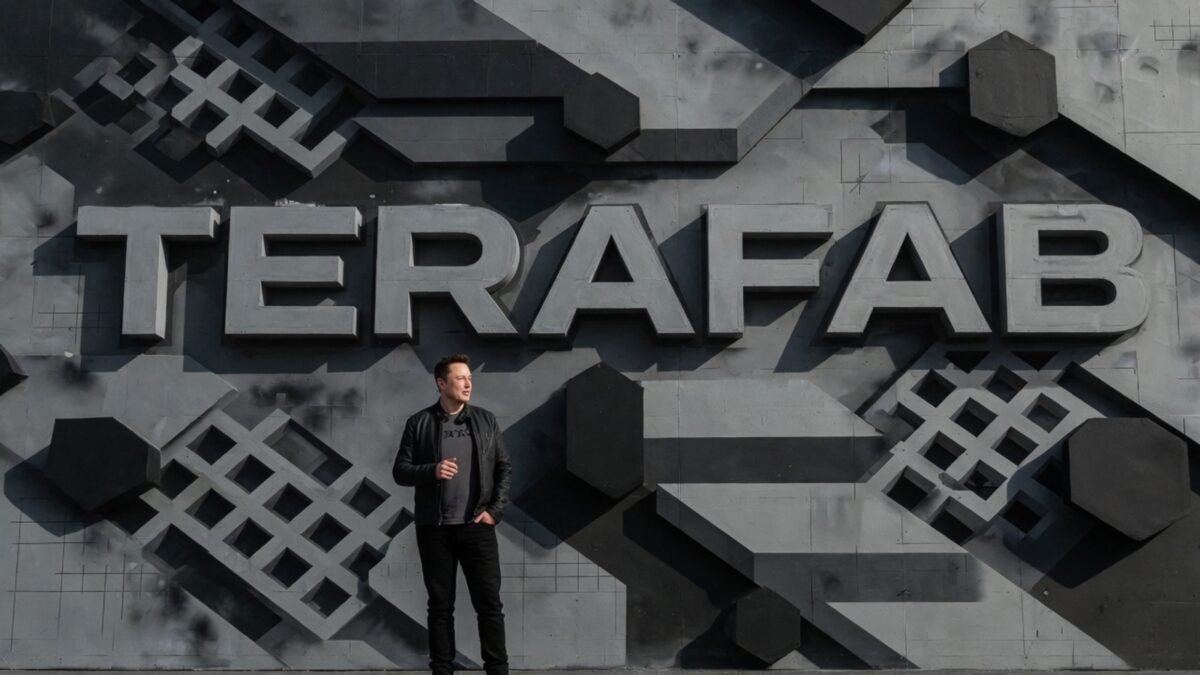
Tesla’s planned Terafab semiconductor plant is being pitched as far more than another chip factory. If the latest details hold, the site could begin small AI5 chip runs in 2026, ramp to large-scale production in 2028, and eventually crank out a scale of specialized processors that sounds less like a fab and more like a dare.
Elon Musk reposted the new information, which frames Terafab as a vertically integrated machine: design, manufacturing, and testing under one roof, with the plant improving itself as it goes. That setup is familiar in consumer electronics, but rare in cutting-edge semiconductors, where supply chains are usually fragmented and painfully slow to change. Tesla appears to be betting that its AI hardware needs are big enough to justify doing it the hard way – then doing it even bigger.
AI5 production starts small, then scales fast
The early plan is modest by semiconductor standards: first small batches of AI5 chips in 2026, followed by mass production in 2028. The long-range target is eye-catching, though – 100 billion to 200 billion specialized chips a year by 2028-2029, which the source says would be 50 times current global AI compute capacity. If that sounds inflated, well, so did many Tesla timelines before they stopped being just timelines.
- First small AI5 batches: 2026
- Large-scale production: 2028
- Annual output target: 100 billion to 200 billion chips by 2028-2029
- Starting capacity: 100,000 wafers per month
- Planned capacity after ramp: 1 million wafers per month
Orbital data centers get 80% of the output
The most unusual part of the plan is not the volume, but the destination. Tesla reportedly wants 80% of Terafab’s output in radiation-resistant form for orbital data centers powered by solar energy. The remaining 20% would go to AI5 and AI6 processors for Tesla vehicles and Optimus robots. That split suggests Musk is still thinking in systems, not products: chips for cars, chips for robots, chips for space, all feeding the same in-house hardware stack.
There’s a reason rivals such as Nvidia, AMD, and Intel keep investing in foundry partnerships rather than building everything themselves. Semiconductor manufacturing is brutally capital-intensive, and even one missed generation can wreck a roadmap. Tesla’s pitch is that its own demand curve is strange enough – and large enough – to support a fab that behaves more like an internal utility than a normal supplier.
AI5, AI6 and the Tesla hardware stack
AI5 and AI6 are the processors named for Tesla’s next generation of hardware ambitions, spanning vehicles and humanoid robots. The logic is straightforward: if Tesla controls the chips, it can tune the software, the training pipeline, and the hardware together instead of waiting on outside vendors. The harder part is execution, because turning a promised fab into a steady chip machine is where optimism usually meets yield rates.
Still, the headline number is the point. Tesla is not signaling a cautious entry into semiconductors; it is floating an industrial-scale bet that could reshape how the company builds AI hardware if the ramp works. The real question now is whether Terafab becomes a strategic moat, or just the most expensive way to discover how difficult chipmaking really is.