

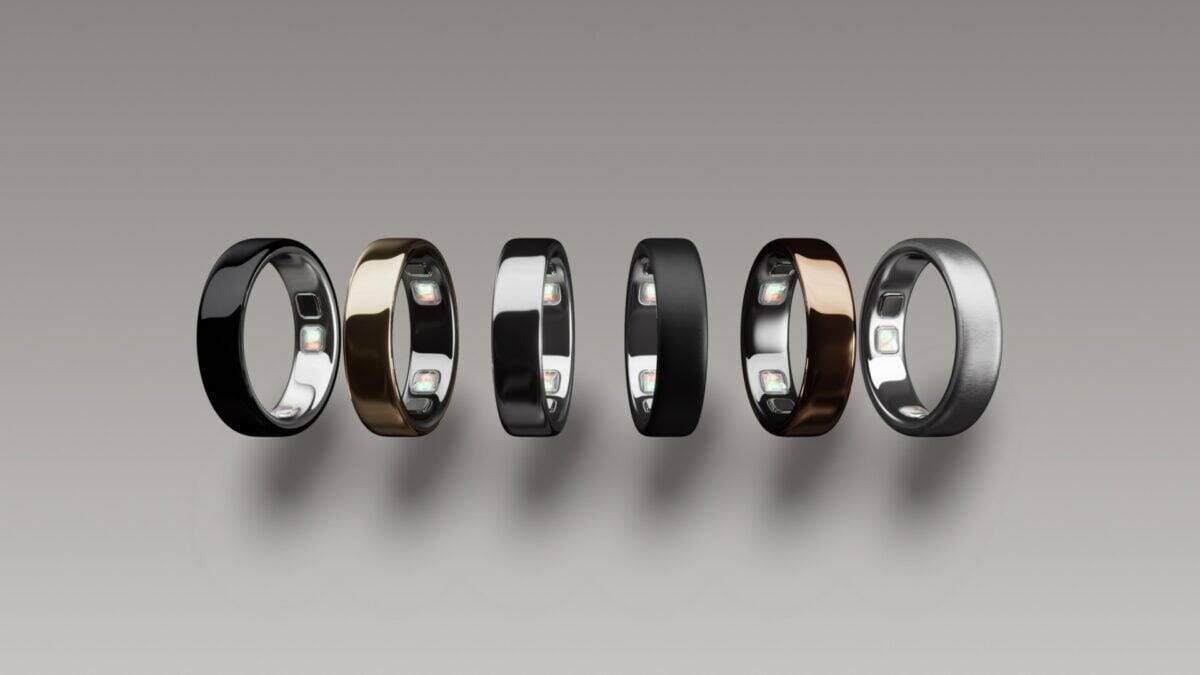
The first AI wearable to win over consumers probably won’t try to be a ”companion” at all. After the backlash to Friend’s AI pendant and the collapse of Humane’s AI Pin, the next useful form factor looks a lot more ordinary: a health tool, a fitness coach, or a slightly nosy ring.
That shift matters because the idea of a constantly chatting gadget was always a hard sell. People may like using chatbots for advice in private, but wearing one in public is another story. The lesson for hardware makers is simple: if the device looks like a social experiment, the market will treat it like one.
Oura Ring 5 leans into health, not friendship
Oura’s new Ring 5, available for preorder today and starting at $399, comes with Oura Adviser, an AI assistant the company first showed last year. The ring is still about sleep tracking, but the pitch is wider now: personalized fitness guidance, health coaching, and recommendations that can be paired with input from human medical professionals through the Oura app.
That is a smarter bet than trying to sell an always-on digital buddy. Wearables succeed when they feel useful, discreet, and slightly boring. Ask people to wear a therapist on their chest and you get a PR problem; ask them to wear a recovery tracker on their finger and you might have a business.
Google and OpenAI are chasing health use cases
Google’s Fitbit Air is making a similar move, pairing the device with a customizable, LLM-powered assistant called Health Coach and a new Google Health app that has not exactly had a dream start. Fitbit has long lived in the wellness lane, and Google’s challenge is less about inventing the category than making its AI layer feel genuinely helpful instead of decorative.
Big AI players are taking the hint from chatbot behavior itself. Microsoft said health and fitness was the third most common prompt category for Copilot, behind technology and work and career, and introduced Copilot Health in March. OpenAI later followed a similar trail after data reported by Axios showed 40 million people around the world were using ChatGPT for medical advice.
- Oura Ring 5: preorder today, starting at $399.
- Fitbit Air: includes Health Coach and Google Health.
- Meta Ray-Ban smart glasses: still the most visible AI wearable, with health features such as food tracking.
The real risk is trust, not hardware
The health angle is promising, but it comes with obvious problems. These systems collect deeply personal data, and users have every reason to ask who sees it, how long it is stored, and what else it gets used for. Add hallucinations to the mix, and a confident but wrong answer becomes more than annoying; in health, it can be actively dangerous.
That is why the next wave of AI wearables will probably be narrower and less theatrical than the first. The winner may not be a pendant at all, but a device that solves one specific problem well enough to justify being worn every day. The open question is whether consumers will accept that trade-off before the privacy backlash catches up again.