

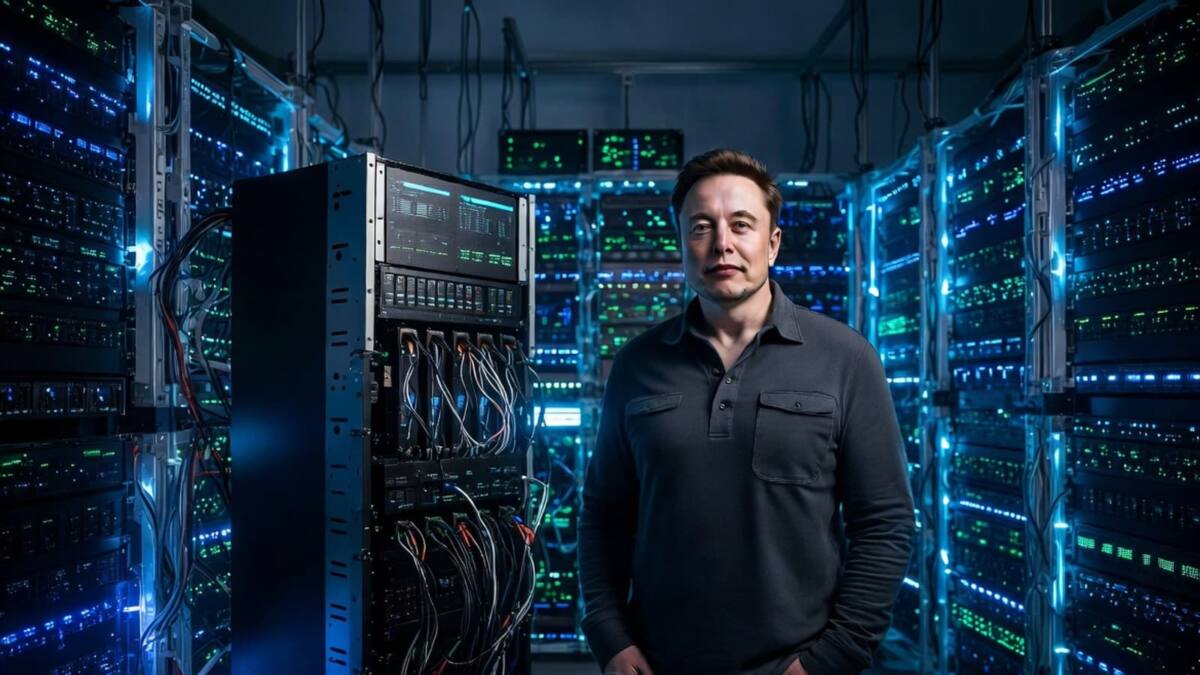
SpaceX has agreed to let Anthropic use clusters from its Colossus AI supercomputer for just 180 days, even though the arrangement could end up lasting much longer. Elon Musk says the short lease was his company’s idea, not Anthropic’s, and that the setup includes a 90-day mutual termination notice – a neat little reminder that even giant AI deals are sometimes written with one eye on the exit.
The Colossus lease comes as the broader AI compute race keeps getting tighter. Big AI labs are spending heavily to lock down access to scarce training power, and short contracts can be a way to stay flexible while still keeping the lights on. In practice, that flexibility is a rare luxury in a market where demand for advanced chips and data center capacity keeps outpacing supply.
What Musk said about the Colossus lease
Musk said SpaceX did not commit to a long multi-year rental of Colossus, though he allowed that such an extension could happen. He described the current deal as a half-year lease with a 90-day mutual termination window, and said the short term was SpaceX’s request.
That language matters. A six-month arrangement gives SpaceX the option to reclaim capacity if its own needs spike, while Anthropic gets access to one of the biggest AI systems around without betting everything on a single long contract.
Colossus and Colossus II data center deal
The short lease sits alongside a much bigger agreement earlier this year: SpaceX signed up to pay Anthropic $1.25 billion a month for access to the Colossus and Colossus II data center clusters in Memphis, Tennessee, through May 2029. That scale puts the deal in the same orbit as the most aggressive AI infrastructure bets in the industry, where locking in compute can matter as much as model quality.
Neither SpaceX nor Anthropic responded to Reuters’ request for comment. That silence is familiar territory in AI infrastructure, where the headlines usually arrive long before the fine print does.
Why short leases are becoming more common
Short-term access can look odd until you remember how brutal the AI supply chain has become. Cloud giants and frontier AI companies are competing for the same chips, power, cooling, and data center space, and nobody wants to be stuck paying for capacity they can’t fully use. A flexible lease also gives the owner leverage: if demand surges, the hardware can be repriced, repurposed, or reserved for something more lucrative.
For now, SpaceX appears to have chosen optionality over certainty. The open question is whether this stays a six-month bridge or turns into a much longer marriage once both sides see how much compute they can actually spare.