

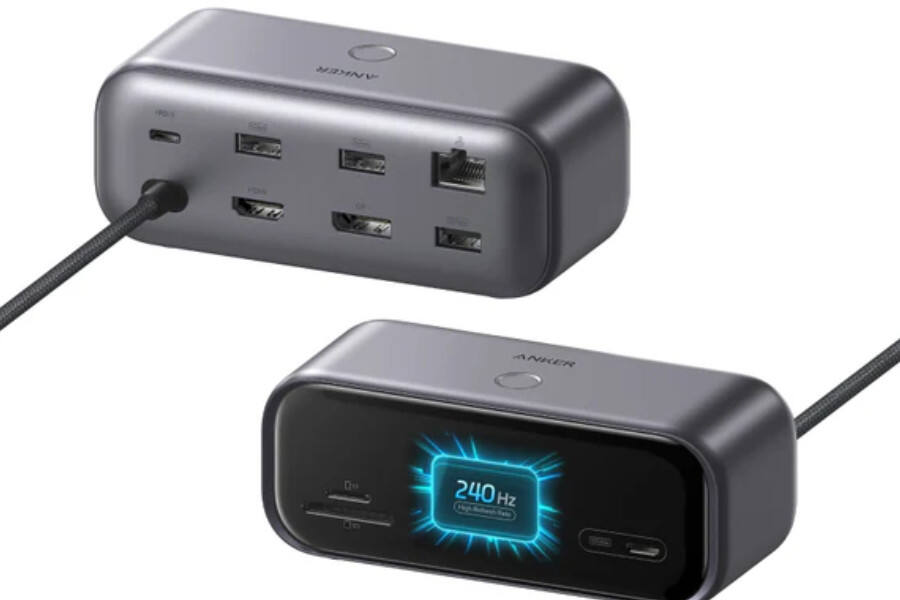
Anker has decided that a USB-C hub should do more than quietly sit there and shovel ports at your laptop. Its upcoming Nano USB-C Hub (10-in-1, 240Hz, Display) adds a built-in screen for live device stats, and that tiny panel is the whole point: instead of guessing what’s drawing power or passing data, you can see it at a glance. The catch is that this novelty-first USB-C hub is headed for Japan in fall 2026, with a price of ¥16,990, or roughly $110.
The spec sheet is more serious than the branding. You get a single USB-C connection to the computer, then 10 ports spread across the body, including SD and microSD slots, a USB-C data port rated at 10Gbps, three USB-A ports, HDMI 2.1, DisplayPort 1.4, Ethernet, and USB-C charging up to 100W. In other words, Anker is chasing the same crowd that buys high-end docks from CalDigit or Ugreen, but with a gimmick that is at least mildly useful instead of just shiny plastic.
Anker Nano USB-C Hub ports and display output
Here’s the quick version for people who care about the numbers more than the marketing:
- 1 USB-C data port up to 10Gbps
- 1 SD card slot
- 1 microSD card slot
- 1 USB-C charging port up to 100W
- 1 USB-A port at 10Gbps
- 2 USB-A ports at 5Gbps
- 1 HDMI 2.1 port
- 1 DisplayPort 1.4 output
- 1 Gigabit Ethernet port
Both video outputs can handle 4K at 144Hz, which puts this squarely in the ”dock for people with expensive monitors” category. That matters because many hubs still treat display output like an afterthought; Anker is clearly aiming at users who want a single box to drive a laptop, a monitor, storage cards, and a wired network without turning the desk into cable archaeology.
The 240Hz screen is the oddest part
The built-in display shows real-time usage data and can pair with a dedicated app for more detail. A 240Hz refresh rate on a status screen is wildly unnecessary, which is exactly why it stands out: no one needs buttery-smooth hub telemetry, but Anker knows a spec this absurd is easier to remember than ”compact docking solution.”
There’s also a reality check hidden in the dimensions. At about 130 × 56 × 50mm and around 300g, this is not a travel buddy. It is a desk dock wearing a ”Nano” badge that sounds more optimistic than accurate, though the silver and dark gray finishes should help it blend in next to the usual pile of laptop accessories.
A niche dock with a very loud hook
Anker is not the first company to add a screen to a dock or hub, but the company is taking the idea further by making the display part of the product’s identity rather than a footnote. That’s a smart move in a category where nearly every device promises the same thing: more ports, slightly better thermals, and another reason to buy one more cable.
The bigger question is whether the screen becomes a genuinely useful dashboard or just a conversation starter. If Anker can make the app good and the usage readouts actually helpful, this could be the rare USB-C hub that earns a spot on a desk for reasons beyond port count. If not, it’s still a very competent dock with a gimmick polished enough to distract people for a while.