

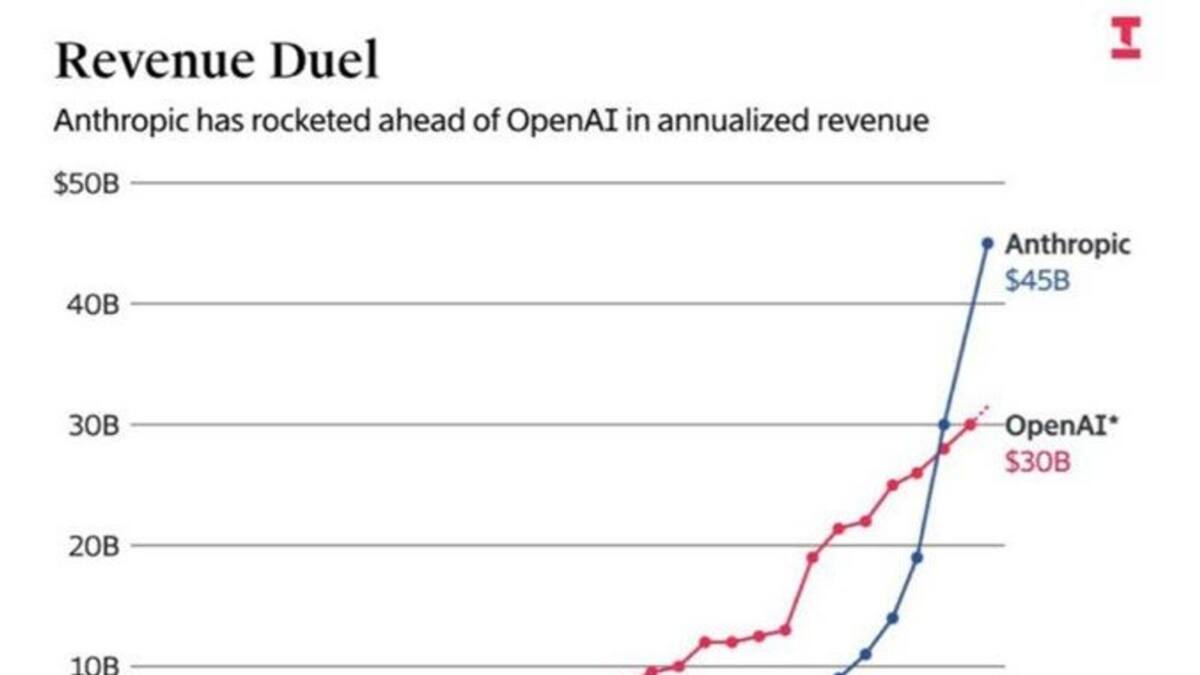
Anthropic has pulled ahead of OpenAI on annual revenue, a sharp reversal that could reshape how investors value the two AI heavyweights as they head toward planned IPOs. According to The Information, the Claude maker is now generating at least 35% more revenue on an annualized basis, despite OpenAI having led by nearly one billion dollars in the first quarter of 2026.
That swing is more than a bragging-rights stat. In a market where growth, not profitability, still does most of the talking, annual revenue momentum tends to set the tone for public-market expectations. And if one company is still accelerating while the other is starting to cool, the gap can widen fast.
How Anthropic reversed the revenue gap
The turnaround appears to have happened in just a few months. OpenAI was ahead in the first quarter of 2026, but Anthropic’s higher growth rate has since pushed it into the lead, at least on the annualized numbers reported by The Information.
That kind of change is exactly what investors watch in the AI race: not just who has the biggest model, but who can turn enterprise demand into durable revenue. Anthropic has leaned hard into paid usage and business adoption, while OpenAI has been juggling product expansion, massive infrastructure needs, and a consumer brand that brings scale but can also slow monetization discipline.
What the revenue lead could mean for OpenAI and Anthropic IPO pricing
The stakes rise because both companies are expected to move toward IPOs. If Anthropic keeps outpacing OpenAI, that could force a rethink of OpenAI’s eventual market debut, especially if public investors decide revenue growth is the cleaner story.
There is precedent here. In tech offerings, the company with the simplest growth narrative often gets the easier reception, even when the other has more brand recognition. That is the awkward little truth of public markets: they reward the company that can explain its momentum without too much hand-waving.
The AI race is becoming a revenue race
For now, Anthropic’s lead is a reminder that the AI market is still fluid. The winner is not always the loudest name; sometimes it is the one quietly converting usage into cash faster than its rival can add users.
The next question is whether OpenAI can re-accelerate before either company reaches the public market, or whether Anthropic’s revenue edge becomes the first real signal that the center of gravity in commercial AI is moving somewhere else.