

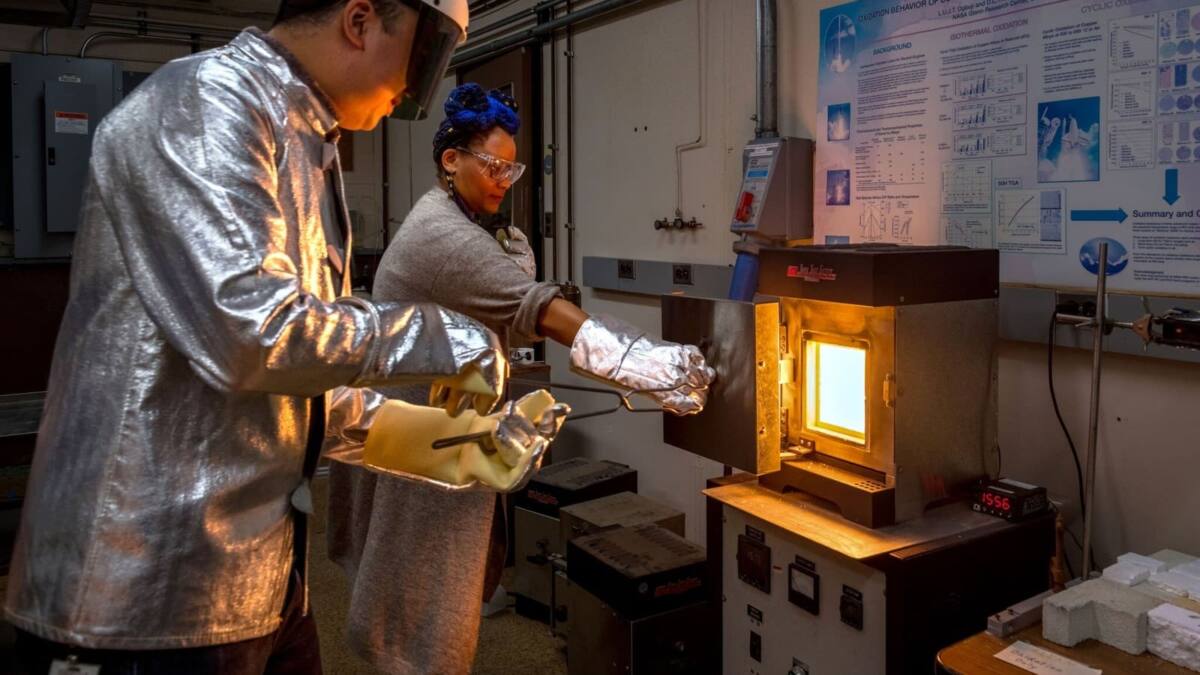
NASA researchers in Cleveland say they have created a new material that can survive extreme heat and hold up when exposed to molten lunar dust, a problem that has long sat between lunar ambition and practical engineering. The scandium oxide-based composition could help future missions process Moon rocks for oxygen and metals on-site, while also pointing to lighter high-temperature coatings for aircraft and spacecraft.
The timing is useful: everyone wants a cheaper way to build off Earth, but lunar regolith turns nasty when it melts, and most materials hate that. NASA’s pitch is straightforward – solve the material problem first, and the rest of the Moon economy becomes less fantasy, more plumbing.
How NASA made the scandium oxide material
The work was led by Kevin Yu from NASA JPL and Jamesa Stokes from NASA Glenn. The team mixed scandium oxide with a material designed to imitate lunar regolith, then heated it above 1,600 °C. That combination produced a substance that does not appear in known databases and behaves differently from standard heat-resistant compounds.
NASA says the material resists corrosion in molten rock, stays strong at temperatures far beyond what household ovens can handle, and is lighter and more efficient than current heat-proof coatings. It is also much cheaper than platinum, which has been a traditional option for some high-temperature applications. That cost angle matters: a lunar outpost built on precious metals would be a very expensive joke.
What NASA wants to build with it
The agency is looking at the new compound as a candidate for pipes and containers used to melt lunar material and extract oxygen and metals. It could also be used as a coating for parts in aviation and space engines that face punishing thermal loads. In other words, the same material might help with Moon mining and with the less glamorous but essential business of keeping hardware alive.
- Base material: scandium oxide
- Test temperature: above 1,600 °C
- Behavior: resists corrosion in molten lunar-like material
- Potential uses: lunar processing equipment, aircraft and space engine coatings
A color change that shows the reaction is working
There is even a built-in visual cue during synthesis: the powder changes from pink to beige when the reaction is progressing properly. NASA plans to keep refining the process so the material becomes purer and better suited to large-scale production. That is the real test now – not whether the chemistry works in a lab, but whether it can be manufactured without turning lunar logistics into a boutique science project.
If that happens, the payoff goes beyond the Moon. Materials designed for brutal space conditions often end up useful on Earth, too, especially in aerospace and energy systems where heat and corrosion keep ruining expensive things. The next question is whether NASA can turn an unusual lab result into something repeatable enough for hardware that actually flies.