

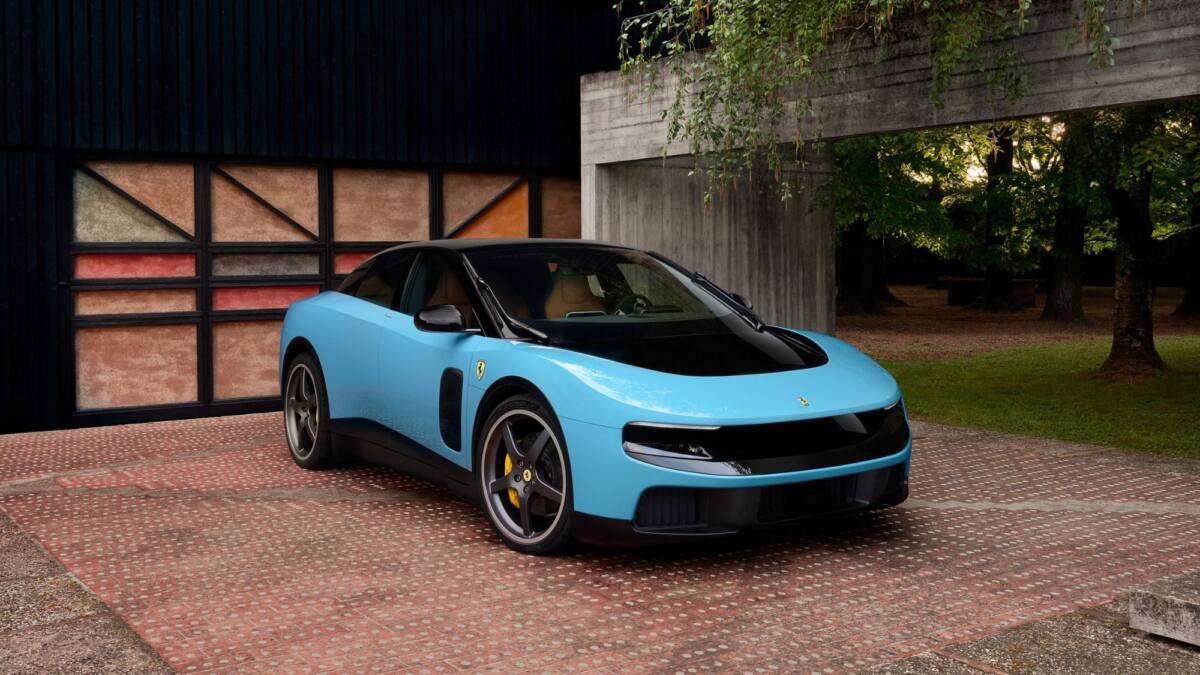
Ferrari’s first all-electric car may be the most polarizing thing the brand has unveiled in a while, but the Luce’s cabin is the part that actually feels fresh. Samsung Display is supplying four OLED panels for the interior, and the driver’s display in particular is doing something far more interesting than just showing speed: it mixes stacked screens, mechanical hands, and cutouts in a way that makes the dashboard feel half digital, half old-school instrument cluster.
That matters because EV interiors often default to giant glass slabs and not much personality. Ferrari and Samsung are trying the opposite here, using display tech to fake a mechanical drama that most cars lost years ago. It is a neat bit of theatre, and, unlike a lot of concept-car nonsense, this one is apparently real enough to work.
A Ferrari dashboard with two OLED layers
The driver’s binnacle is the star: a 12-inch OLED panel sits below a 12.9-inch OLED panel, with three circular cutouts in the upper layer. Physical hands move through the gap between them, so the display reads as digital while still behaving like an analogue cluster. It is an unusual setup, and it sounds like the sort of thing someone would sketch at 2 a.m. and then never manage to build.
Ferrari also uses a 10.1-inch central display with mechanical hands rotating through tiny cutouts, plus a 6.3-inch rear screen for climate controls and driving information. The secondary display even keeps physical buttons for fan speed, temperature, and seat heating, which is refreshingly sensible in a world where some automakers seem determined to make every adjustment a touchscreen treasure hunt.
How Samsung kept the OLED cutouts clean
Making large holes in an active display area without trashing the image is the hard part. In the Luce’s binnacle, the opening is around 100 mm across, roughly 20 times larger than the tiny front-camera cutout found on smartphones, which makes signal routing far more difficult. Samsung says its HIAA, or Hole in Active Area, technology solves that by optimizing each signal design individually so the image stays uniform and stable across the panel.
- Driver’s display: 12-inch OLED plus 12.9-inch OLED
- Center display: 10.1-inch panel
- Rear passenger screen: 6.3-inch display
- Display trick: mechanical hands visible through cutouts
That approach also points to where premium car interiors are heading next. Tesla pushed the industry toward minimalism, Mercedes and BMW kept layering on bigger screens, and now Ferrari is using display engineering to make a screen look less like a tablet bolted to a dashboard and more like a proper piece of design.
Ferrari’s EV gamble starts with the cabin
The Luce is Ferrari’s first fully electric production car, which is a much bigger deal than the interior tech alone. The company spent years insisting that sound and emotion were core to the brand, so its move into EVs was always going to be judged harshly by enthusiasts. If the exterior styling divides opinion, the cabin is the part that gives the car a genuine point of difference.
The question now is whether Ferrari can keep that sense of occasion once the novelty wears off. If this dashboard is a preview of how premium EVs will compete, the next battleground won’t just be battery range or charging speed – it will be who can make a screen feel like something you actually want to sit behind.