

Google unveiled its biggest search update in 25 years at I/O 2026, introducing AI that understands intent, processes images and video, and even creates mini interactive apps. Meanwhile, GitHub suffered a major breach with 3,800 internal repos leaked, and Fortnite made a global comeback to the Apple App Store after a three-year absence. Here’s the essential tech news from the week, covering Google’s AI advances, SpaceX’s launch scrubs, controversial VPN billing delays in Russia, and more.
Google I/O 2026 unveils smarter search features and Gemini AI agent
Google’s I/O 2026 keynote introduced sweeping updates to its core search experience, which the company touts as the largest overhaul in 25 years. The search bar now predicts user intent and accepts inputs like images, videos, and open Chrome tabs. Instead of just textual answers, it can generate interactive mini-apps tailored to specific queries.
Alongside this, Google launched Universal Cart, an AI-powered shopping assistant built on Gemini that consolidates your shopping carts across stores, tracks prices, discounts, and stock availability, debuting this summer in the US.
The centerpiece is Gemini Spark – a personal AI agent that works 24/7, even with your laptop lid closed. It integrates deeply with Gmail, Docs, Sheets, Slides, and third-party services to autonomously handle tasks. Gemini Spark opens to testers this week, then enters public beta in the US next week for AI Ultra subscribers.
Google also rolled out new AI models: Gemini 3.5 Flash is now the default in AI search mode, while Omni Flash offers video editing via voice commands, preserving the scene’s physical continuity and character consistency across edits.
Smart glasses received a double rollout: Google and Samsung are collaborating on Android XR-powered glasses with Gemini AI in two models-one with a display, one without; both have cameras, microphones, and speakers. The display-less model launches this fall, though pricing and names remain undisclosed. Separately, Google and Xreal previewed Project Aura, Android XR glasses slated for release by the end of 2026, with design input from Gentle Monster and Warby Parker.
Other Google updates include Android 17’s new Android Halo-a status bar showing active AI agents. AI Studio now supports building native Android apps in Kotlin via natural language and direct publishing to Google Play. Google Photos adds voice-controlled image editing features. The AI Ultra subscription price dropped from $250 to $200, with a new $100 tier offering limited usage.
SpaceX aborts Starship V3 launch seconds before liftoff
SpaceX’s first launch attempt of Starship V3 on May 21 was aborted repeatedly at T-40 seconds due to a mechanical arm on the launch tower that secures the rocket at launch and is designed to catch it on return.
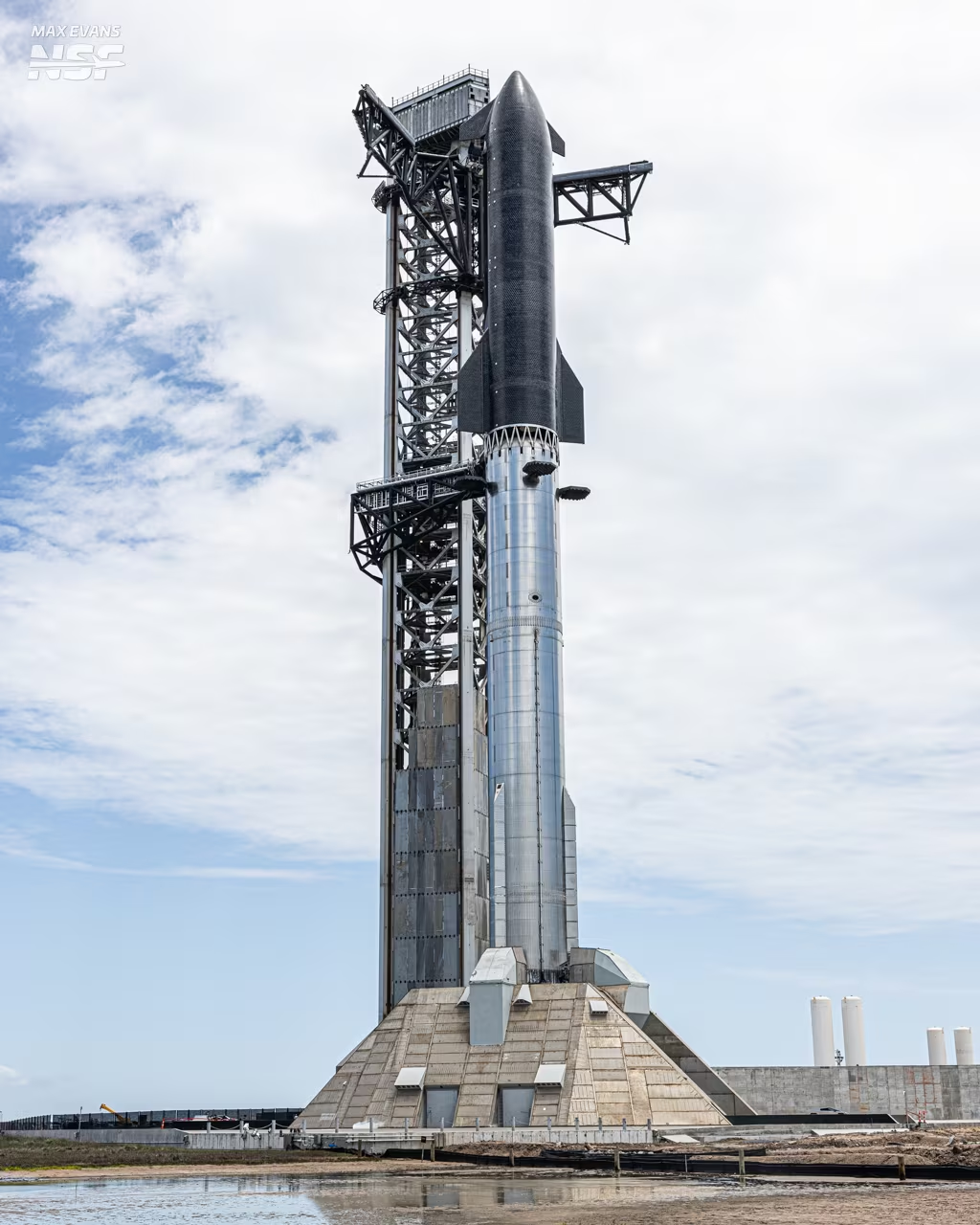
Despite the aborted launch, SpaceX completed a ”wet dress rehearsal,” fully fueling the rocket and running through launch procedures on new hardware and infrastructure. The next launch attempt is scheduled for May 23 at 01:00 Moscow time, with a 90-minute launch window. Starship is critical for SpaceX’s Starlink satellite deployments, NASA lunar missions, and its planned IPO.
Russia delays new VPN and international traffic fees until autumn
Russia postponed the rollout of mandatory fees for VPN and international internet traffic exceeding 15GB per month, originally planned for June 1, to autumn. Further delays are possible following parliamentary elections.

The challenge lies in defining what counts as international traffic. Services like Google, content delivery networks, corporate VPNs, and distributed platforms complicate this. Encrypted protocols such as TLS 1.3 and QUIC make deep packet inspection nearly impossible. Many platforms maintain local Russian infrastructure, blurring domestic and international traffic boundaries. Revising billing and customer systems to comply could take months and risk incorrect fines.
GitHub leak exposes 3,800 internal repositories via malicious VS Code plugin
A GitHub employee installed a compromised Visual Studio Code extension, allowing a hacker group called TeamPCP to steal approximately 3,800 internal company repositories. The stolen archive is listed for sale on Breached with a minimum asking price of $50,000 and a threat to release the data publicly if not paid.
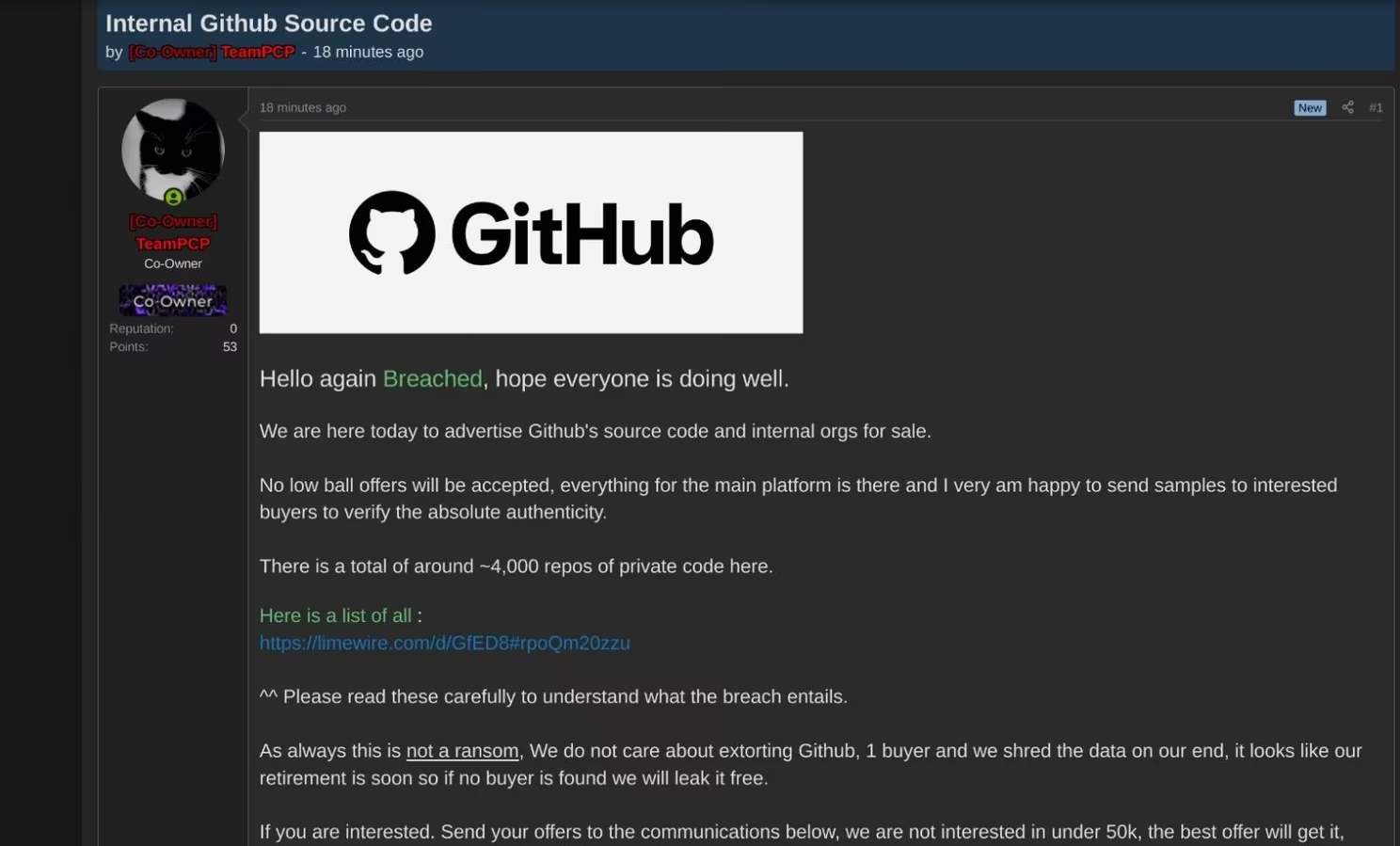
GitHub confirmed no user data was compromised, removed the malicious plugin from its Marketplace, and quarantined the affected employee’s device. The internal repositories include build tools, service libraries, and test infrastructures that indirectly impact millions of users. TeamPCP has previously targeted open source registries like PyPI, npm, and Docker, indicating a targeted effort to exploit software supply chain vulnerabilities.
Fortnite returns to Apple App Store worldwide after three years
Epic Games announced Fortnite’s return to Apple’s App Store globally, marking the first time since its removal in 2023. The ban followed Epic integrating its own payment system to bypass Apple’s up-to-30% commission fees.
Epic credits regulatory pressure from the EU, Japan, and UK for forcing Apple to ease third-party payment restrictions and allow alternative app stores. Google had made similar concessions, enabling Fortnite to return to Google Play worldwide. Epic continues its legal battle against Apple’s app monopoly while ramping up its own Epic Games Store for mobile platforms.
Dreame launches slim magnetic power bank with Qi2 charging and silicon anode
Dreame’s Air Power 17 is thinner than most rivals-8 mm for the 5000 mAh version and 12.8 mm for the 10,000 mAh model. It features an aluminum chassis, 15W Qi2 wireless charging, and a silicon anode that boosts energy density without increasing thickness. When magnetically attached to an iPhone, the power bank’s charge status displays directly on the phone screen.
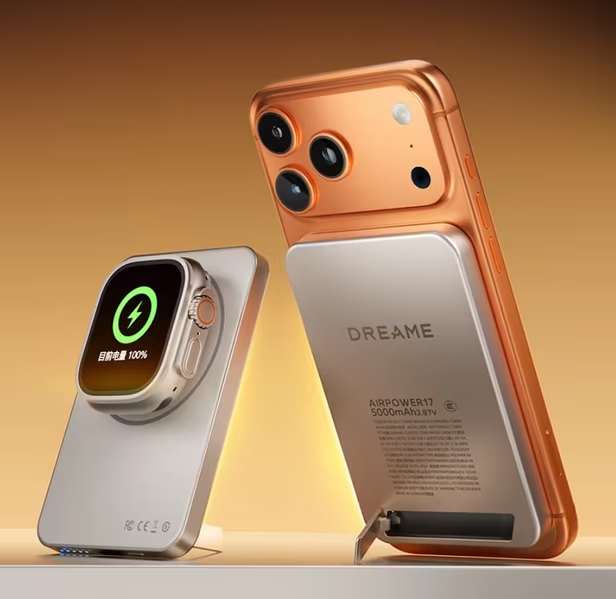
Silicon anodes face degradation issues over repeated charging cycles, so real longevity remains to be proven. Still, at a starting price of $30 (expected $39-49 globally for the smaller model), Dreame undercuts competitors like Anker, Ugreen, and Baseus, which offer similar Qi2 devices.
GTA VI release date confirmed for November 19, 2026
Take-Two announced GTA VI’s official launch date in its financial report, setting November 19, 2026, with no planned delays. Shares jumped roughly 7% as investors welcomed the firm commitment. A full-scale marketing campaign featuring the third trailer kicks off this summer.

The initial release targets PlayStation 5 and Xbox Series X|S only, with no PC version confirmed yet. Based on previous Rockstar launches like GTA V, a PC port is likely at least a year later. Take-Two projects $8-8.2 billion in revenues next fiscal year, with GTA VI as the growth driver.
Among these headlines, Google’s aggressive AI rollout and Gemini personal assistant mark a bold step toward fully integrated AI workflows on everyday devices. Fortnite’s re-entry into Apple’s ecosystem signals shifting dynamics in app store control. Meanwhile, security concerns with supply chain attacks on platforms like GitHub highlight ongoing vulnerabilities in software development. These developments are set to influence industry standards for AI integration, platform openness, and cybersecurity throughout 2026.