

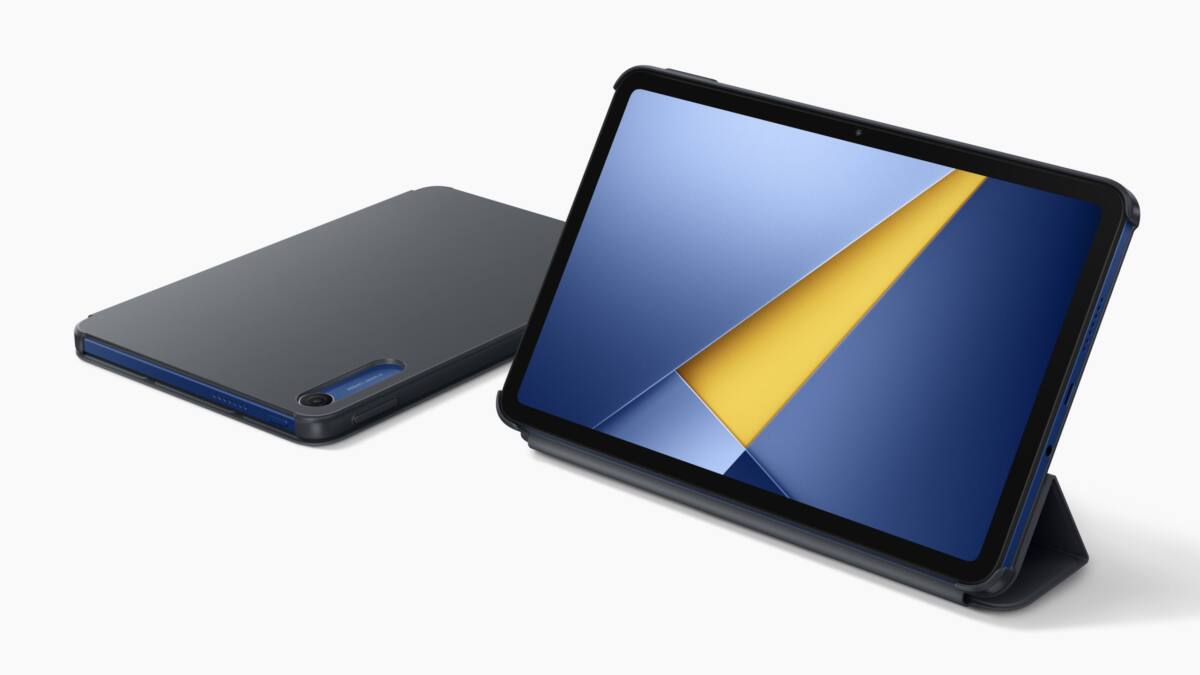
Xiaomi has officially added the POCO Pad C1 to its budget tablet family, and the surprise here is not that it exists, but how closely it tracks the Redmi Pad 2 9.7. The hardware looks familiar, the branding is more playful, and the formula is aimed squarely at people who want a cheap tablet for streaming, browsing, and the usual doomscrolling duties.
That is hardly a scandal. Xiaomi has long recycled solid midrange tablet hardware across brands, and it is a tactic that keeps costs down while giving each lineup its own identity. The POCO badge is doing exactly what the POCO badge usually does: making an otherwise sensible device feel a little less beige.
POCO Pad C1 display and design
The tablet’s front is dominated by a 9.7-inch 2K display with a 120Hz refresh rate and a peak brightness of 600 nits. Xiaomi has wrapped it in a slim metal unibody chassis, which is the kind of design language that makes budget tablets look more expensive than they are.
That screen spec is the real selling point. Competitors in this price tier often cut corners on refresh rate or brightness, so a 120Hz panel and 600 nits should help the POCO Pad C1 stand out if Xiaomi prices it aggressively enough. The catch, of course, is that this is still very much a value device, not a luxury slab for creative work.
Snapdragon 6s 4G Gen 2 and everyday performance
Under the hood, the tablet uses Qualcomm’s Snapdragon 6s 4G Gen 2 chip. That will not impress benchmark chasers, but it should be fine for the use case Xiaomi is clearly targeting: video, social apps, web tabs, and light multitasking.
- Chipset: Snapdragon 6s 4G Gen 2
- RAM: up to 6GB
- Storage: up to 128GB
- Expandable storage: up to 2TB via microSD
That microSD support is a smart bit of old-school practicality. A lot of rivals have been steadily stripping expansion options, so being able to push storage up to 2TB gives the POCO Pad C1 a useful advantage for offline movies, downloaded series, and other space-hungry habits.
Battery, cameras and software
Xiaomi has fitted a 7,600mAh battery, which sounds reassuring on paper, though charging is limited to 18W. That combination suggests endurance should be the better story than refill speed, and that is usually the right trade-off for an affordable tablet anyway.
For cameras, the POCO Pad C1 gets an 8MP rear camera and a 5MP front sensor. That is enough for the occasional document scan, video call, or classroom check-in, and not much more. On the software side, it ships with Xiaomi HyperOS 3 and includes AI features from Xiaomi and Google baked in.
Xiaomi has not shared regional pricing yet, so the real verdict will depend on where the tablet lands on store shelves. If it arrives cheap enough, the POCO Pad C1 could be one of those boring-looking devices that sells very well anyway.