

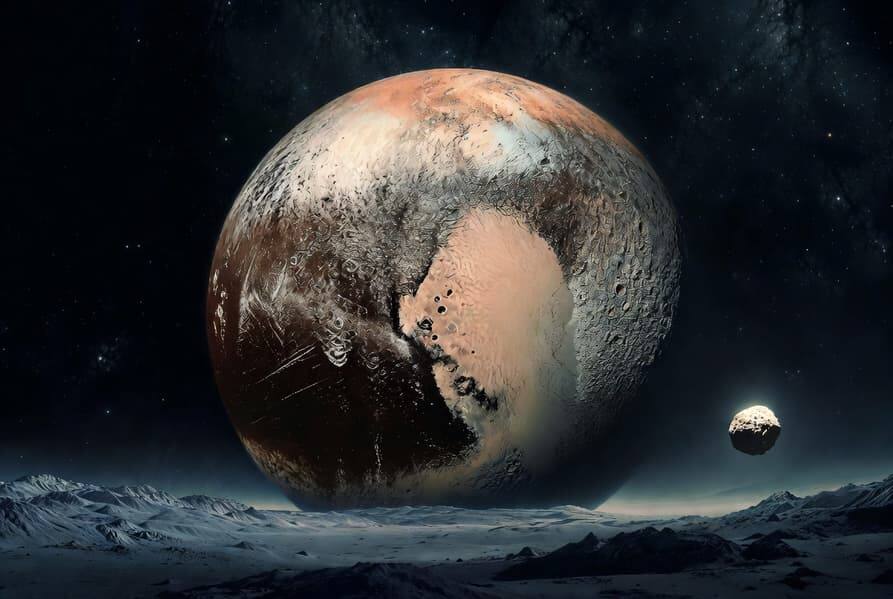
The James Webb Space Telescope has helped astronomers make a neat, slightly brutal cut through Neptune’s family tree: Nereid now appears to be the planet’s only original moon, while the rest of its small satellites likely arrived later. The finding, published in Science Advances, comes from a team led by Michael Brown of the California Institute of Technology and adds a sharper timeline to one of the Solar System’s messier moon systems.
That timeline centers on Triton, Neptune’s largest moon. Scientists think Triton was captured by Neptune’s gravity after forming far away, and that encounter probably scrambled the planet’s earlier moon lineup. If that is right, Nereid is the survivor that stayed close enough to avoid being flung out or smashed to pieces. For a system this remote, that is a rare bit of order.
Why Triton changed Neptune’s moon system
Triton is the odd one out: it moves backward and follows an unusual orbital tilt, which is exactly the sort of thing that makes dynamicists sit up straight. A capture event like that would have been violent enough to reshape Neptune’s neighborhood, and the new conclusion is that most of the small moons now seen there formed only after the dust settled. In other words, Neptune’s present moon roster is less a fossil record than a rebuilt archive.
That is also why Nereid matters more than its size suggests. The moon has long been seen as a clue to Neptune’s early history, but this study gives it a clearer role: not a later arrival, but a remnant from the planet’s original satellite system. The result fits a broader pattern astronomers have seen elsewhere, where giant-planet systems are repeatedly reshaped by capture, collision, and gravity doing what gravity does best – making a mess, then leaving one or two survivors to tell the story.
What Webb adds to the Neptune puzzle
Webb’s value here is not just that it can see faint things. It is that its infrared sensitivity helps researchers track faint moons and reconstruct how a planetary system evolved after a major disturbance. NASA, ESA, and CSA built the observatory for deep cosmic history, but it is increasingly useful for nearby forensic work too, from icy moons to ring systems and the aftermath of gravitational chaos.
- Nereid: identified as Neptune’s only original moon in the new study
- Triton: likely captured later, then reshaped the system’s moon population
- Science Advances: the journal where the research was published
The obvious next question is whether Neptune’s remaining small moons all share the same post-Triton origin story or whether some were picked up in separate episodes. Webb has already shown it can turn distant blur into usable evidence, so don’t be surprised if Neptune’s moon inventory gets another revision soon.