

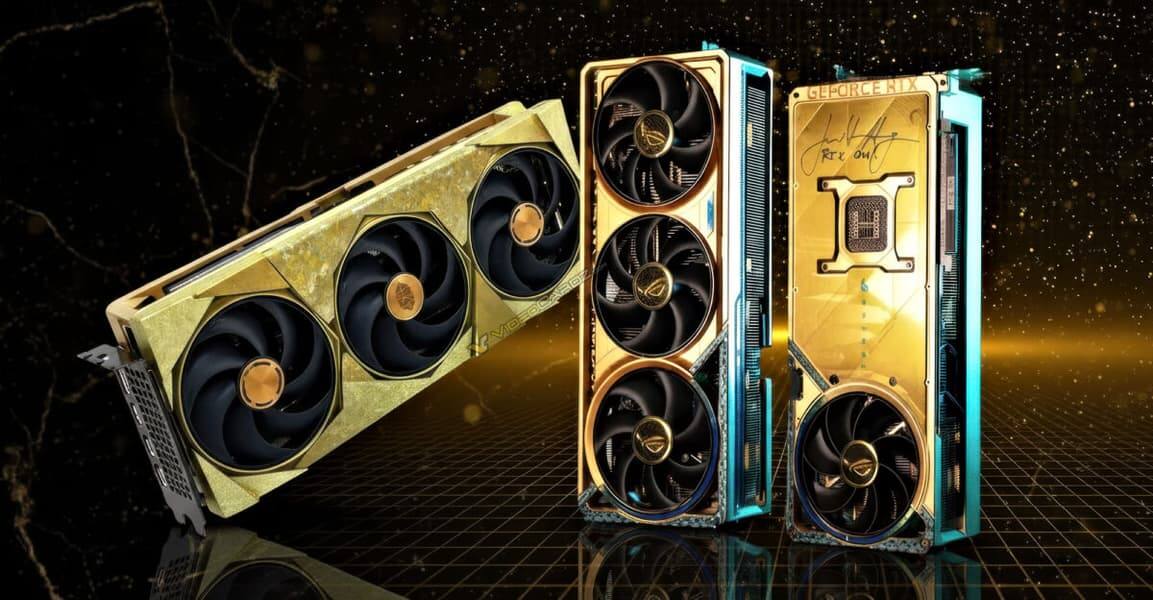
China has reportedly blocked import approval for Nvidia’s GeForce RTX 5090D v2, a gaming card built specifically to fit U.S. export limits and the Chinese market. That leaves Nvidia with a very awkward product: a trimmed-down flagship that still cannot get into the one place it was designed to sell, while the global RTX 5090 shortage keeps pushing prices higher elsewhere.
The rejection matters because RTX 5090D v2 was not some vanity refresh. It was the compromise version: 24 GB of GDDR7 on a 384-bit bus, with reduced AI compute, compared with 32 GB and a 512-bit bus on the standard RTX 5090. In other words, Nvidia already gave up performance headroom to satisfy export rules, and China appears to be saying that is still not enough.
Why RTX 5090D v2 was built in the first place
Nvidia created the card as a China-only answer to tightening U.S. restrictions on advanced chips. That sort of split-market engineering is becoming a familiar workaround in the GPU business, but it also shows how fragile the strategy is: if either Washington changes the rules or Beijing changes the welcome mat, the product becomes stranded fast.
The problem for Nvidia is that stranded is exactly where RTX 5090D v2 now looks headed. Unlike mainstream GeForce models, this one does not have a natural second home, so a blocked import channel leaves it with nowhere obvious to go. That is bad for any product; for a halo GPU, it is almost a joke in silicon form.
RTX 5090 pricing is already climbing elsewhere
The timing is especially awkward because the standard RTX 5090 is already getting harder to buy. Supply is tight and prices are rising globally, with some high-end models in South Korea jumping by roughly $300 to $400 in a day and reaching about $5300. That is the kind of pricing that turns a flagship GPU into a luxury item with fans.
- RTX 5090D v2: 24 GB GDDR7, 384-bit bus
- Standard RTX 5090: 32 GB, 512-bit bus
- Selected RTX 5090 cards in South Korea: about $5300
- Daily price increase in some cases: roughly $300 to $400
There is another twist here: China is also pushing its own gaming hardware, but the local alternative cited in the source is far from a direct answer. It has 12 GB of memory, sells for around the same as a GeForce RTX 5060 Ti, and still trails a GeForce RTX 3060 in performance. That is less ”national substitute” and more ”proof the gap is still wide.”
What Nvidia can do next
Nvidia now has an uncomfortable choice: keep trying to thread the needle with region-specific variants, or accept that the China market may not be reliably available for even watered-down top-end GPUs. The more likely outcome is more fragmentation, more paperwork, and more products that look clever on a slide deck but fail the simple test of actually reaching customers.