

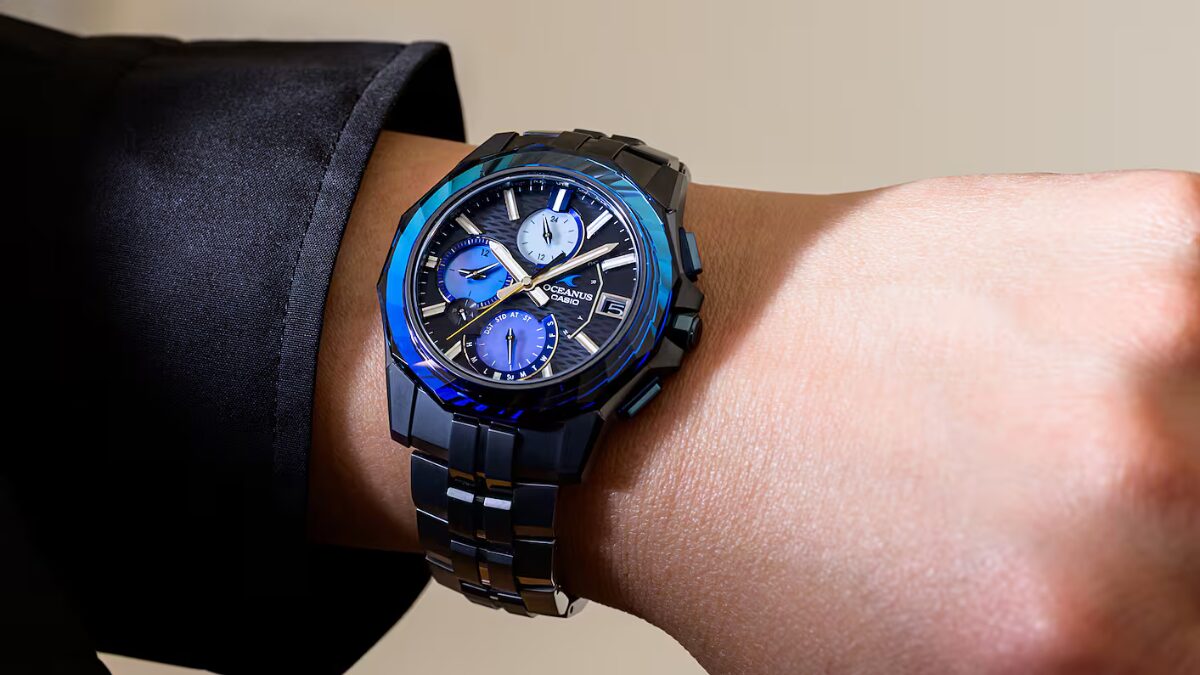
Casio is leaning hard into Japanese craft with three limited Casio Oceanus watches that swap generic luxury cues for Awa indigo, the traditional Tokushima dye that gives the lineup its deep blue character. The result is a very Casio mix of heritage styling, titanium hardware, and radio-sync tech – plus pricing that reminds you this is still the premium end of the brand, not a souvenir shop.
The three models are the OCW-S7000AP-1AJF, OCW-T2600AP-1AJF, and OCW-S6000AP-1AJR. The first two go on sale on May 22, 2026, while the S6000AP arrives on June 12, 2026. Casio is clearly using the Oceanus name to do what it does best: sell quiet, high-spec watches to people who want technical credibility with a little cultural storytelling on top.
Awa indigo and wave-inspired dials
Casio’s design pitch is built around contrast. The watches use Awa indigo for the sub-dials, with three shades of blue meant to echo the ocean as light changes across it. The OCW-S7000AP and OCW-T2600AP add a black main dial with wave-like patterning, while the OCW-S6000AP gets the flashiest treatment: a sapphire glass bezel with a spiral cut that stands in for breaking waves.
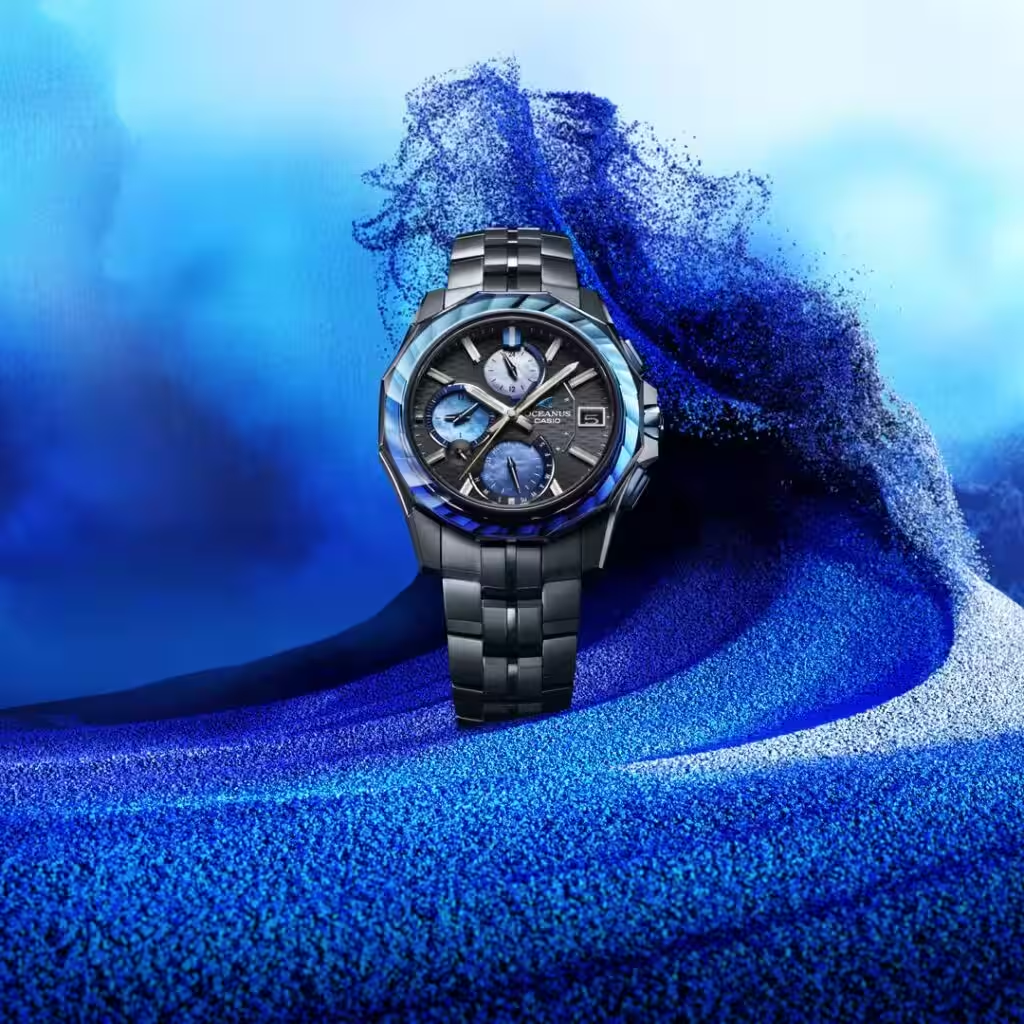
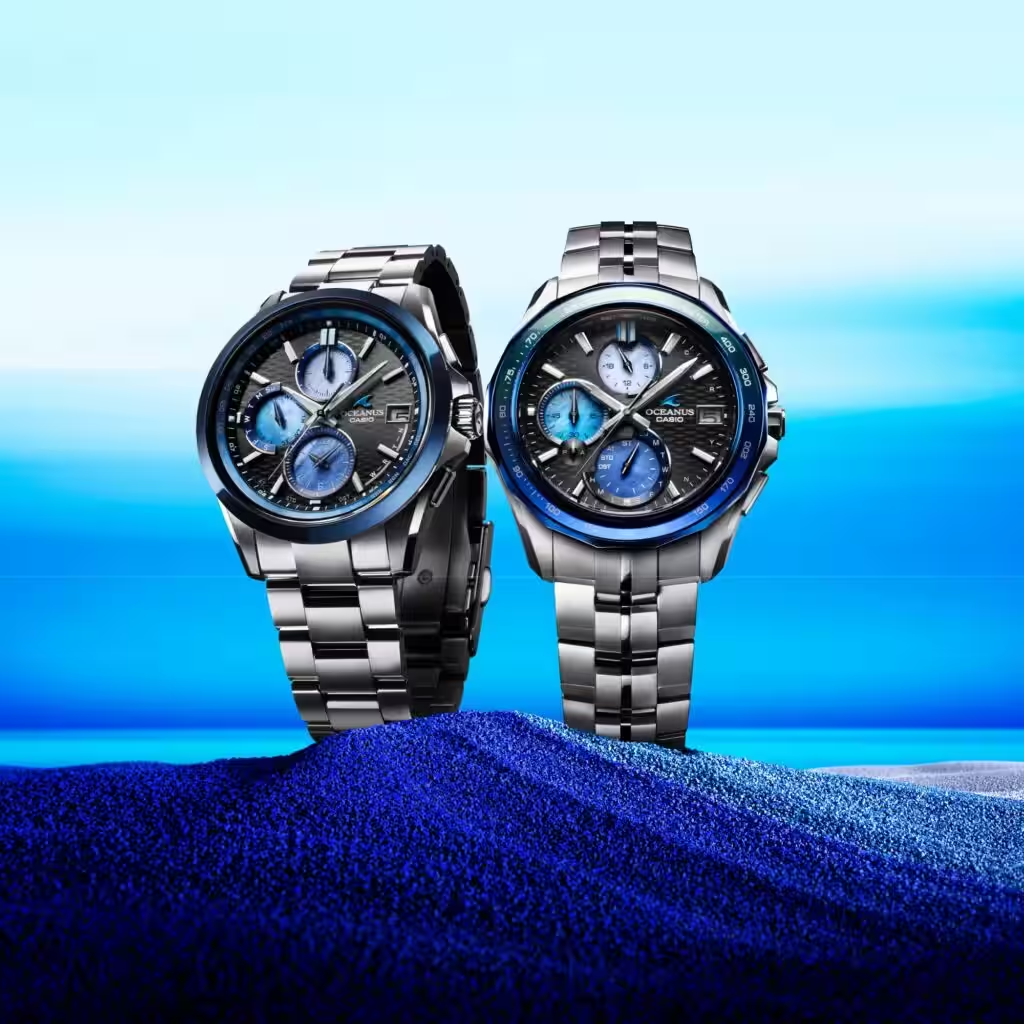
All three models also get navy ion-plated titanium cases and bezels to match the indigo theme. That sounds decorative, but it is also how Casio keeps the watches from drifting into costume territory. A premium watch needs a visual story; an expensive premium watch needs the story to survive a closer look.
Casio Oceanus features and hardware
Under the styling, Casio is sticking to the Oceanus formula: Tough Solar, Multi-Band 6, and Bluetooth connectivity through the Casio Watches app. The app handles automatic time adjustment, settings changes, and world time for more than 300 cities, which is exactly the sort of quietly overqualified feature set that has kept Casio relevant while some rivals chase app gimmicks.
- Tough Solar for solar-powered operation
- Multi-Band 6 for radio-controlled timekeeping across six global regions
- Bluetooth sync with the Casio Watches app
- World time for more than 300 cities
Casio also keeps the cases and bands in titanium, with Zaratsu polishing for a smoother finish and slim profiles ranging from 9.2 mm to 10.7 mm thick. That puts the watches in the sweet spot for buyers who want something more refined than a G-Shock but still unmistakably engineered rather than jeweled.
Prices, editions, and who gets left out
Scarcity is doing a lot of work here. The OCW-S7000AP is limited to 1,300 units and priced at ¥264,000 ($1,660), the OCW-T2600AP is capped at 800 units at ¥154,000 ($968), and the OCW-S6000AP sits at the top of the range at ¥495,000 ($3,111) with just 700 units available. Casio knows exactly what it is selling: not mass-market volume, but collector-grade differentiation with a strong national identity attached.
- OCW-S7000AP-1AJF: ¥264,000 ($1,660), limited to 1,300 units
- OCW-T2600AP-1AJF: ¥154,000 ($968), limited to 800 units
- OCW-S6000AP-1AJR: ¥495,000 ($3,111), limited to 700 units
The real question is how far that formula can stretch. Casio has been busy pairing Japanese motifs with its watches across different lines, and that makes sense: heritage sells, especially when the brand can back it up with actual materials and solid specs rather than a printed pattern and a press release. The Oceanus series, though, is where that idea becomes most convincing – and most expensive.
The safest bet is that the lower-priced OCW-T2600AP will move fastest, while the S6000AP plays the role of halo product for people who enjoy knowing their watch costs as much as a decent used scooter. Casio’s challenge is simple: keep these limited editions feeling special without turning Oceanus into a museum gift shop with a titanium supply chain.