

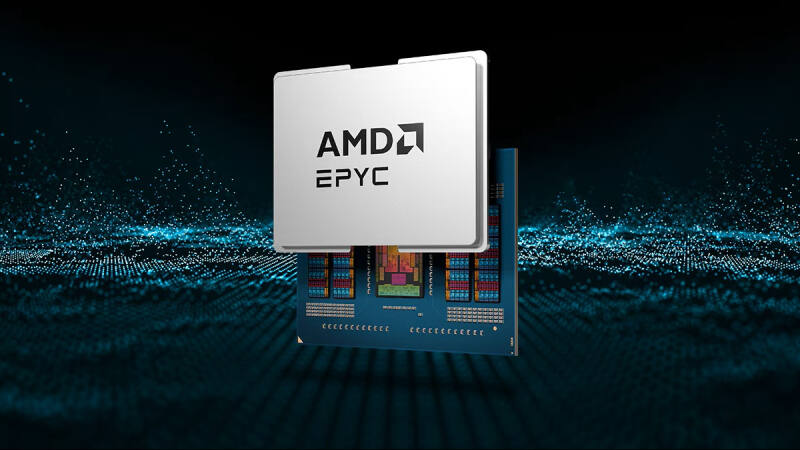
AMD has finally filled in the blanks on EPYC 8005, its Sorano family of server processors for telecom gear, cloud storage, and edge deployments. The headline number is hard to miss: the top chip packs 84 cores, and the lineup now looks like a direct shot at Intel’s Xeon 6 SoC range, while AMD also keeps NVIDIA’s Grace in the crosshairs.
The new AMD EPYC 8005 parts are built on Zen 5 and are meant to deliver high performance without blowing up power budgets or rack sizes. That combination matters in telecom, where operators want more throughput at the edge but rarely have the luxury of rethinking the entire box around it.
EPYC 8635P tops the lineup
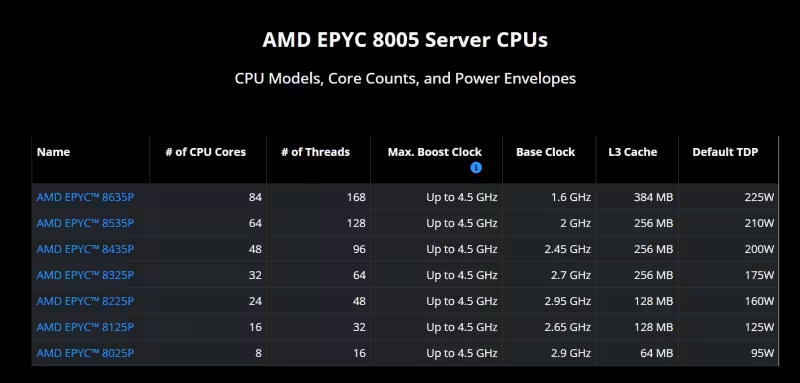
Leading the range is the EPYC 8635P, an 84-core, 168-thread processor with a 4.5 GHz boost clock, 1.6 GHz base clock, 384 MB of L3 cache, and a default TDP of 225 W. AMD also lists the 64-core EPYC 8535P, 48-core EPYC 8435P, 32-core EPYC 8325P, 24-core EPYC 8225P, 16-core EPYC 8125P, and 8-core EPYC 8025P.
- EPYC 8635P: 84 cores, 168 threads, 4.5 GHz boost, 384 MB L3, 225 W TDP
- EPYC 8535P: 64 cores
- EPYC 8435P: 48 cores
- EPYC 8325P: 32 cores
- EPYC 8225P: 24 cores
- EPYC 8125P: 16 cores
- EPYC 8025P: 8 cores
No PN models in EPYC 8005
One omission stands out: there are no PN variants in EPYC 8005, unlike EPYC 8004. That matters because PN was the version that fit NEBS-compliant systems, so telecom buyers hoping for a neat drop-in option will need to wait and see whether AMD adds one later or leaves that niche to the previous generation.
Phoronix notes that the new family gives server vendors a broad single-socket Zen 5 spread with TDPs from 70 W to 225 W. On paper, that puts AMD in a better position to chase both compact edge systems and beefier telecom boxes, while Intel leans on Xeon 6 SoC features such as vRAN Boost and built-in 100/200GbE connectivity to keep its own pitch sticky.
AMD EPYC 8005 targets telecom edge deployments
AMD announced EPYC 8005 in February, but the company only now has enough detail on the record to make the family look like more than a placeholder. In a market where telecom operators buy slowly and hate surprises even more, that kind of delay is almost as important as the silicon itself.
The next question is simple: will OEMs treat EPYC 8005 as a true telecom platform, or just another efficient single-socket server chip with a networking-friendly label? If AMD eventually adds NEBS-ready PN parts, the series gets a lot more interesting. If not, Intel’s and Arm’s incumbents will keep getting an easy sales pitch.