

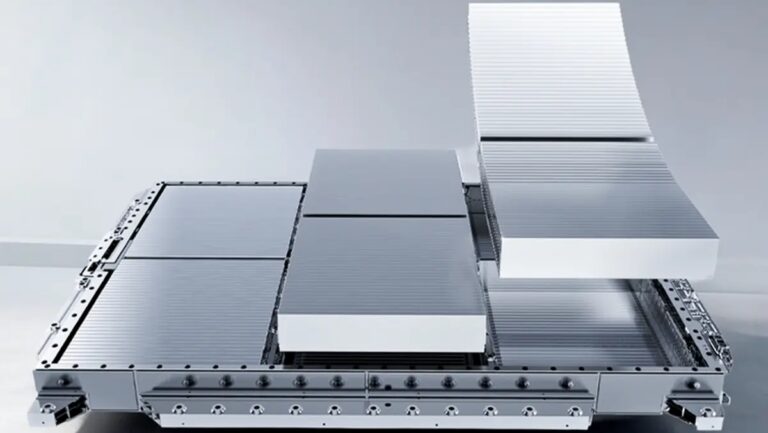
BYD is making a very bold claim about its second-generation Blade Battery: with a 1500 kW charger, it can go from 10% to 97% in nine minutes, and even at -30°C the same jump takes only three minutes longer. That kind of BYD Blade Battery fast charging speed is exactly the sort of thing battery skeptics love to hate, because high power usually means heat, wear, and a long list of caveats.
The company says those caveats do not apply here. Sun Huajun, BYD’s technical chief for its battery unit, argued that fears around overheating are stuck in the past, and that the Blade pack’s symmetrical layout and two-sided cooling help keep temperatures under control. BYD also says it has already run more than 1000 full fast-charge cycles and simulated punishing long-distance drives, including a trip from Hainan to Harbin, before moving toward mass production.
BYD Blade Battery fast charging: 1500 kW and a nine-minute sprint
The headline number is the one that will do the rounds: 10% to 97% in nine minutes. In a market where many fast-charging systems still trade speed for caution, BYD is pushing the opposite message – more power, less drama. That is a direct challenge to rivals building their own ultra-fast platforms, especially in China, where charging networks have become part hardware race, part public policy race.
BYD is backing the battery with a matching rollout of charging infrastructure. Its Flash Charge China strategy aims to build 20,000 fast-charging stations nationwide by the end of this year, and the company says 5,924 stations were already open as of 6 May.
That scale matters. A battery can only be as useful as the chargers that feed it, and BYD clearly knows it cannot win the fast-charge argument with chemistry alone.
BYD Blade Battery cooling and overheating fears
The hottest argument is not about battery temperature, at least not in BYD’s telling. Industry critics have warned that very high charging power could push cells past the 65-70°C range that many consider a practical safety line, with the SEI layer singled out as a possible weak point. BYD’s response is that this is yesterday’s thinking dressed up as caution.
- Charging speed: 10% to 97% in nine minutes
- Cold-weather performance: at -30°C, the same charge takes only three minutes longer than at room temperature
- Infrastructure target: 20,000 fast-charging stations by the end of this year
- Stations open as of 6 May: 5,924
That confidence is not accidental. BYD has spent years turning LFP batteries from the budget-friendly option into something it wants seen as the safe performance play. If the numbers hold up outside company-controlled testing, other EV makers will have to answer an uncomfortable question: why should fast charging still feel slow?
The real test is proving it outside the lab
For now, the burden of proof is still on BYD, because battery claims tend to look better in slides than in a winter commute. But if the company can deliver those charging times at scale while keeping heat and degradation under control, it will have something the market notices fast: a battery story that is about more than range numbers and optimistic marketing copy.