

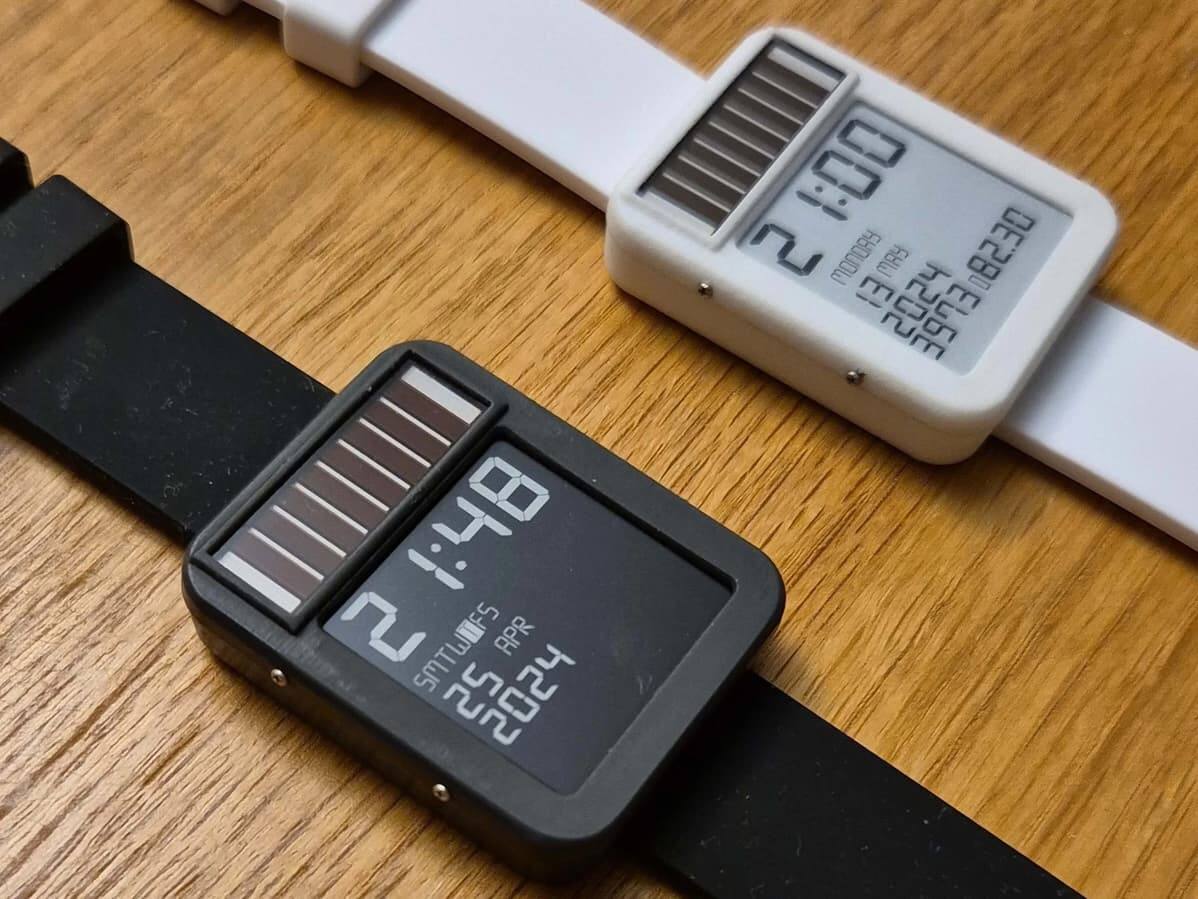
A DIY watch project called LightInk is making a bold promise: solar charging, GPS, LoRa connectivity, and up to 10 months of battery life from a 100 mAh cell. The catch is that you cannot just buy it, strap it on, and pretend you built it in a weekend. You have to assemble it yourself, which neatly filters out anyone who was hoping for a polished consumer gadget.
That open solar panel is the point. Unlike Garmin’s more discreet approach, LightInk puts the module in plain sight, turning charging hardware into part of the design instead of hiding it under the screen. It is a very maker-minded move: practical first, sleek second, and probably exactly the opposite of what most mainstream smartwatch buyers would want.
LightInk smart watch features
LightInk pairs an E Ink display with backlighting for dark environments, which fits the whole low-power story nicely. The watch also has a speaker, GPS, and LoRa for long-range communication, and it skips the accelerometer entirely to avoid wasting energy on features the designers clearly consider optional.
- Battery capacity: 100 mAh
- Claimed autonomy: up to 10 months
- Display: E Ink with backlight
- Connectivity: GPS and LoRa
- Extras: speaker
A DIY smart watch for builders, not shoppers
This is not a retail launch with a neat checkout button. The instructions call for ordering a PCB from the maker, using a 3D printer, and soldering the parts together, so the target audience is obvious: experienced hobbyists who enjoy the build almost as much as the result. The absence of a mobile app is another clue that LightInk is still very much a project, not a consumer ecosystem.
If the design holds up in real-world use, LightInk could appeal to a niche that mainstream smartwatch brands mostly ignore: people who value battery life, hackability, and long-range radio features over polished app stores and fitness theatrics. The bigger question is whether the same crowd will tolerate a watch that looks more like a prototype than a product.