

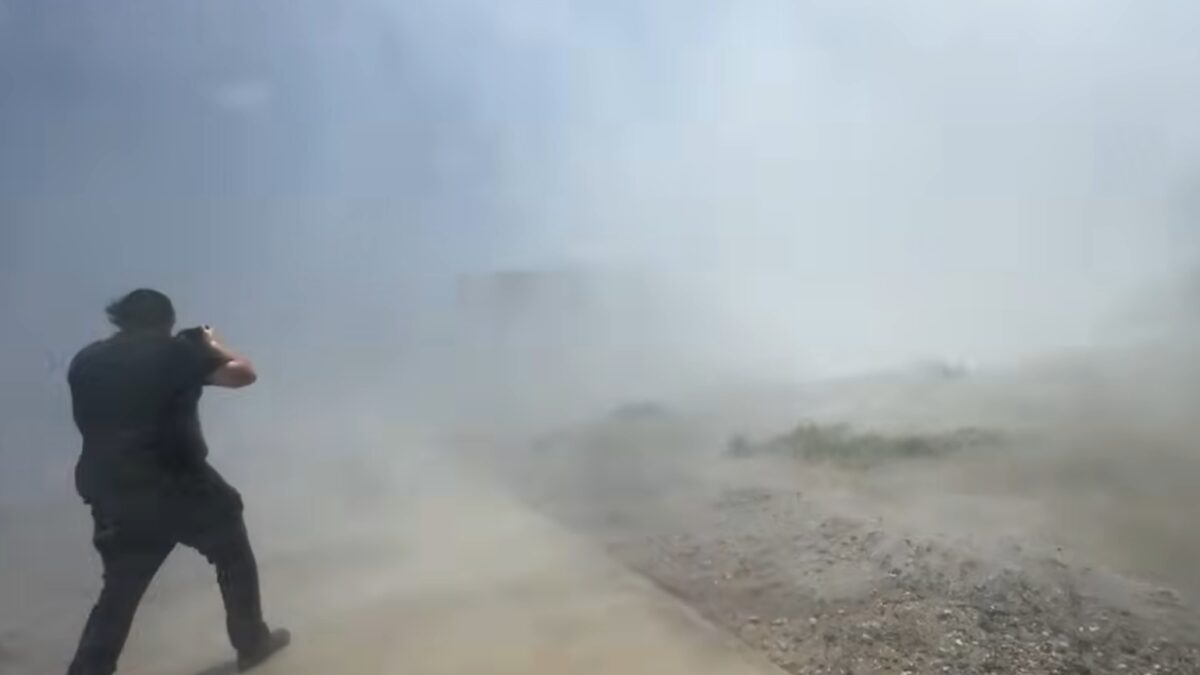
SpaceX’s Starship Pad 2 just produced one of those clips that looks fake until you remember rockets are absurdly loud. During water deluge tests at Pad 2, a Water Deluge System dumped torrents of water around the launch table, briefly turning the site into a white wall of spray as an operator stood uncomfortably close to the action.
The system is doing a very specific job: soaking the launch area seconds before liftoff so the acoustic shock, vibration, and pressure from 33 Raptor engines do not chew up the pad. Without that flood of water, the energy from Super Heavy’s ignition could hammer the launch table, the tower, and nearby infrastructure in a hurry.
Pad 2’s upgraded deluge system
NASA Spaceflight’s footage shows why launch teams bother with all the plumbing. The water cloud is so thick the person near the pad practically vanishes into it, which is a dramatic reminder that the real enemy here is not flame alone but sound and shock waves. SpaceX has been testing the system repeatedly in recent days as it tunes Pad 2 before Flight 12.
Pad 2 is said to have a more powerful version of the deluge setup than the first Starship launch site, which makes sense given the company’s habit of making each iteration a little less flimsy and a little more ambitious. That upgrade matters because Starship’s next flight is supposed to use Booster 19 and Ship 39, and the company clearly wants the pad to survive more than a polite handshake with 33 engines.
Flight 12 and the Raptor 3 debut
The next launch is expected on 20 May, and it will be the first Starship test featuring Raptor 3 engines. SpaceX says the new version has about 280 tonnes of thrust versus 230 for Raptor 2, plus higher efficiency, lower mass, and no external heat shield because the cooling systems are built in.
- Starship flight: Flight 12
- Booster: Booster 19
- Ship: Ship 39
- Launch date expected: 20 May
- Raptor 3 thrust: about 280 tonnes
- Raptor 2 thrust: 230 tonnes
SpaceX also claims Raptor 3 is roughly four times cheaper to manufacture and is designed for reuse on Starship V3. That is the real thread running through all this spectacle: the company is not just trying to launch a bigger rocket, but to make the ground system, engines, and hardware durable enough to withstand routine use rather than one heroic blast.
The wet dress rehearsal came first
Before this water-soaked pad test, Ship 39 already completed a wet dress rehearsal, meaning the vehicle went through full fueling and prelaunch steps without actually taking off. That is the boring-sounding part of rocket development that usually separates a dramatic live launch from a very expensive firework display.
If the pad continues behaving itself, the bigger question is whether Starship V3 and its new engines can deliver the cleaner, more reusable performance SpaceX is promising. The deluge system may be the supporting actor here, but launch day will show whether the rest of the production holds together when the countdown hits zero.