

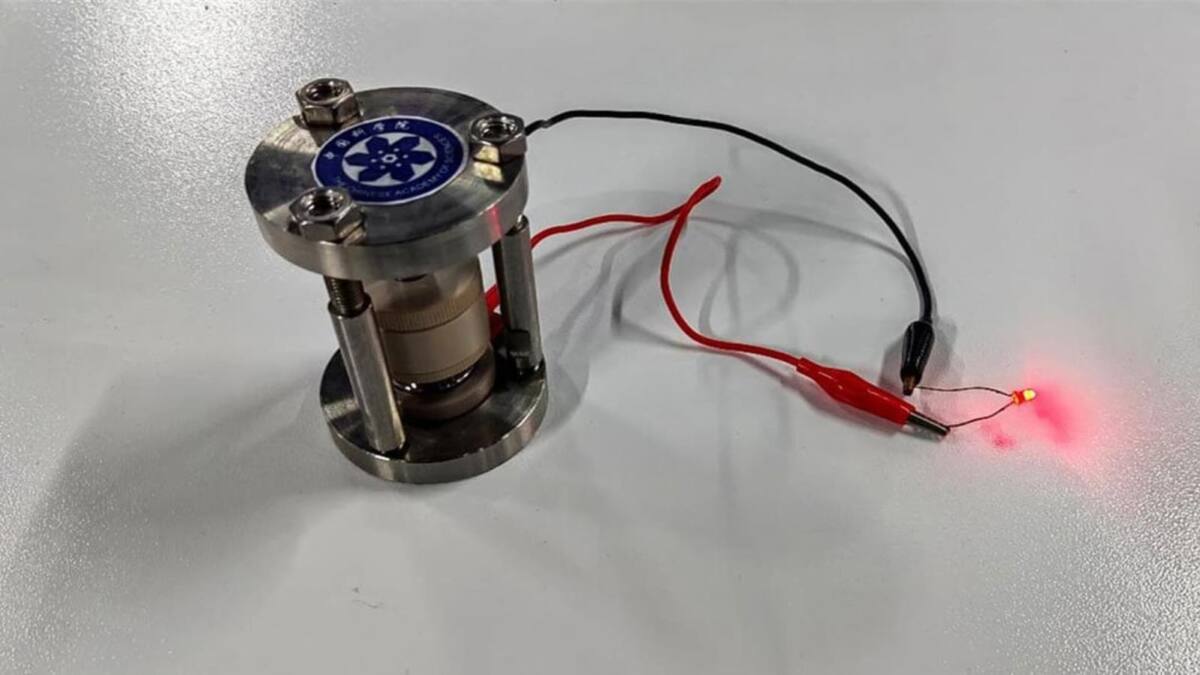
Chinese researchers say they have built a hydrogen battery that can store both electricity and hydrogen at once, without the usual need for extreme pressure or cryogenic temperatures. The prototype comes from the Dalian Institute of Chemical Physics under the Chinese Academy of Sciences, and if the lab results hold up, it points to a cheaper way to move hydrogen around than the tank-heavy methods used now.
The pitch is simple enough to be clever: the system runs at room temperature and normal atmospheric pressure. That makes it very different from conventional hydrogen storage, which usually leans on bulky high-pressure cylinders or deep-cold cooling, both expensive ways to babysit a gas.
How the hydrogen battery works
The battery uses a reaction between hydrogen and magnesium. During discharge, hydrogen binds with the metal and becomes solid; during charging, it is released again. In other words, the device does two jobs at once: it stores electrical energy and keeps hydrogen inside the battery itself.
According to the developers, storage efficiency reached almost 94%, roughly one-third better than traditional thermal hydrogen storage methods. The prototype also kept working across a wide temperature range, from -20 to +90 degrees Celsius, which is the kind of tolerance engineers like to brag about because it means the thing is less fragile than a lab toy.
A 10-cell block powered an LED
To test the idea outside a slide deck, the team assembled a small block of 10 cells. It produced more than 2.4 volts and was able to light an LED. That is not grid-scale proof, but it is enough to show the concept can move beyond chemistry jargon and into basic hardware.
- Operates at room temperature and normal atmospheric pressure
- Storage efficiency: almost 94%
- Temperature range: -20 to +90 degrees Celsius
- 10-cell block output: more than 2.4 volts
Potential uses for the hydrogen battery
The obvious appeal is that the technology sidesteps expensive high-pressure hydrogen tanks, which have long been one of the messiest parts of the hydrogen economy. If the battery can be scaled without losing too much performance, it could find a place in portable electronics, stationary storage, and renewable power systems. The hard part is the usual one: making a promising prototype survive long enough to matter outside the lab.
For now, this is still early-stage work, and the researchers say they still need to improve cycle life and overall performance. That leaves an open question bigger than the chemistry itself: can a battery that stores hydrogen as neatly as electricity move from elegant experiment to industrially boring reality?