

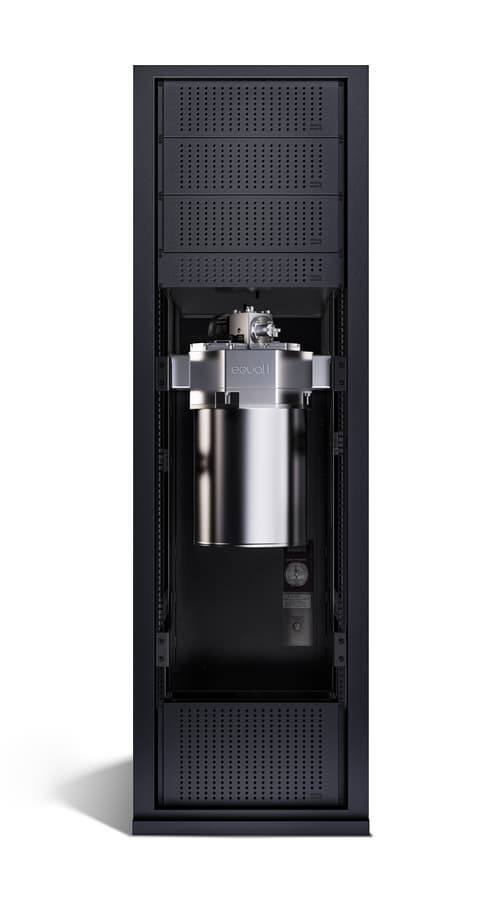
Equal1 has unveiled RacQ, a quantum computing system built to fit inside a standard 19-inch server rack and plug into ordinary data-center infrastructure. That is a pretty direct challenge to the usual quantum-computing playbook, which has long depended on specialized rooms, exotic cooling gear, and a lot of patience.
The Irish startup says RacQ is based on its UnityQ CMOS chip with silicon spin qubits and is an evolution of the Bell-1 platform shown in 2025. The pitch is simple: if quantum hardware can be deployed like a normal server, it becomes much easier to imagine hybrid systems running alongside conventional compute instead of off in a lab down the hall.
According to Equal1, the machine draws 1.6 kW from a standard line, about what you would expect from an industrial server. Inside the rack sits a closed-cycle cryogenic system that keeps the hardware at about 0.3 kelvin, or roughly minus 272.85 degrees Celsius. The whole setup weighs about 400 kilograms, which is a reminder that ”rack-sized” does not mean light enough for a casual repositioning by one optimistic engineer.
RacQ will be shown with Dell hardware
The company plans to demonstrate RacQ at Dell Technologies World in Las Vegas, linked to a Dell PowerEdge R770 server and Dell PowerSwitch networking gear. That demo matters because the industry has spent years promising practical quantum systems, but most real deployments still live in highly controlled research environments. Showing a quantum rack in a familiar enterprise stack is a smarter sales move than another glossy lab photo.
- System: RacQ
- Chip: UnityQ CMOS with silicon spin qubits
- Power draw: 1.6 kW
- Operating temperature: about 0.3 kelvin
- Weight: about 400 kilograms
A bet on silicon spin qubits
Equal1 was spun out of University College Dublin in 2018 and is working on quantum processors based on silicon spin qubits, a path also pursued by TNO and Delft University of Technology. In January 2026, the company said it had raised $60 million, giving it the cash needed to push beyond prototype theater and into something closer to commercial positioning.
That timing is telling. As quantum computing companies compete to prove they can survive outside the lab, the real winner may be the one that makes deployment boring. If RacQ can genuinely sit in a data center next to mainstream servers, the next fight will not be about whether quantum is possible, but about who can make it operational without turning every installation into a science project.