

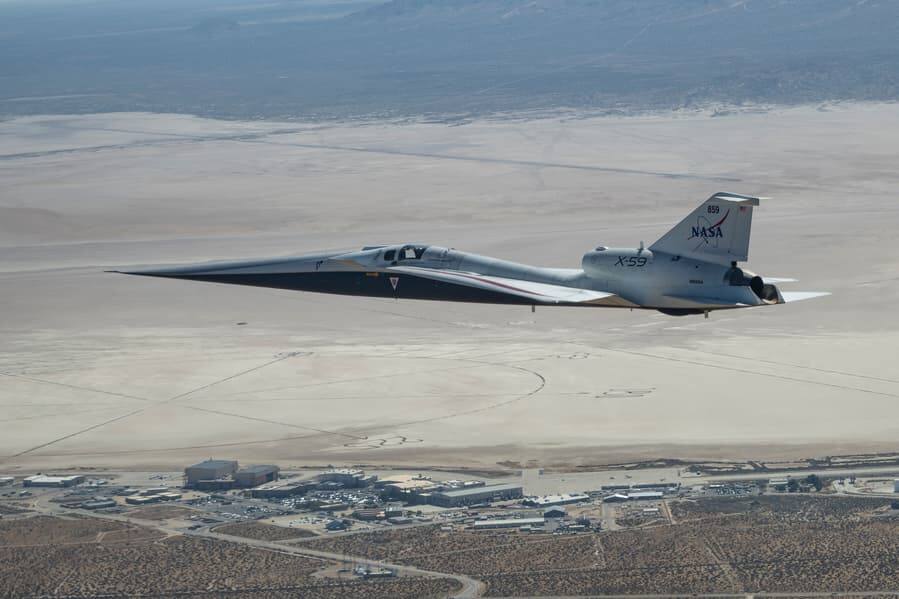
NASA has moved its experimental X-59 into a new round of low-altitude flight tests, shifting the spotlight from headline-grabbing speed to the unglamorous work of calibration, vibration checks, and data collection. The aircraft, built for NASA’s Quesst program, has already completed its first high-altitude and near-supersonic flights; now engineers are probing how it behaves lower to the ground and at slower speeds before the next phase of the campaign.
That sequencing makes sense. Aviation programs often chase the riskiest conditions first, then circle back to the basics once they know the airframe is stable enough to keep talking to them, not fighting them. In this case, the slow stuff is still tied to the fast stuff: the low-level flights are helping NASA understand loads, airflow, and sensor performance before the aircraft is pushed harder again.
What NASA is testing at 150 meters
The current focus is a low pass at roughly 150 meters above the runway, where engineers are watching the air data system and the structure itself for signs of unwanted movement. NASA has also fitted the aircraft with strain gauges to measure how forces spread through the frame, a very non-glamorous but very necessary step if you want a clean supersonic profile later.
According to project manager Cathy Bamm of NASA’s Armstrong Flight Research Center, the team initially wanted to reach the highest-risk regimes quickly, then come back and study the results in slower, lower flights. That is the sort of test plan that sounds backward only until you remember that aerospace development is basically one long argument with physics.
Why the X-59 looks so strange
The X-59 is being designed to do something aviation regulators have long hated: fly faster than sound without producing the usual thunderclap. Its elongated nose and camera-based forward-view system are there for a reason, because the cockpit layout is shaped as much by acoustics as by aerodynamics.
- Program: Quesst
- Goal: reduce the sonic boom to a much quieter sound
- Current testing: low-altitude flights, including with landing gear extended and retracted
- Operations pace: several test flights per day
The prize is over land
If NASA can prove the concept, the payoff is not just one cool aircraft. The real prize is reopening the possibility of civilian supersonic travel over land, something now largely blocked by noise limits, and giving regulators data they can actually use instead of marketing claims wrapped in titanium.
That would also put pressure on a few other players circling the same prize. Boom Supersonic and others have spent years talking up quieter high-speed travel, but NASA’s job is different: it is trying to build the evidence base that could underpin future international standards, not sell tickets to a faster cross-country flight.
What comes after the quiet runs
The next question is whether the aircraft’s low-speed, low-altitude behavior confirms what the earlier high-altitude tests suggested. If the data holds up, the X-59 will move closer to the part of the program that really matters: proving that supersonic flight can sound acceptable on the ground, not just impressive in the sky.