

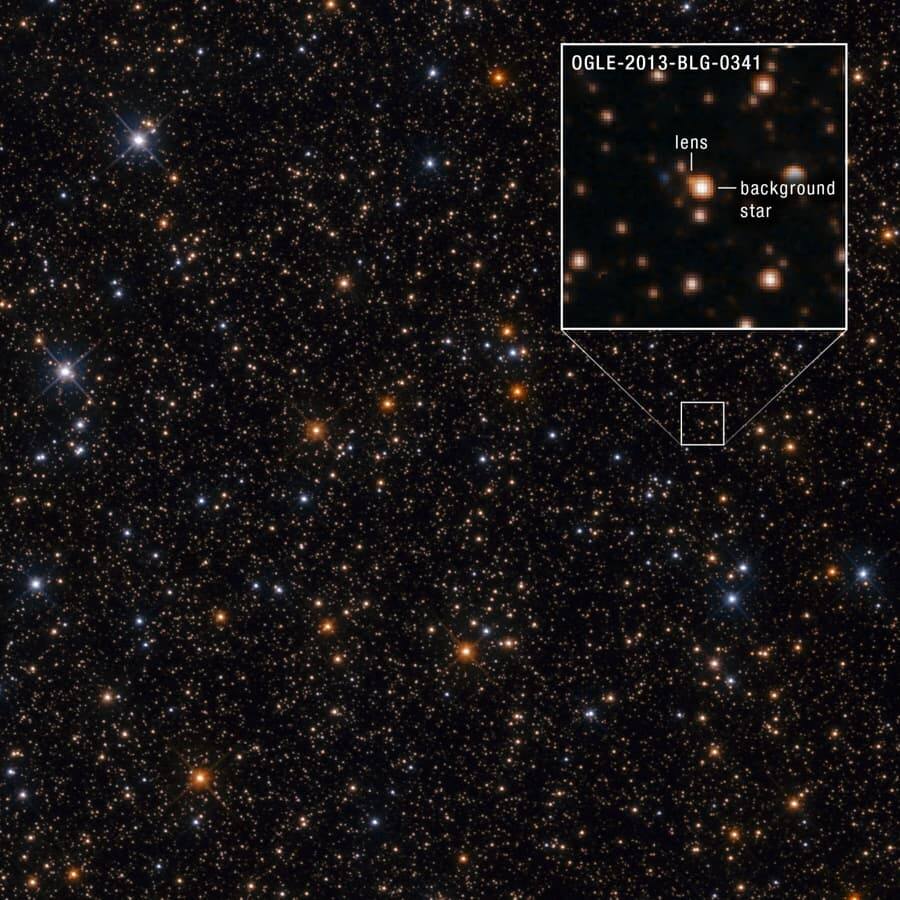
Astronomers have used Hubble to build a detailed map of the Milky Way’s central bulge, setting the stage for NASA’s Nancy Grace Roman Space Telescope and its hunt for exoplanets, rogue planets, and hard-to-see black holes. The idea is simple: if you already know what the crowded Galactic center looked like before Roman starts watching it, you can make much better sense of the motion and brightness changes that come later.
The timing matters. NASA is aiming for a launch in September this year, and Roman is designed to turn the bulge into one of its main science targets, with a much wider field of view and a rapid imaging cadence that Hubble could never match. That combination should let it track millions of stars and catch gravitational microlensing events as they happen, instead of guessing after the fact.
What Hubble mapped in the Galactic bulge
The new Hubble survey covers a large chunk of the dense central region of the Milky Way, where stars, planets, dust, and other objects are packed tightly together. That crowded setting is exactly where Roman is expected to do some of its best work, because the telescope’s wide view and fast repeat imaging are built for finding subtle changes in light across busy star fields.
That pre-imaging should pay off immediately. When a lensing object and a background star blur together, having earlier Hubble data makes it easier to separate the two and estimate the mass of the hidden object with far more confidence. Without that reference point, microlensing can look like astronomy doing magic tricks with the lights off.
Why microlensing is Roman’s headline act
Microlensing happens when a massive object bends the light of a more distant star, briefly magnifying it. Roman is expected to use that effect to spot objects that barely emit any light at all, including planets that drift through space alone, neutron stars, and stellar-mass black holes. Astronomers also expect it to find hundreds of planets that were flung out of their original systems.
- Monitoring window: 72 days per campaign
- Image cadence: every 12 minutes
- Survey area: about 1.7 square degrees
- Scale of view: roughly 8.5 full moons on the sky
That cadence is fast enough to catch the short-lived brightening events that older surveys can miss. It also gives Roman a chance to build one of the biggest star catalogs ever assembled for this region, which is useful well beyond planet hunting.
Dust maps and a star catalog measured in millions
The Hubble and Roman combination will also sharpen maps of interstellar dust in the Galactic center, where haze absorbs and scatters light and makes observations messy. That matters because dust is not just a nuisance; it changes how bright and how red objects appear, which can distort the interpretation of nearly everything Roman sees there.
Hubble is expected to log 20 million to 30 million objects in the survey, while Roman could push that total to 200 million to 300 million sources. That is the kind of jump that turns a sky survey into a data factory, and it explains why pre-mapping with Hubble is more than housekeeping: it is the difference between knowing the neighborhood and wandering into a crowd.
If Roman launches on schedule, the first question will not be whether it finds microlensing events. It will be how many hidden objects are already waiting in the bulge, and how quickly the new telescope can sort planets, stars, and dark remnants out of the chaos.