

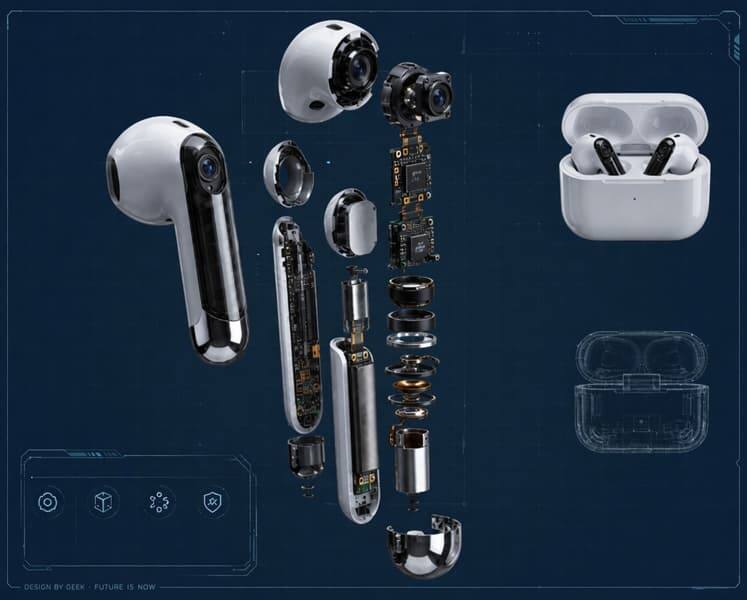
Apple’s long-rumored AirPods with cameras and sensor-based ”vision” have run into a very European problem: privacy law. The company has reportedly paused part of the manufacturing plan for the H90 project, even though the earbuds were already deep into development and close to production-ready.
The camera-equipped AirPods were never meant to be tiny spy gadgets in your ears. The system was designed to read depth, movement, and the surrounding environment, while an infrared sensor would sit in a slightly extended stem. Apple has been trying to frame the hardware as privacy-conscious computing, not photography.
Still, the law does not care much about product marketing. Under EU rules, including GDPR and newer AI requirements, collecting biometric or environmental data in public spaces can trigger consent and transparency obligations that are easy to write into policy decks and miserable to implement in real life. That has become a recurring theme for wearable tech: the more a device tries to understand its surroundings, the more regulators start asking who else just got scanned.
What Apple built into H90
The project had been in development for about four years and had already reached DVT, the stage where a design is tested against its requirements before mass production. In other words, this was not a napkin sketch. It was a nearly finished product with a longer stem, an infrared sensor, and on-device processing powered by the H3 chip, plus LED activity indicators intended to signal when the system was active.
That approach sounds smart on paper, and it is exactly the kind of defensive engineering Apple likes to brag about. The problem is that ”we process data locally” is not a magic shield when the feature itself depends on sensing people and places around you. Meta has been pushed into similar privacy arguments around wearable AI, and Apple now finds itself in the same messy zone where ambition meets paperwork.
Why the EU is making this harder
The core issue is consent. EU rules make it difficult to deploy a device that may capture or infer data about bystanders in public spaces unless those people are clearly informed and agree to it, which is close to impossible for earbuds designed to work anywhere, all the time.
That is the catch for the next generation of wearables: the hardware may be ready before society is. Camera-equipped earbuds, smart glasses, and other ambient AI devices are all running into the same wall. The products are getting more capable, but the legal tolerance for invisible sensing is moving in the opposite direction.
What happens to Apple’s wearable roadmap
For Apple, delaying H90 is less about a dead end than a reality check. The company can keep the project alive, rework features, or wait for a friendlier regulatory path, but the bigger question is whether consumers actually want earbuds that can understand a room before they can even fully explain themselves.
My bet: Apple will not abandon the idea. It will either strip the feature set down until regulators blink, or push the concept into a future product category where cameras in personal devices feel less alarming than they do today. Either way, the era of ”always-on” sensing is going to arrive in Europe with a lawyer attached.