

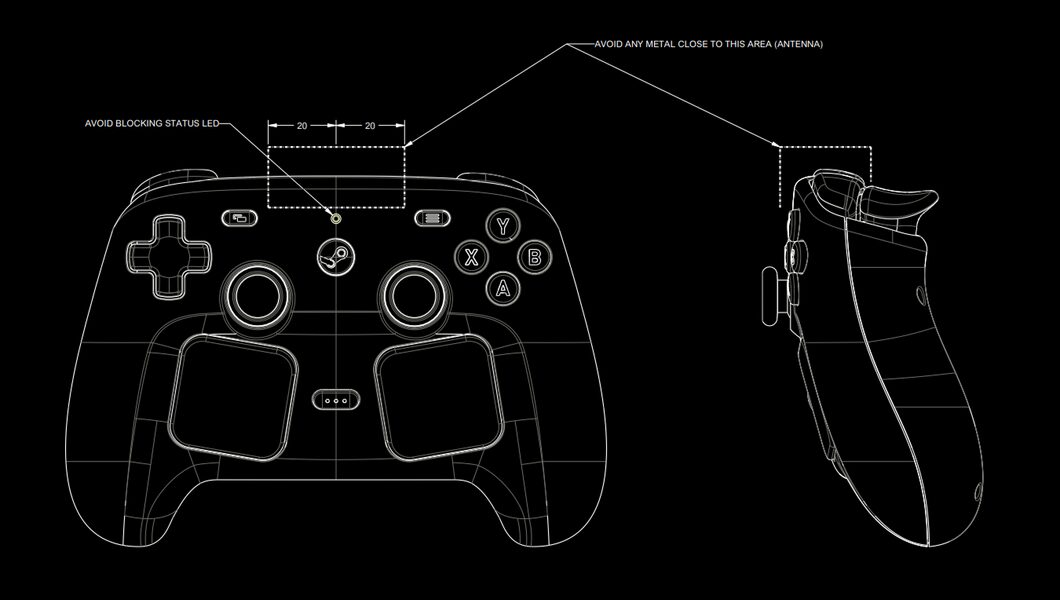
Valve has published CAD files for the outer shells of its new Steam Controller and the Puck, turning a fast-sold-out accessory into something enthusiasts can actually measure, tweak, and potentially copy. The Steam Controller launched on 4 May 2026 and vanished in about half an hour, which is exactly the kind of shortage that tends to send modders straight to CAD software.
According to Valve, the files for the controller and the Puck are available under a Creative Commons license. That package includes STP and STL models, plus technical drawings showing critical features and keep-out zones, which is the useful part if you care about building around the hardware instead of just admiring it on a shelf.
What Valve actually released
This is not a full open-source dump of the device internals, but it is a practical handout for accessory makers and hobbyists. The release covers the external geometry of the shells, which is often enough for custom grips, cases, mounts, and other mods that hardware fans dream up before the stock product is even back in stock.
- Steam Controller outer shell CAD files
- Puck outer shell CAD files
- STP models
- STL models
- Technical drawings with keep-out zones
Steam Controller price and release details
The Steam Controller is Valve’s latest hardware comeback, but it is also a familiar name: the first Steam Controller arrived in 2015. The new model is priced at $100, or €100 depending on where you buy it. That puts it in the premium gamepad bracket, while the instant sellout suggests Valve underestimated just how much nostalgia and curiosity the controller name still carries.
Valve’s invitation to ”experiment” sounds generous, but it also makes business sense: if the official supply is tight, third-party accessories and community-made modifications can keep the device in the conversation. The more players treat it like a platform instead of a sealed box, the longer Valve gets to keep the attention.
Steam Controller mods and accessories
The obvious next step is customization. Expect alternative shells, ergonomic tweaks and replacement parts built around the published dimensions, especially from makers who already produce niche controller accessories and 3D-printed hardware add-ons. The only real question is whether Valve keeps feeding that ecosystem with more documentation, or stops here and lets the community do the rest.