

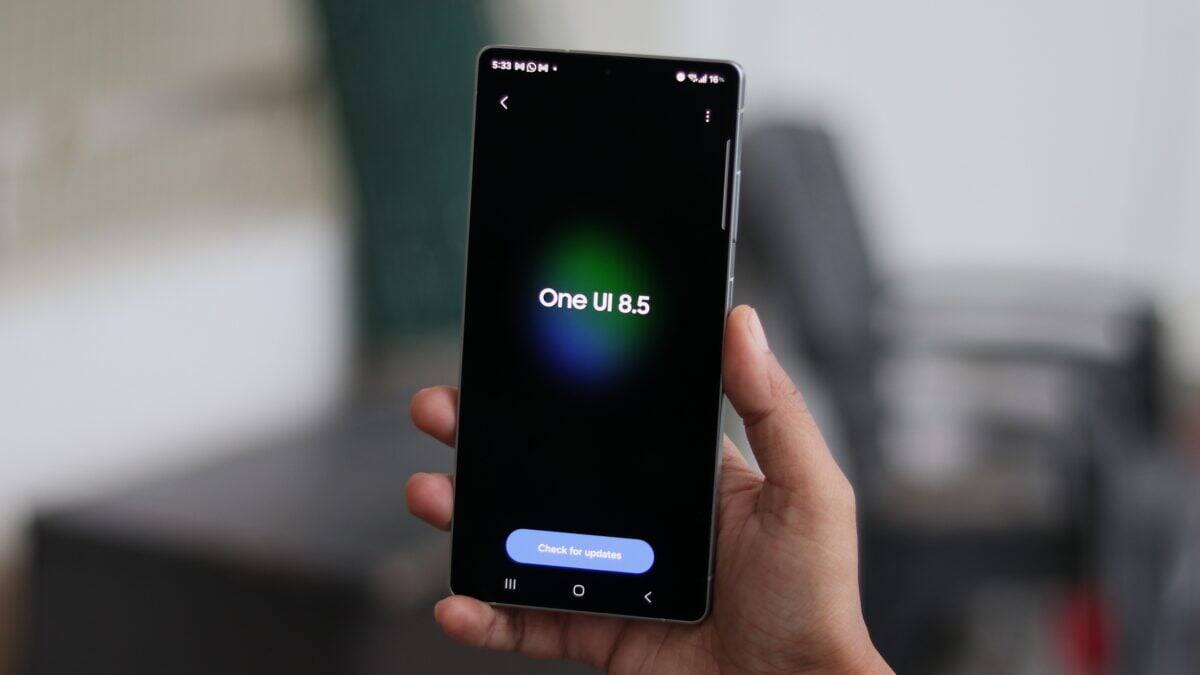
Samsung has started shipping the stable One UI 8.5 update, with the first wave going out today to eligible Galaxy devices. The launch begins in South Korea and then expands to Europe, Hong Kong, India, Latin America, North America, Southeast Asia, and Taiwan.
The Galaxy S26 series was the first to run the stable build, while Samsung says the update will reach Galaxy S, Galaxy Tab S, and Galaxy Z devices first before expanding to Galaxy A, Galaxy F, and Galaxy M models. That puts the focus squarely on Samsung’s premium lineup before the rollout widens.
Which Galaxy devices get One UI 8.5 first
Samsung says Galaxy S, Galaxy Tab S, and Galaxy Z devices are expected to receive One UI 8.5 first, followed later by Galaxy A, Galaxy F, and Galaxy M models. That order fits the company’s usual playbook: premium devices first, mid-range later, and a little patience for everyone else.
- First rollout wave: South Korea today
- Next regions: Europe, Hong Kong, India, Latin America, North America, Southeast Asia, and Taiwan
- First device families: Galaxy S, Galaxy Tab S, and Galaxy Z
- Later device families: Galaxy A, Galaxy F, and Galaxy M
Galaxy AI additions and the fine print
One UI 8.5 is not just a cosmetic refresh. Samsung says it adds new Galaxy AI features, although some of them will be limited to select phones and tablets. That selective approach is doing a lot of work here, because ”new AI features” always sounds generous until you learn they are not for everybody.
Galaxy A devices from the last three generations will also get Awesome Intelligence AI features as part of the update. Samsung has clearly decided that its AI pitch needs to reach beyond flagships, even if the most advanced tools stay locked to the top end of the lineup.
What Samsung is really buying with this launch
Four months of beta testing gave Samsung a long runway to polish the release, and that matters in a market where rivals keep trying to make software support look like a spec sheet contest. Apple may own the tightest ecosystem story, but Samsung’s scale gives it a different advantage: when a major update lands, it lands across a huge spread of phones, tablets, and foldables.
The open question is how fast the rollout spreads beyond the first markets and whether the feature split feels fair to users on older hardware. Samsung has started the clock; now everyone else gets to find out where their device sits in the queue.