

LG Display is trying to clean up OLED’s longest-running reputation problem: gorgeous screens that get dimmer, guzzle power, or look worse when the room lights are on. At SID Display Week 2026 in Los Angeles, the company unveiled a new wave of LG OLED panels aimed at cars, TVs, laptops, and even robots – a broad signal that OLED is no longer being tuned just for premium phones and TVs, but for every screen that has to survive real-world use.
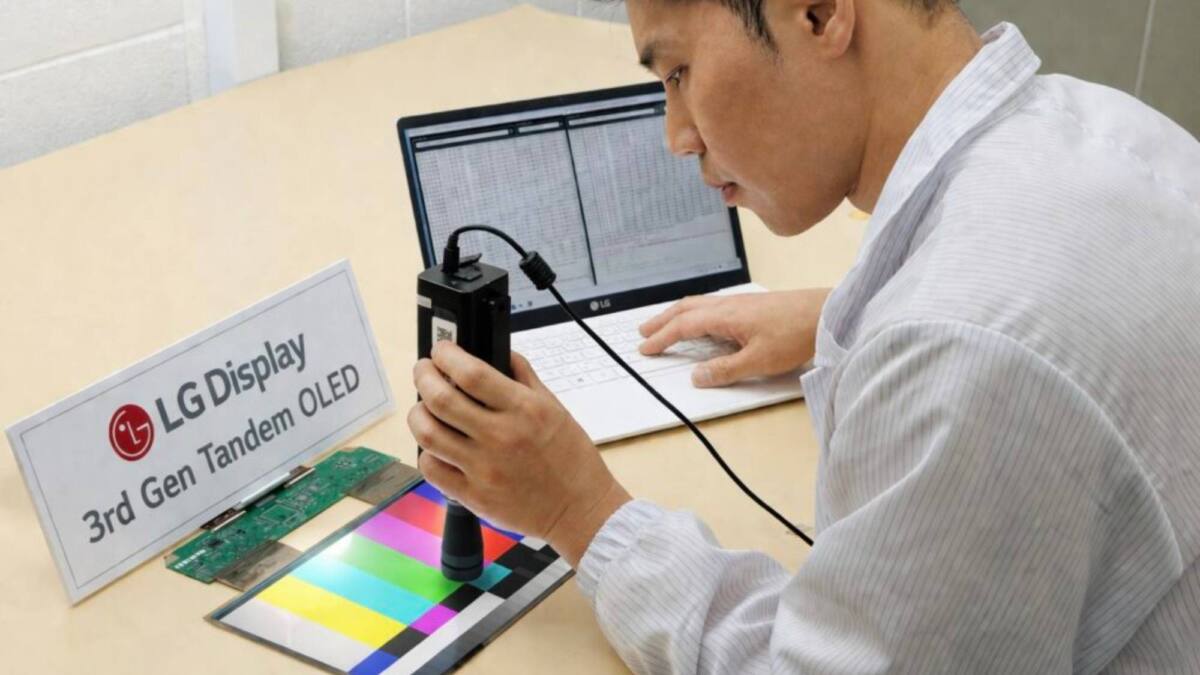
The headliner is third-generation Tandem OLED for automotive use. LG says the panel delivers more than double the lifespan of the previous generation while cutting power consumption by 18%. It also reaches 1,200 nits of brightness and is rated to hold that level for more than 15,000 hours at room temperature without visible degradation. That’s the kind of spec sheet carmakers like because dashboards do not get to pretend they live in a dim theater.
Primary RGB Tandem 2.0 raises the TV ceiling
For living rooms, LG’s Primary RGB Tandem 2.0 pushes peak brightness to 4,500 nits and claims an ultra-low reflectance of 0.3%, which LG says is the lowest of any current display. Translation: it is taking the fight to bright windows, overhead lights, and the stubborn fact that not everyone watches TV in a blacked-out cave. OLED’s contrast advantage has always been obvious; the harder part has been making it behave in daylight.
That matters because Samsung Display and other panel makers have spent the last few years chasing similar ”bright enough for real life” improvements. LG’s answer is less about one flashy number and more about reducing the compromises that have kept some buyers in Mini LED territory.
A 16-inch OLED panel for AI laptops
LG also introduced a 16-inch Tandem OLED panel for AI laptops. The company says it is thinner and lighter than conventional OLED panels and can extend battery life by up to 2.3 hours. That is a tidy upgrade in a market where laptop makers keep asking displays to be brighter, sharper, and somehow less thirsty at the same time. If those gains hold up in commercial machines, the usual ”great screen, bad battery” complaint gets a lot harder to make.
- Third-generation Tandem OLED: more than double the lifespan, 18% lower power consumption
- Automotive panel: 1,200 nits, more than 15,000 hours at room temperature without visible degradation
- Primary RGB Tandem 2.0: 4,500 nits peak brightness, 0.3% reflectance
- 16-inch laptop panel: thinner, lighter, and up to 2.3 hours longer battery life
Robots get a panel too
There is also a new P-OLED solution for humanoid robots, built using the same automotive-grade Tandem OLED tech and designed to handle extreme temperatures and demanding physical conditions. It sounds niche, but it is actually a useful signpost: OLED is moving from consumer bragging rights into machines that need displays to stay readable, efficient, and durable under stress.
If LG can scale these panels without the price and supply headaches that often shadow advanced display tech, OLED’s old tradeoffs start to look less like destiny and more like a temporary glitch. The bigger question is how fast device makers adopt them – because the industry loves better screens almost as much as it loves waiting a generation too long to use them.