

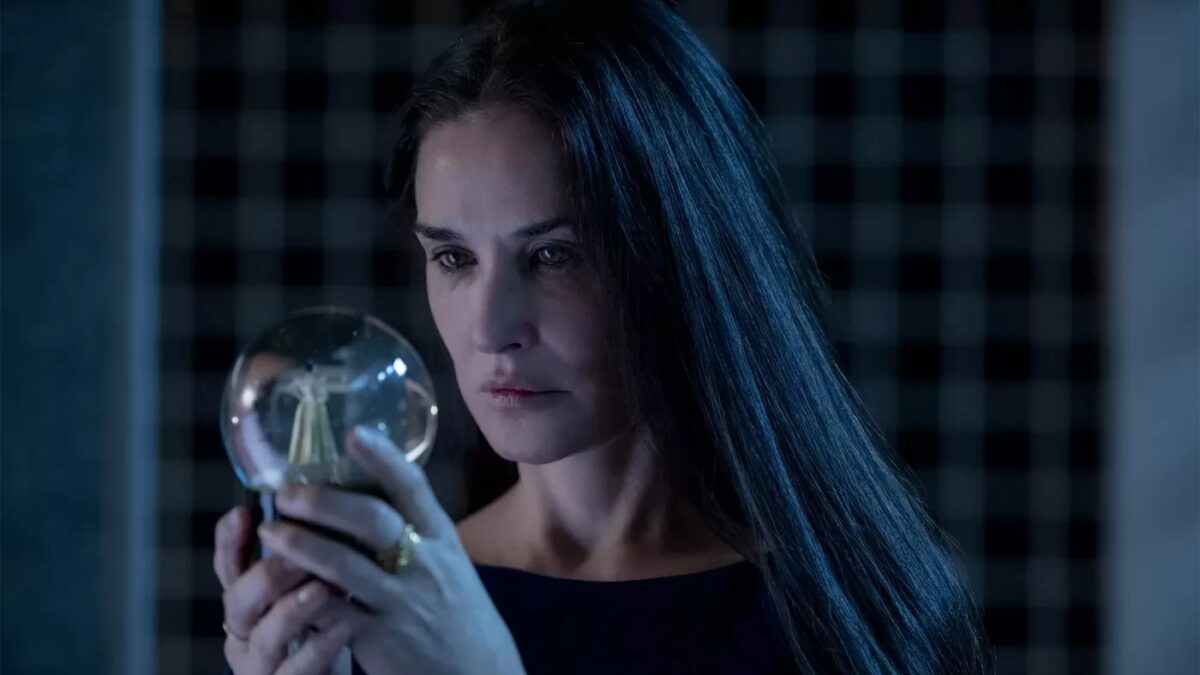
Demi Moore is heading back to Cannes, this time not as a comeback story but as one of the people deciding who leaves with the Palme d’Or. The American actor has been named to the main competition jury for the festival that opens on 12 May 2026, with South Korean filmmaker Park Chan-wook serving as president.
The lineup mixes star power with serious festival muscle. Alongside Moore are Oscar-winning director Chloé Zhao and Swedish actor Stellan Skarsgård, plus Ruth Negga, Laura Wandel, Dieudo Sésépédes, Isaac de Bankolé, and Paul Laverty. Their job is straightforward on paper and brutal in practice: pick one winner from 22 films in the main competition.
A jury built for prestige, not consensus
Cannes likes juries that can argue in three languages and still look elegant doing it. This one fits the brief. Park Chan-wook brings the cinephile credibility, Zhao brings Oscar heft, and Moore brings the kind of pop-cultural recognition that keeps the jury from feeling like a closed seminar for people who own velvet jackets.
The setup also gives the festival a familiar edge: Cannes loves to position its prizes as a clash between artistic daring and institutional taste. Last year, under Juliette Binoche, the top award went to Jafar Panahi’s ”It Was Just an Accident”, proof that the jury can still lean toward politically charged, formally distinct cinema when it wants to.
Demi Moore’s return to the Croisette
Moore’s Cannes appearance carries extra baggage in the best possible sense. She was one of the breakout names of 2024 after ”The Substance” premiered on the Croisette, helping reframe her career from tabloid fixture to awards-season force. The film won best screenplay, while Moore collected the Golden Globe, SAG, and Critics Choice prizes, plus BAFTA and Oscar nominations.
That arc matters because Cannes loves a return narrative almost as much as it loves a scandal. By placing Moore on the jury, the festival is acknowledging the afterlife of that triumph: not just a performance, but a full-circuit reset that turned an old star into a fresh authority.
The opening night slot is already locked
The festival’s opening film has also been set: Pierre Salvadori’s comedy ”Électric Blue Kiss”, a story set in the 1920s. Cannes is clearly leaning into contrast again – a breezy opener, a heavyweight jury, and a competition slate of 22 titles that will spend the next two weeks being loved, booed, dissected, and, inevitably, over-read.
The real question now is whether this jury goes for a politically charged winner, a formally daring one or the sort of polished crowd-pleaser that lets everyone leave for the airport claiming victory. Cannes rarely makes that easy. Which is exactly why everyone keeps watching.