

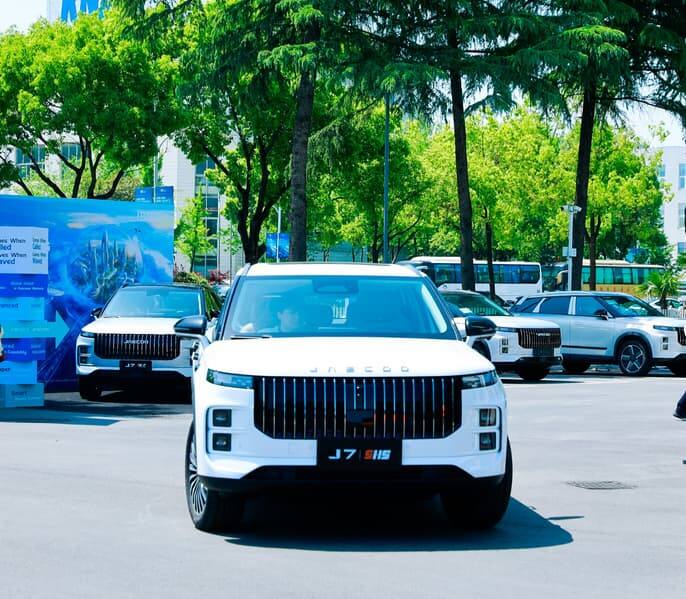
Omoda and Jaecoo have put a fresh twist on automated parking with VPD smart parking: the system can drop you at the door, find a space on its own, and even bring the car back when summoned. In a public demonstration at the Beijing auto show, the brands compared the system with a driver who had 15 years behind the wheel, and in tight, awkward parking spots the software came out ahead on speed, precision, and the number of steering corrections.
That is the sort of result carmakers love to turn into a headline, because parking is one of the few everyday tasks where drivers still routinely hate their cars. It is also a reminder that the best driver-assistance tech is usually boringly specific: not a robot chauffeur, just a machine that does one annoying job better than most humans can.
What VPD smart parking actually does
VPD, short for Valet Parking Driver, is designed to handle two jobs:
- Autonomous parking lets the car search for an empty spot and park itself.
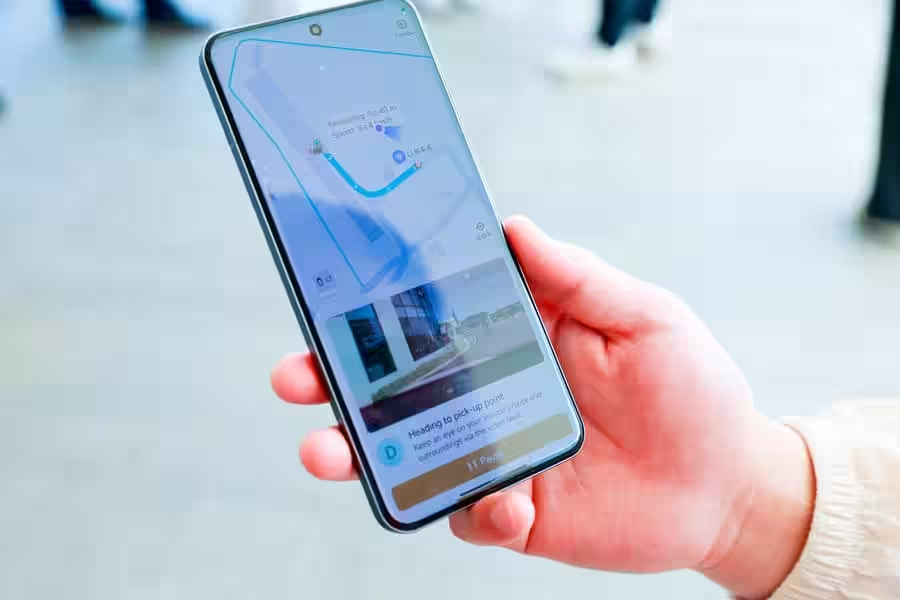
- Call the car sends it to a chosen pickup point through an app.
Omoda says the driver can leave the vehicle at the entrance of a building and let the system take over from there.
Why parking lots are the real proving ground
The company’s demo focused on especially nasty scenarios: dead-end bays and narrow spaces where even confident drivers start making tiny, frustrated adjustments. That matters because parking automation lives or dies on low-speed accuracy, not flashy max speed claims that never survive contact with a concrete pillar.
There is also a bigger industry pattern here. Several automakers and suppliers have been pushing self-parking systems for years, but most of them stop short of true autonomy outside controlled environments. VPD follows that familiar playbook by keeping the feature fenced inside closed parking areas, which is sensible engineering and a useful way to avoid pretending this is a self-driving system.
The limits are as important as the demo
Omoda and Jaecoo were careful to say VPD is a helper, not a full autopilot. The system does not work on public roads, and the driver must always be ready to take back control. That caveat is doing a lot of heavy lifting, but it is also the right one: parking assistants are useful precisely because they solve a narrow problem without demanding blind faith.
The open question is whether features like this become a real differentiator or just another showroom trick. If VPD stays reliable in messy real-world garages, it could make premium parking feel less like a stress test and more like a shrug. If not, it joins the long list of clever demos that look brilliant under lights and average on Tuesday night in a crowded lot.