

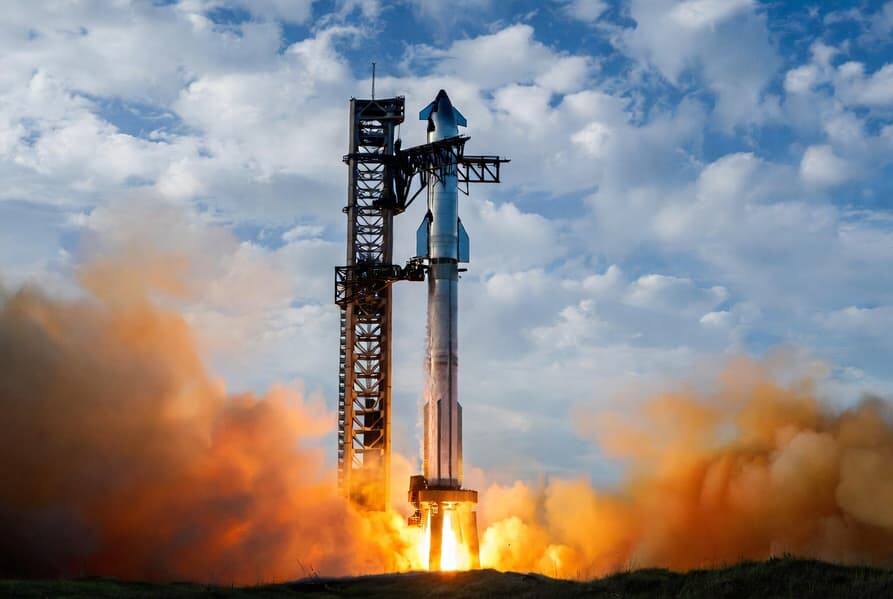
SpaceX is edging toward the next Starship test flight, with Flight 12 now expected no earlier than May 2026, and the new Starship V3 cost numbers are almost as striking as the rocket itself. A fresh estimate puts a full Starship build at about $100 million, while the debut of Raptor 3 pushes the program toward a simpler, cheaper-to-build version designed for heavy reuse rather than one-and-done heroics.
The cost breakdown is easy to read and hard to ignore. The upper stage comes in at $20-30 million, the Super Heavy booster at $30-40 million, and the 39 Raptor engines add roughly $39 million more. Fuel and other materials account for up to $2 million. For a vehicle this large, that is still expensive; for a system meant to be flown again and again, it is the whole point.
Raptor 3 changes the economics
Raptor 3 is the real story here. SpaceX says the engine brings higher thrust, better efficiency, lower mass, and no external heat shield thanks to integrated cooling systems. The company also claims it is far simpler and about four times cheaper to manufacture, which is the sort of engineering claim that only matters if the hardware survives repeated abuse.
That fits SpaceX’s long game better than the old launch-business model ever could. United Launch Alliance and Arianespace still sell rockets as precious events; SpaceX wants Starship to become more like a flying industrial asset. If the company can actually get past the usual explosion-adjacent test program, the cost per launch starts looking disruptive instead of theoretical.
Starship V3 cost per kilogram
- One-off launch cost: about $900-1,010 per kg of payload
- Payload capacity: about 100 tons
- After 20+ reuse cycles: about $115-125 per kg
Those figures explain why investors and rivals keep watching Starship even when the test cadence looks messy. A system that big, if it truly gets cheaper after repeated flights, would reset expectations for everything from satellites to deep-space logistics. It would also make today’s expendable rockets look even more like expensive fireworks.
SpaceX has already secured FCC approval for radio frequencies tied to the 13th Starship flight, using Super Heavy B20 and Starship S40. The next question is less about paperwork and more about whether the hardware can deliver the reliability that a 100-ton reusable launcher needs. If Flight 12 goes well, the pricing story gets louder fast; if it does not, the math stays impressive and the schedule gets awkward.