

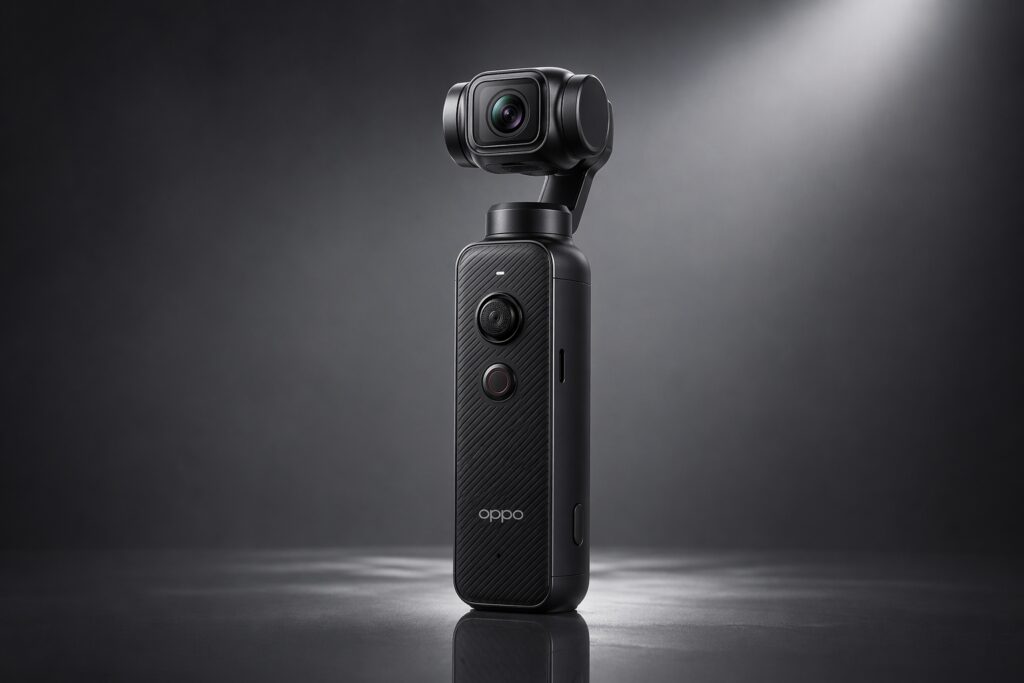
Oppo is reportedly moving beyond phones and into handheld smart cameras, with a gimbal camera project said to be under internal development and aimed at a launch later this year. The Oppo gimbal camera could land alongside the Find X10 series, giving the company a way to extend its imaging reputation into a category long dominated by dedicated camera brands.
The codename attached to the project is ”Fuyao,” and the product is described as a pocket-sized gimbal camera rather than another phone accessory. That puts Oppo on a collision course with DJI and Insta360, two companies that built the category while smartphone makers mostly stayed on the sidelines. Now those same phone makers appear to think they can do the hard part too: stabilized video, clever software, and a polished retail pitch.
Fuyao could debut with the Find X10 series
According to the report, Oppo has already approved the project internally, with a launch expected in the fourth quarter of this year. There is also a chance the device is unveiled at the same event as the Find X10 series, which is said to arrive in October. That would be a tidy bit of cross-promotion: sell the phone, then sell the camera as proof that Oppo’s imaging ambitions do not stop at the rear camera bump.
The move would not come out of nowhere. Phone brands have spent years pouring money into computational photography, and handheld cameras are one of the few adjacent product areas where that expertise can travel well. The catch is that software swagger does not automatically equal hardware excellence, especially in a segment where balance, stabilization, and ergonomics are the whole point.
Why smartphone brands want a piece of this category
Oppo is not alone. vivo is said to have started work on its own handheld gimbal camera late last year, with the first model already through prototype moulding, while Honor has entered the category through its ecosystem platform. Vivo is also reportedly developing a vlogging camera that may appear with the Vivo X500 series in September. The pattern is clear: the phone makers are sniffing around a segment that once looked too niche to bother with.
That nibbling has a logic to it. Smartphone companies already control imaging software, AI processing, component sourcing, and, in many markets, the shelf space where casual buyers actually make decisions. If they can package a capable handheld camera at a sharper price than the specialists, they do not need to win every creator – just enough of the beginner and enthusiast crowd to make the category uncomfortable for everyone else.
DJI and Insta360 still have the numbers
The incumbents are not sitting on empty chairs, though. IDC data cited in the report says global shipments of handheld smart cameras, including gimbal, action, and panoramic models, reached 16.65 million units in 2025, with gimbal cameras the fastest-growing slice. DJI reportedly held around 62 per cent market share, while Insta360 accounted for nearly 12 per cent. That is a very lopsided leaderboard, but also a tempting one: even a small dent in those shares would mean real volume.
For Oppo, the gamble is obvious. The company is betting that its imaging pedigree can translate into a new product line before the market hardens around the current winners. If the Fuyao project does show up with Find X10 in October, expect the pitch to be less about ”another gadget” and more about ”your next camera probably wants phone DNA.” If that sounds a little ambitious, well, it is. That is usually how new categories get crowded.