

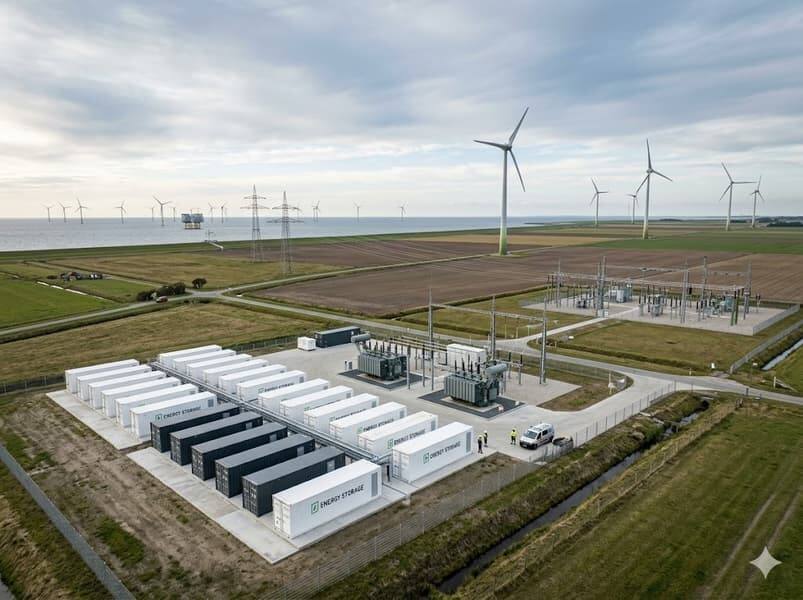
Germany is adding another piece to the grid-balancing puzzle: Noveria Energy has signed a grid connection agreement with TenneT for a 250 MW battery energy storage system in Lower Saxony, with connection to the network planned for early 2028. The Germany 250 MW battery is designed to soak up the ups and downs of offshore wind coming in from the North Sea, which is exactly the kind of job battery storage is increasingly being asked to do.
That may sound routine, but it is not. Across Europe, big batteries are moving from pilot status to infrastructure status because wind and solar keep growing faster than the grids built to serve them. Germany, with its heavy exposure to offshore generation in the northwest, is a particularly obvious place for this shift.
A 250 MW battery tied to Lower Saxony
The project will sit in Lower Saxony, a region that receives substantial offshore wind power from the North Sea. Once built, the BESS will operate under the connection terms agreed with TenneT and support grid stability as renewable generation becomes a larger share of supply.
Battery storage is becoming the utility-scale fix for a very old problem: electricity does not arrive exactly when people need it. By charging when supply is abundant and discharging when demand rises, systems like this help reduce curtailment and make variable renewables easier to integrate without forcing the grid to carry every fluctuation on its own.
Why the TenneT agreement matters
The signed agreement is more than paperwork. It locks in a key milestone for the project and gives a clear target date for network connection, which is a major step in a development process that can otherwise drift for years.
Noveria says the battery is part of a broader push into large-scale energy assets aimed at supporting the energy transition. The company’s portfolio already exceeds 3 GW of storage projects, which is a sign that it is not betting on one flagship site but on a whole pipeline of grid services.
Noveria’s storage push across Germany
Founded in 2023, Noveria Energy focuses on industrial-scale storage development and says it is building projects across nine German states. It is backed by Bluestar Energy Capital, an investment platform that funds renewable energy projects through regional vehicles in Europe and the United States.
That makes the Lower Saxony battery part of a wider pattern: developers are increasingly treating storage as a core asset class, not a sidecar to generation. The open question is how quickly grid operators can keep up, because a battery is only useful if the wires around it are ready to carry the power it shifts.