

A San Francisco startup says its robot model is starting to do something robotics has long promised and rarely delivered: handle tasks it was never explicitly trained on. Physical Intelligence calls the model π0.7, and the company says it shows early signs of ”generalization” – the ability to stitch together skills from different situations instead of memorizing one narrow routine at a time.
In one demo, a robot used a fryer even though the training data included only two fryer-related examples. With step-by-step guidance, it then cooked sweet potatoes. That is the headline promise behind the physical intelligence robot model π0.7: better generalization without retraining for every new job.
What π0.7 can do now
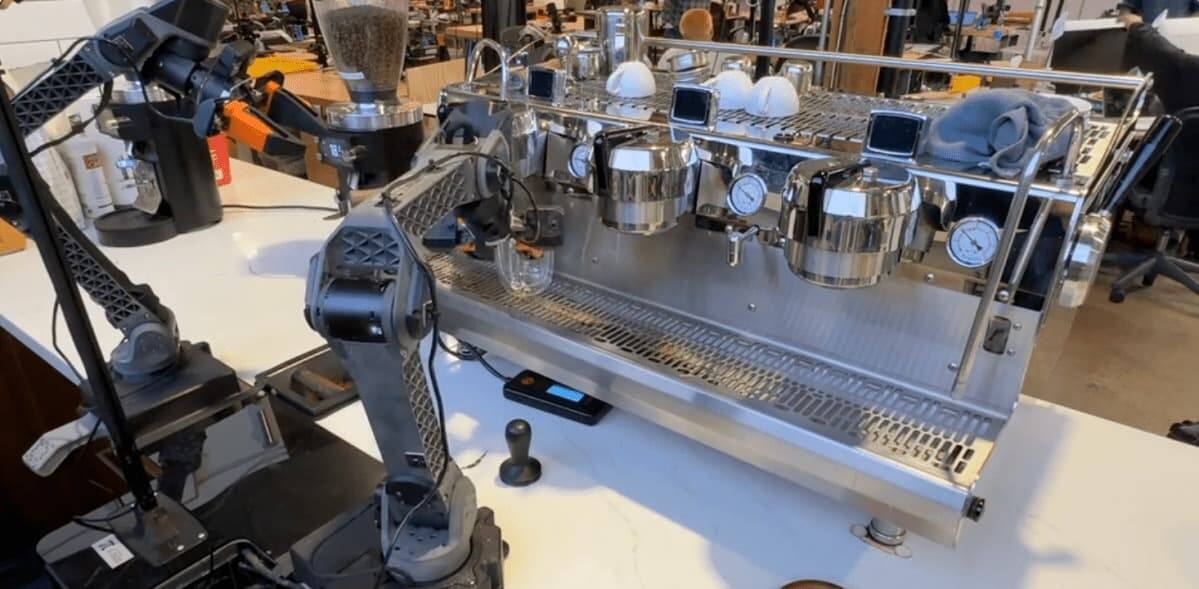
Physical Intelligence says π0.7 performed at a similar level to its earlier task-specific models on jobs such as making coffee, folding laundry and assembling boxes. The broader point is that robotics may be inching toward the same kind of scaling behavior that transformed language and vision AI: once a model can recombine skills, data starts to go further.
That said, robotics still has a few annoying differences from chatbots. Physical systems are slower, messier and far easier to break, which is one reason the field has relied so heavily on training for specific tasks. The company also admits there is no standard benchmark for measuring robot generalization yet, which makes outside verification harder than it should be.
The limits are still obvious
The new model is not being marketed as fully autonomous. Physical Intelligence says π0.7 still cannot carry out complex multi-step tasks on its own, even if it can follow instructions once it gets them. That puts it somewhere between a promising lab result and a product people can actually trust in a kitchen or warehouse.
Still, the direction is clear. If robots can start combining small bits of experience across environments, the economics of training may shift fast, especially in industries where every new task has traditionally required more data collection and more tuning. That is the kind of progress investors like to hear about almost as much as engineers do.
Physical Intelligence funding and valuation
The company is already one of the best-funded names in the sector, with more than $1 billion raised and a valuation of $5.6 billion. It is also planning another funding round that could push that figure to $11 billion, though it has not said when the technology will reach commercial products.
For now, π0.7 is less a finished robot brain than a signpost. The important question is not whether the model can fold more laundry than its predecessors; it is whether the industry can turn this kind of early generalization into something reliable enough for real deployment. If that happens, the winners will be the companies that need fewer custom-trained robots – and the losers will be the ones still paying to teach every machine the same trick twice.