

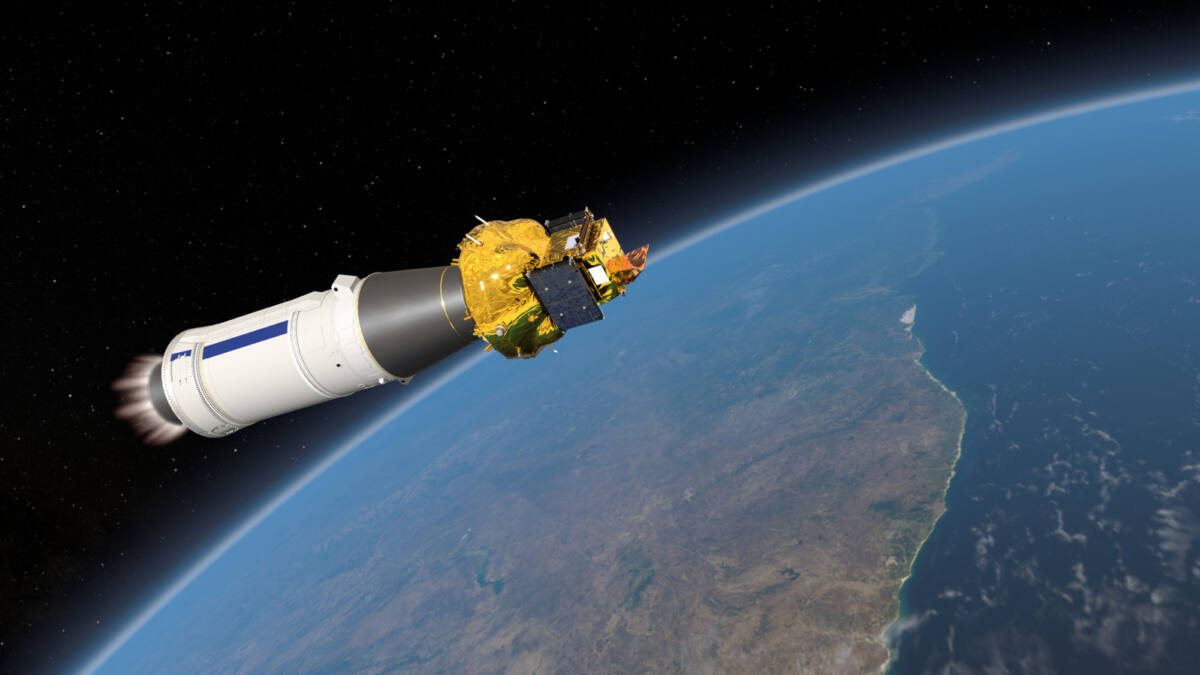
A China-Europe spacecraft is about to try something planetary science has never quite nailed in one go: watch Earth’s magnetic field react to a solar storm in real time. The SMILE mission is meant to give researchers a global view of how the solar wind pushes and distorts the magnetosphere, and it arrives with an awkwardly familiar twist for spaceflight – the launch is delayed.
SMILE, short for Solar wind Magnetosphere Ionosphere Link Explorer, is the first full mission-level collaboration between the Chinese Academy of Sciences and the European Space Agency, with both agencies involved in design, build, and operations. That alone makes it a notable test case for international space science at a time when big-ticket cooperation is getting harder, not easier. The partnership traces back to a joint call for ideas in 2015, and SMILE was chosen from 13 proposals before entering study in early 2016.
Why SMILE is different from earlier missions
There are already missions that study the Sun-Earth connection, including NASA’s MMS and ESA-NASA SOHO, but they are built to catch individual events or localized regions. SMILE is designed to do the annoying thing scientists still cannot do well enough: stitch those snapshots into a single global picture. Its soft X-ray imager will map the magnetosphere’s boundaries globally for the first time, which should make the changing shape of Earth’s magnetic shield far easier to follow.
The spacecraft will sit in an unusually elliptical orbit, dropping to 5,000 kilometers above the South Pole and stretching out to 121,000 kilometers above the North Pole. That wide swing is not for drama; it is there to give the instruments the best possible view of how solar wind slams into the magnetosphere. When that interaction intensifies, geomagnetic storms can follow, and those storms can be nasty for satellites, navigation, and radio links.
The storms scientists want to forecast better
The practical case for SMILE is easy to understand: better forecasting means operators get more warning before vulnerable systems are hit. The May 2024 storm is a recent reminder, disrupting satellite navigation and radio communications around the world. The benchmark horror story is 1989, when a far stronger event knocked out Quebec’s entire power grid for nine hours and left millions without electricity.
That kind of damage is exactly why researchers keep returning to space weather. A more complete view of the magnetosphere could help them predict when a burst of solar activity is likely to spill into something more serious on Earth. In the background, that’s also a competition between scientific ambition and operational reality: the technology exists to observe parts of the system, but not yet to watch the whole response unfold at once.
Launch delay leaves the mission waiting
SMILE was due to lift off on April 9 from Europe’s spaceport in French Guiana, but ESA said the launch was postponed because of a technical issue on a subsystem component production line. No new date has been announced. For a mission built to study the timing of solar storms, the irony is hard to miss: the hardware has to wait, even if the Sun does not.
If SMILE gets off the ground without another hiccup, the payoff could be bigger than a single dataset. It would give scientists the first mission-scale look at how Earth’s magnetic shield reshapes itself under solar pressure, and that may push space-weather forecasting closer to the sort of real-time warning systems power-grid operators and satellite fleets actually need. The open question is whether the launch delay is a brief pause or the kind of slide that turns a carefully planned mission into a long lesson in patience.