

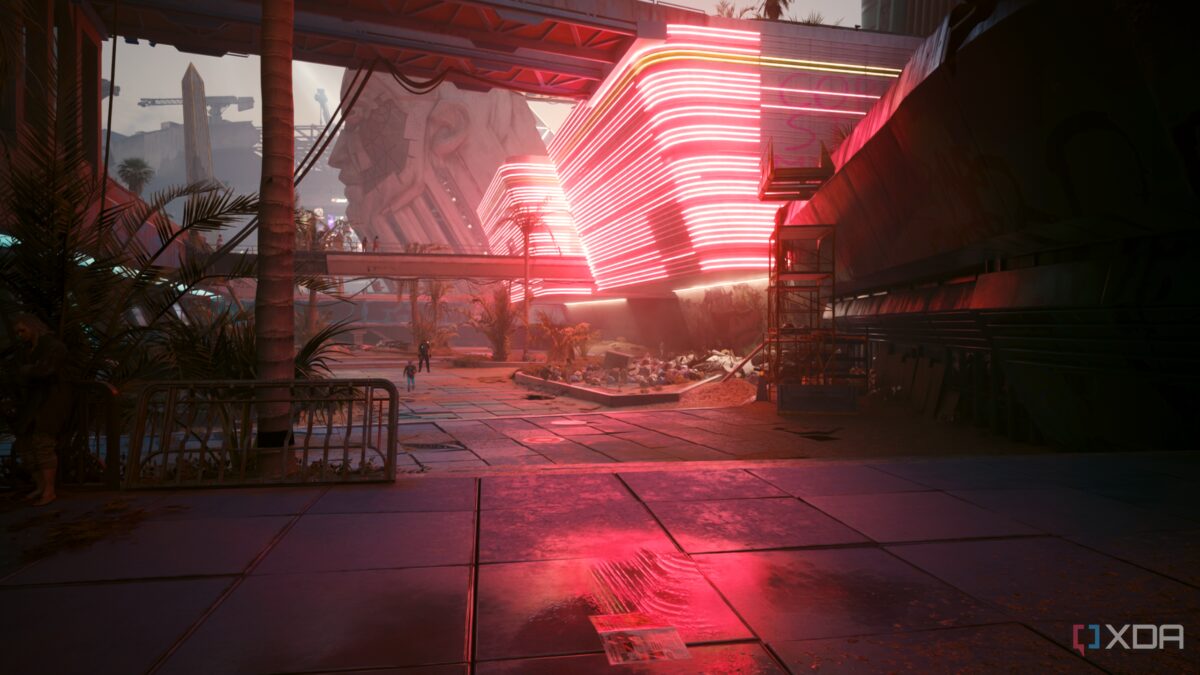
DLSS has made native resolution a niche choice in PC gaming. Native resolution used to be the default badge of honor, but now it is increasingly a purist preference because DLSS and FSR have gotten good enough that many players no longer see a compelling reason to brute-force every pixel the old way.
That shift is bigger than a visual tweak. It changes how games are built, how GPUs are judged, and what ”high-end” actually means in 2026. When upscaling looks close to native and runs faster, the old standard stops feeling like a standard and starts feeling like a hobby within a hobby.
DLSS and FSR are now the default expectation
The source article points to a few telling signals: a reported 80% of RTX GPU users use DLSS, and a blind test by German outlet ComputerBase found that over 40% of voters picked DLSS 4.5 as the best-looking image in six AAA games at 4K with Quality settings. That is not the profile of a niche feature anymore; that is a de facto standard with a lot of momentum behind it.
That also explains why developers have quietly changed their assumptions. If a large share of players will turn on upscaling anyway, studios can optimize around that reality instead of designing every scene for uncompromising native rendering. It is efficient, and it is also a little cheeky: the industry sold upscaling as a convenience, then used it to raise the floor for what counts as acceptable performance.
4K native is still the hard mode option
4K was supposed to be the clean finish line, but the hardware race kept moving the tape. The article argues that even RTX 50-series cards still struggle with 4K native in the latest AAA games without Multi-Frame Generation and DLSS 4.5, while RTX 5090- and RTX 4090-class hardware are the exceptions rather than the rule.
That is the trap. Each GPU generation gets faster, then games get heavier in return with ray tracing, path tracing, denser worlds, and more effects piled on top. So the supposed victory lap for native resolution never really arrives; the goalposts simply sprint away.
- Upscaling now matters because it preserves image quality while improving frame rates.
- Native 4K is no longer the easy default for modern AAA games at high settings.
- DLSS 4.5 and FSR 4.1 have narrowed the visible gap enough that ”native looks obviously better” is no longer a safe claim.
Why native-only gamers sound increasingly stubborn
The article’s sharpest point is also the most uncomfortable one: native rendering is no longer obviously sharper, and in motion it can even look worse than upscaled output with modern temporal reconstruction. That leaves native enthusiasts defending a principle, not a clearly superior result.
There is still a respectable argument for wanting the raw output of your GPU untouched. But in mainstream PC gaming, principles lose to frame rates, motion clarity, and time saved on the settings menu. If the practical difference keeps shrinking, native-only play starts to look less like purity and more like self-imposed difficulty.
What comes after native rendering?
The more interesting question is not whether native resolution survives in some form. It will. The question is whether future games keep treating it as the target state at all, or whether smarter rendering becomes the baseline and native becomes the enthusiast checkbox tucked away in the settings.
My bet is that the latter keeps spreading. The next fight will not be about whether DLSS looks good enough; it will be about how far studios can push image reconstruction before players start caring that the pixels were borrowed, not rendered the old-fashioned way.