

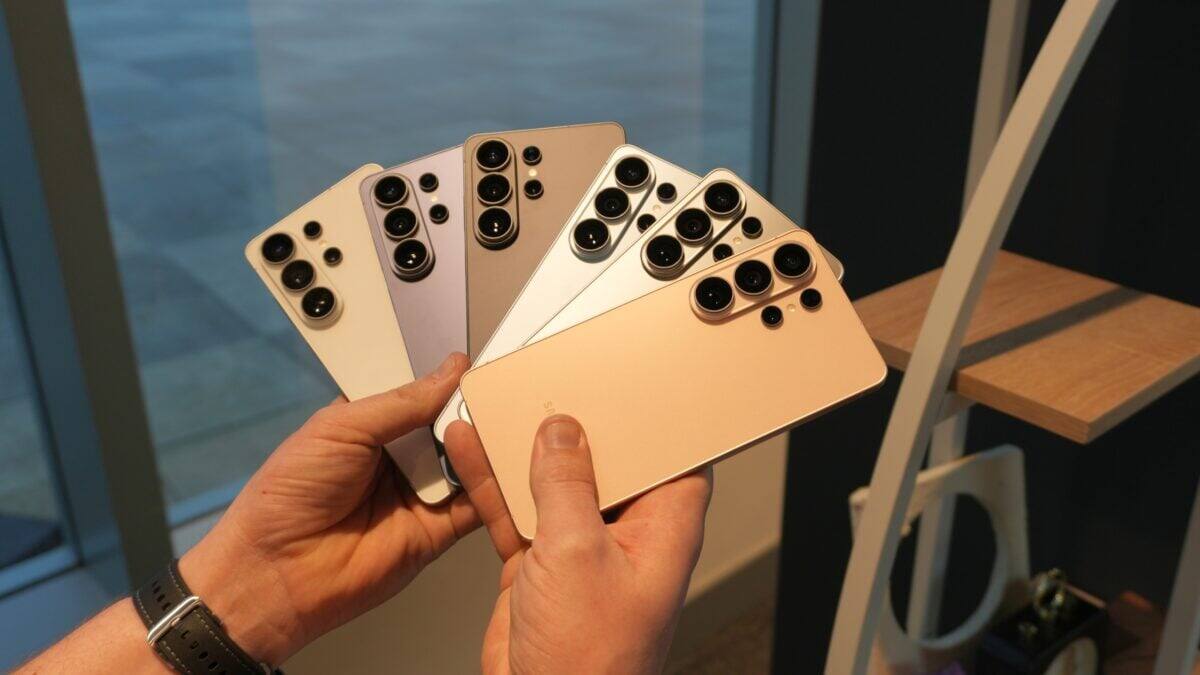
Samsung is reportedly leaning into stronger-than-expected demand for the Galaxy S26 family, raising April component orders to 3 million units and putting the Galaxy S26 Ultra at the front of the queue. That is 600,000 units above March’s projection, a useful sign for the company’s flagship business even as rising memory prices threaten to squeeze margins elsewhere.
The standout is the Galaxy S26 Ultra. According to the report, it now accounts for 70% to 80% of total Galaxy S26 demand, an unusually high share for an Ultra-tier phone in Samsung’s own lineup. The Privacy Display feature appears to be doing real work here, which is more than can be said for many premium-phone gimmicks that sound clever in a keynote and vanish in the real world.
Galaxy S26 production breakdown
Samsung’s revised production mix tilts hard toward the premium models, while the mid-tier sibling gets trimmed back. The base Galaxy S26 saw the biggest jump, but the Ultra still leads by a wide margin.
- Galaxy S26: 0.8 million in March, 1.3 million in April
- Galaxy S26+: 0.3 million in March, 0.2 million in April
- Galaxy S26 Ultra: 1.3 million in March, 1.5 million in April
That shift suggests Samsung would rather risk overbuilding its best seller than miss demand and leave money on the table. It also fits a familiar premium-phone pattern: the top model carries both the strongest margins and the easiest marketing story, while the middle model can get squeezed from both sides.
Memory costs are still the awkward part
There is, however, a less cheerful subplot. Memory chip prices have been rising over the past year, and that could hit Samsung’s profits even if shipment volumes stay healthy. Samsung MX is said to have a stable DRAM and NAND supply from Samsung DS, which is a tidy advantage over some Chinese rivals that may not enjoy the same cushion.
That internal supply setup matters because smartphone makers do not get to ignore component inflation forever. When memory costs rise faster than other parts, affordable phones become harder to price aggressively, and that helps explain why Samsung is reportedly cutting back on some lower-end models instead of flooding the market.
Galaxy A57 and A17 output gets cut
The report says Samsung has reduced production targets for its mid-range and entry-level phones. The Galaxy A57 was initially set for 1.8 million units in April but has reportedly been lowered to 1.6 million, while the Galaxy A17 has been cut from 4.4 million units to 3.9 million.
That does not scream panic. It looks more like a company choosing where to absorb a supply squeeze, and premium phones are the obvious place to keep the factory lines busy. If the numbers hold, Samsung may end up with a stronger flagship quarter and a slimmer bargain-phone lineup than planned.
Galaxy S26 Ultra demand and lineup balance
The real question is whether the Galaxy S26 Ultra can keep carrying such an outsized share of the series without cannibalizing the rest of the lineup. Samsung has an enviable problem if demand stays this hot, but it also risks training buyers to wait for the Ultra and ignore everything below it. That is great for bragging rights, less great for a balanced product stack.