

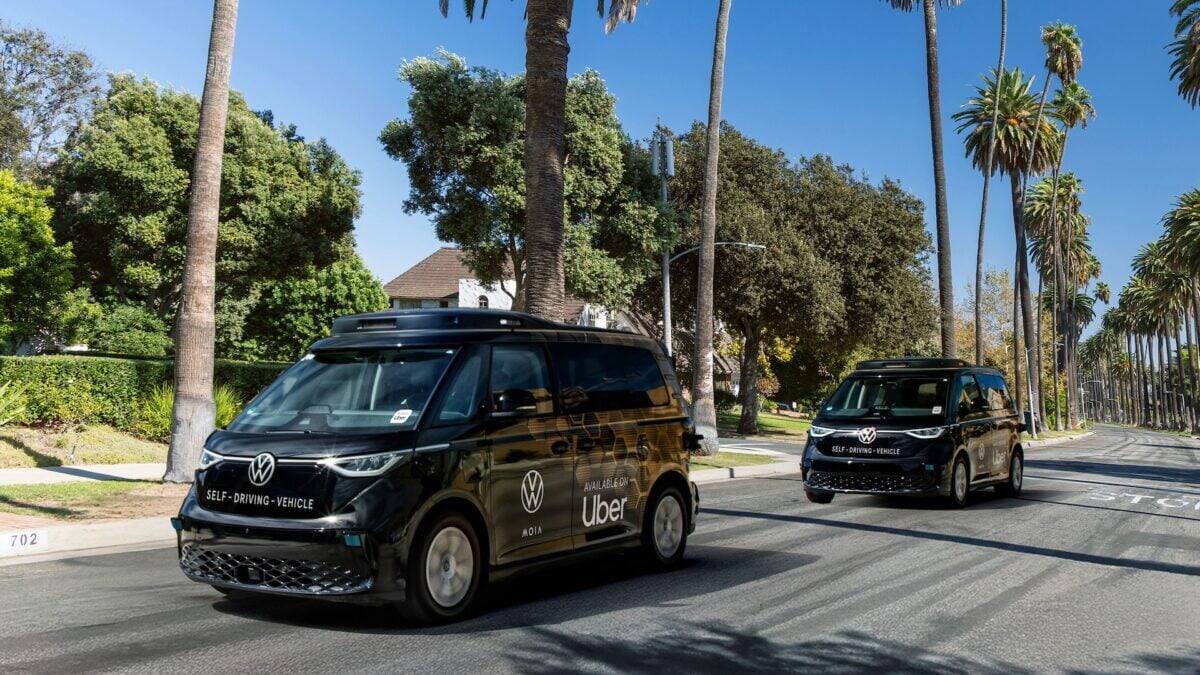
Uber has opened another front in its robotaxi push, this time in Los Angeles with Volkswagen’s autonomous mobility arm MOIA America and custom-built ID. Buzz vans. The on-road validation program is already underway, with human safety operators in the vehicles for now and passenger rides expected later this year. The Los Angeles trial centers on Volkswagen ID. Buzz robotaxis and is another sign that the robotaxi race is no longer just about software; it is also about who can build, charge, clean, and dispatch a fleet at scale without setting money on fire.
The test fleet is expected to grow to more than 100 ID. Buzz vehicles during the testing period, and Uber and MOIA have opened a joint facility in Los Angeles to handle day-to-day operations. The choice of the ID. Buzz is smart branding as much as engineering: Volkswagen’s retro electric van has instant recognition, and that matters when you are trying to normalize the idea of riding in a driverless box with sliding doors.
Uber’s Volkswagen ID. Buzz robotaxi test in Los Angeles
This Los Angeles test is the latest in a growing list of Uber autonomous bets. Just a few weeks ago, the company announced a deal with Rivian that could bring up to 50,000 robotaxis by 2031, starting in San Francisco and Miami in 2028. Last July, Uber teamed up with Lucid and Nuro to deploy at least 20,000 Lucid Gravity SUVs with Nuro’s self-driving system over the next five years.
That breadth is telling. Waymo already offers rides through Uber in Austin and Atlanta, so Uber is no longer trying to own every layer of the stack; it is assembling a marketplace of autonomous suppliers and letting them compete for routes, cities, and eventually riders. The upside is flexibility. The downside is obvious: if you are partnered with everyone, you are also dependent on everyone.
The charging hubs behind the driverless push
Vehicles are only half the story. In February, Uber said it would invest more than $100 million in charging hubs built specifically for autonomous fleets, with rollout planned for the San Francisco Bay Area, Los Angeles, and Dallas, plus more cities later. The sites will include fast chargers at what Uber calls autonomous depots, where it will also handle cleaning, maintenance, and inspections.
- Los Angeles test fleet: more than 100 ID. Buzz vehicles planned during testing
- Safety setup: human operators in vehicles at first
- Operational support: a joint facility for fleet work in Los Angeles
- Infrastructure spend: more than $100 million for autonomous charging hubs
Uber also wants fast-charging ”pit stop” stations in priority cities, which is the sort of unglamorous plumbing that usually decides whether a futuristic transport plan survives contact with reality. If the company can keep vehicles charged, cleaned, and moving longer than rivals, the robotaxi race may end up looking less like a software showdown and more like a logistics business with better marketing.
What the Los Angeles trial could lead to
Uber says the Volkswagen-MOIA program is meant to lay the groundwork for autonomous rides in Los Angeles and, over time, cities around the world. That is a bold claim, but not a wild one: by the end of the decade, more riders could be getting picked up by cars with no driver behind the wheel than by the old-fashioned kind. The bigger question is not whether Uber can add more partners. It is whether it can turn this patchwork of pilots into a service that feels routine, cheap, and boring enough for millions of people to trust it.