

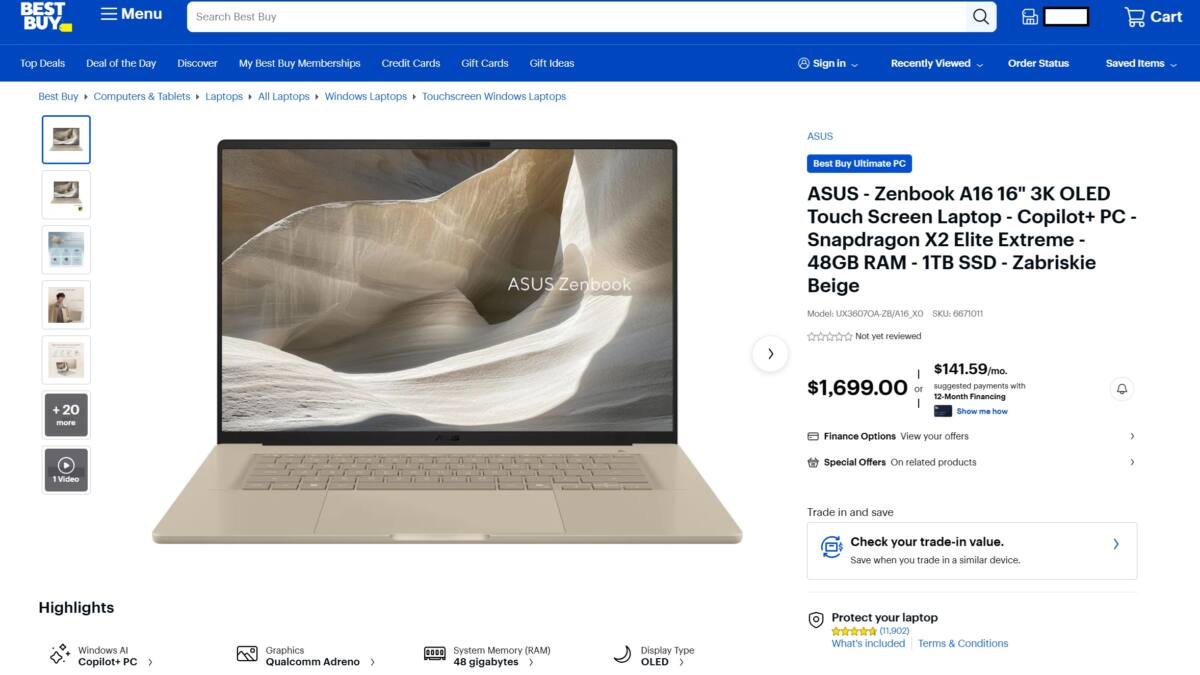
Asus managed a rare feat in laptop marketing: it got people excited about a new machine, then made the deal worse almost immediately. The Zenbook A16 launched looking absurdly good for the money, with a Qualcomm Snapdragon X2 Elite chip, 48GB of RAM, and a 3K display, but Asus raised the price by $100 just one day later, from $1,599 to $1,699 at Best Buy.
The Asus Zenbook A16 price hike is especially annoying because pricing is a big part of the case for Snapdragon-powered thin-and-light laptops. In a market where Microsoft, Lenovo, and others are pushing Windows on Arm models hard, changing the price after the praise lands makes the comparison look a lot less heroic.
Zenbook A16 specs that drew the attention
The original appeal was obvious. On paper, the Zenbook A16 pairs a new Qualcomm Snapdragon X2 Elite chip with 48GB of memory and 1TB of storage, plus a 3K screen, for a price that undercut rival Windows on Arm laptops by a wide margin. Lenovo’s Yoga Slim 7x Gen 11, for example, is listed at $1,839.99 with a similar processor, a 1200p display, 32GB of RAM, and 1TB of storage.
- Original Zenbook A16 price: $1,599
- New Zenbook A16 price: $1,699
- Zenbook S16 price mentioned in the report: $1,900
- Zenbook 14 price mentioned in the report: $1,350
Why the price jump rankles reviewers
This is not just a grumble about sticker shock. Reviewers judge a laptop partly on the value proposition at the time of publication, and a sudden price change makes a glowing verdict harder to trust. Asus has every right to adjust pricing if component costs shift, but a fast move right after launch looks messy, especially when other PC makers are already being more open about cost pressure on memory, storage, and CPUs.
Hardware Canucks also reported higher pricing on related Zenbook models, suggesting this was not a one-off adjustment. Whether it was a mistake or a deliberate change, the result is the same: a laptop that looked like a steal on day one now has a less flattering sales pitch. Asus has not publicly explained the move, which does the company no favors.
What buyers will probably do next
For shoppers, the practical answer is simple: check the price at the moment you buy, not the price in the review. That sounds basic, but laptop launches have become slippery enough that basic advice now counts as consumer protection. If Asus wants the Zenbook A16 to stay in the conversation, it will need to convince buyers that the hardware is still worth the new number, not just the old headline.
The bigger question is whether this becomes a pattern. If other vendors copy the same launch-and-lift tactic, reviews will need a lot more price caveats and a lot less trust. That is a bad trade for everyone except the accountants.