

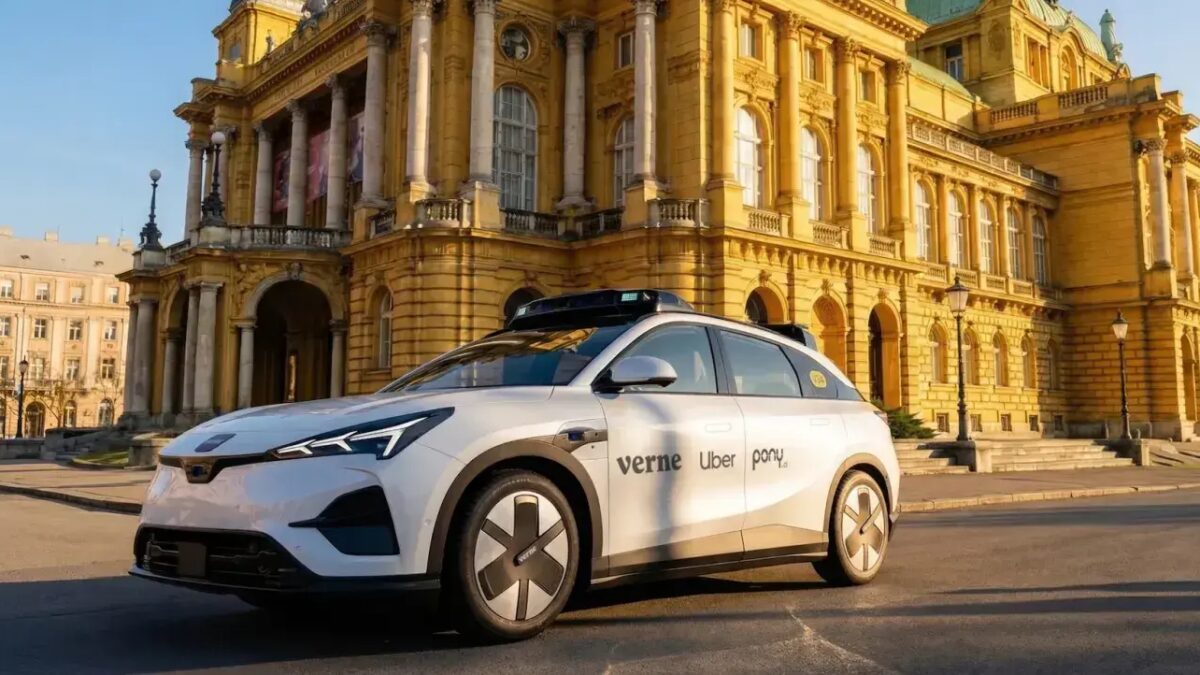
Europe’s first paid robotaxi service is starting in Zagreb, and the line-up is telling: Pony.ai brings the driving tech, Verne brings the local operation, and Uber brings the app. The launch on 8 April puts Croatia ahead of bigger markets such as Germany and the UK, not because they lack ambition, but because they have more competing projects and a lot more red tape.
The service begins in a roughly 90-square-kilometre zone covering central Zagreb, including the airport, using BAIC Arcfox Alpha T5 vehicles fitted with Pony.ai’s seventh-generation autonomous driving system. Safety operators are still onboard for now, which is the usual way these launches start: ”driverless” tends to arrive after regulators have had their say, not before.
How the Zagreb robotaxi service is set up
The division of labour is pretty clean. Pony.ai supplies the autonomous platform and operational know-how, Verne owns the fleet and handles local execution, and Uber is integrating ride bookings into its app shortly. That kind of partnership is increasingly the shortcut into Europe for Chinese robotaxi companies, which are looking for local allies instead of trying to bulldoze their way into each market alone.
- Launch date: 8 April
- Service area: about 90 square kilometres in central Zagreb
- Vehicle: BAIC Arcfox Alpha T5
- Autonomy stack: Pony.ai seventh-generation system
- Access: Uber app integration coming shortly
Why Croatia got there first
Verne’s local history matters. The company has operated in Zagreb since its 2024 founding, and its parent Rimac Group has a longer-standing presence in Croatia, giving it a head start on the sort of regulatory groundwork that can take years elsewhere. Verne is also building a two-seat autonomous vehicle at a new factory in Lučko, without a steering wheel or pedals, which is a cleaner long-term bet than relying on borrowed hardware forever.
That matters because the European robotaxi race is no longer theoretical. Pony.ai is following a licensing-and-partnership model, Baidu’s Apollo Go is doing something similar with Lyft, and Waymo is mapping London ahead of a planned commercial service later in 2026. Volkswagen’s MOIA is pushing ride-pooling in Hamburg and Munich, while Tesla’s Cybercab still faces the small issue of European approval for its camera-only setup and lack of manual controls.
Who gets to scale first
Verne says it wants to expand to 11 cities across the EU, the UK, and the Middle East, with 30 more under consideration. That is ambitious, but the real race is not who can announce the most cities; it is who can persuade regulators, municipalities, and riders that autonomous taxis are boring enough to trust. Zagreb has the early lead. The more interesting question is whether it stays a first mover or becomes the template others copy.