

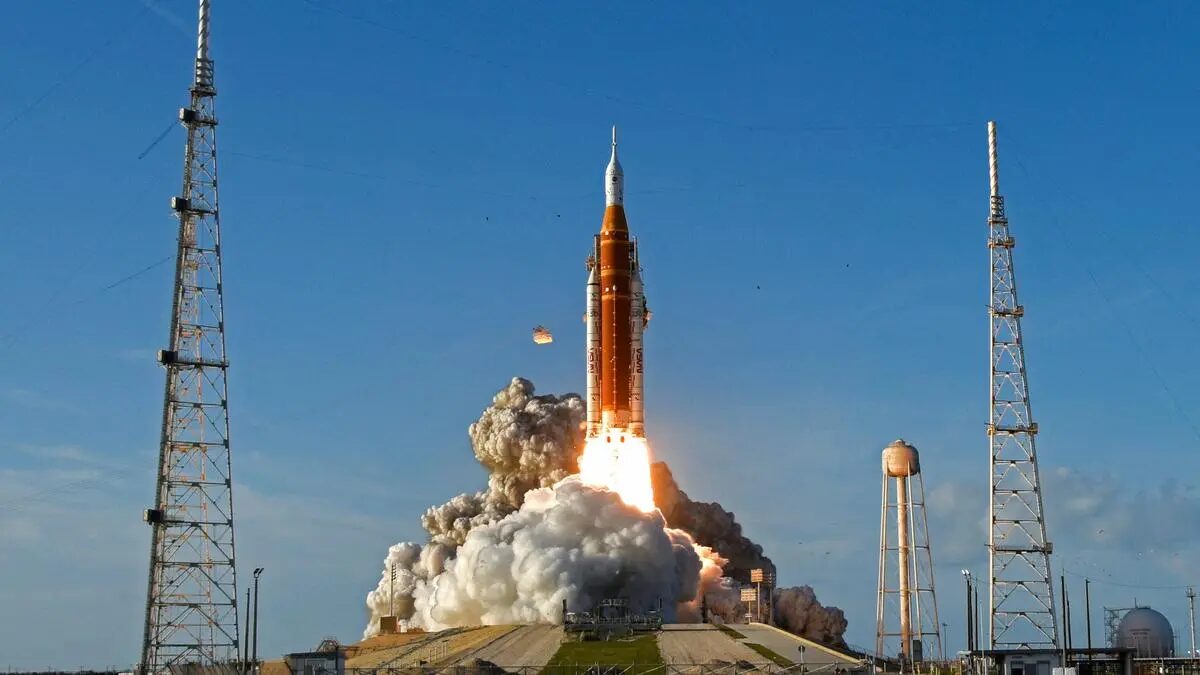
NASA’s Artemis II crew has done something no human crew has managed before: fly farther from Earth than anyone else and still make it home on purpose. On its moon flyby, the four astronauts turned the long-awaited test mission into a mix of record-setting engineering, lunar science, and a very expensive astronomy lesson, with a total solar eclipse thrown in for free.
The Orion capsule reached a maximum distance of 252,756 miles (406,771 kilometres) from Earth, edging past Apollo 13’s 1970 mark by 4,101 miles (6,600 kilometres). That kind of bragging rights matters less for the trophy shelf than for the next step: NASA wants this flight to validate the systems for a crewed landing near the moon’s south pole, which the agency is still aiming for on later Artemis missions.
A moon flyby with a solar eclipse attached
The best part, naturally, was the view. As the moon slipped between the astronauts and the sun, they watched a total solar eclipse from lunar distance, while Mercury, Venus, Mars, and Saturn all showed up in the blackness. The crew also spotted the Apollo 12 and 14 landing sites, a nice reminder that space history is still parked out there, just dustier.
Artemis II spent seven hours in its closest look at the moon, skimming within 4,067 miles (6,545 kilometres) of the surface. The astronauts used Nikon cameras and their iPhones to catalogue more than two dozen targets, including the sprawling Orientale Basin, whose outer ring stretches nearly 600 miles (950 kilometres) across. If NASA wanted proof that modern moon missions are as much about imaging as flying, it got it.
The Apollo 13 route, minus the disaster
Artemis II used the same free-return lunar trajectory Apollo 13 relied on after its oxygen tank failure forced an abort. The geometry is elegant and a little coldly pragmatic: no landing, just a gravity-assisted loop around the moon and a ride back to Earth. It is also a reminder that NASA’s playbook for deep space is still built on Apollo-era physics, even if the capsule and expectations look a lot more 21st century.
There was a human note inside the technical choreography. Jim Lovell, commander of Apollo 13, recorded a message before his death and welcomed the crew to his ”old neighbourhood.” The Artemis II astronauts also carried the Apollo 8 silk patch, a neat bit of continuity between NASA’s first lunar era and its current reboot.
What Artemis II is clearing the way for
The mission is still a test flight, not the destination. It is due to end with a Pacific splashdown on Friday, and NASA is using it to prepare for Artemis III, which is meant to send another Orion crew into lunar orbit for docking practice with landers before a later mission attempts a crewed landing near the south pole.
- Maximum distance from Earth: 252,756 miles (406,771 kilometres)
- Closest approach to the moon: 4,067 miles (6,545 kilometres)
- Speed at closest approach: 3,139 mph (5,052 kph)
- Flight length: nearly 10 days
The last stretch will tell NASA most of what it needs to know: whether Orion can keep carrying people through deep space, and whether the agency’s grand lunar reset can move from nostalgia to routine. If it does, the next argument won’t be about Apollo 13’s record. It’ll be about how soon Artemis can stop borrowing Apollo’s ghosts and start making its own.